The Appointment
Episode 10: The Appointment
Paris and London, March—August 1941
…as remembered in London, October 1946
Time stopped meaning anything after the first week.
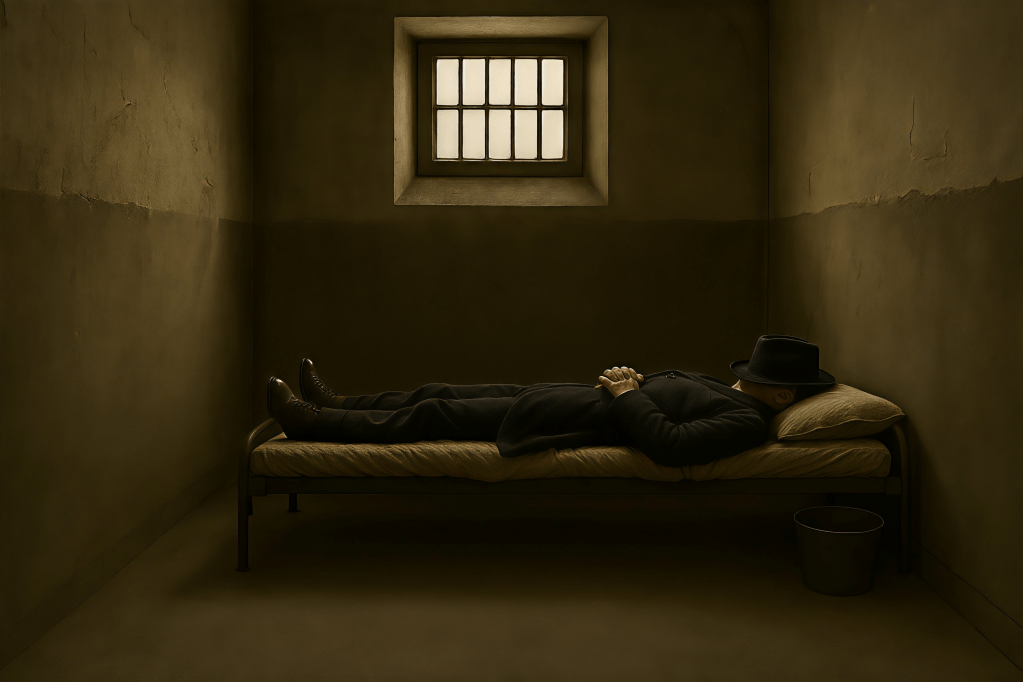
There was only the cell: three paces wide, four long, a cot that smelled of old sweat and fear, a bucket in the corner that was emptied once a day by a guard who never spoke. The walls were the colour of dirty water. The single window, high and barred, let in a grey light that never seemed to change, as if the sun had forgotten how to rise or set properly.
I marked days by meals—thin soup and bread that tasted of sawdust, brought twice daily. The days blurred together. Guard brings food. Empty bucket. Return to cot. Stare at grey light from window. Try to sleep. Fail. Pray desperate, bargaining prayers: Get them out. Let Marcel have escaped. Let Colette and Élise survive. Let Antoine’s faith hold. Bernard—let Bernard survive. I’ll confess. I’ll tell you everything. Just let them live.
No answer. Just grey light and silence and the slow dissolution of time.
On the seventh day—or perhaps the eighth, I’d lost count—the guard brought me my soup and dropped a comment like a stone into still water:
“Your friend, the old perfumer. He didn’t last long.”
I looked up. “What?”
“Died a few days ago. Heart gave out. The doctors tried, but…” He shrugged. “Too old. Too weak. These things happen.”
He left before I could ask anything else.
I sat on the cot, soup untouched, and felt something break inside me that I hadn’t known was still intact. Bernard. Dead. The man I’d traded myself for. The catalyst that had brought us here—Weber’s note demanding his release in exchange for confirmation of my role. The trap we’d walked into thinking we were making a sacrifice play.
Dead anyway.
Heart failure. Age. Exhaustion. The arithmetic of resistance: one elderly perfumer minus his protection equals death in German custody.
I’d accomplished nothing. Just confirmed what Weber already suspected, handed him Colette and Élise in the process, and Bernard had died regardless.
The grey light from the window seemed to darken, though the sun hadn’t moved. Or perhaps I simply couldn’t see properly anymore. Everything felt hollow, futile, like I’d been filling a bucket with a hole in the bottom and only now noticed all the water was gone.
I didn’t eat the soup. Didn’t touch the bread. Just sat there, staring at the wall, thinking about Bernard’s quiet dignity and Élise’s brilliant, owlish eyes and whether she knew yet that her father was dead.
That night, I stopped praying. Not in anger. In exhaustion. Because there was no one there. Or if there was, He wasn’t listening. Or He was listening and simply didn’t care.
The silence felt absolute.
The next day—or perhaps the day after, time had stopped meaning anything—the guard opened my cell door, gestured with his rifle. I followed him down corridors that smelt of bureaucracy and despair—paper and sweat and the particular staleness of air that never fully circulates. Past other cells, some silent, some containing sounds I tried not to identify. Up two flights of stairs. Into an office that had once belonged to someone French, judging by the elegant moulding and parquet floor, but now furnished with hastily imported utilitarian German furniture—a steel desk, a hard chair, grey filing cabinets—that looked brutal against the room’s faded elegance. Weber sat behind the desk with the patience of someone who had all the time in the world.
“Monsieur Penbury.” He gestured to a chair across from him. “Please. Sit.”
I sat.
“You haven’t written your confession.” Not a question.
“No.”
“May I ask why not?”
“There’s nothing to confess.”
“You’re a British intelligence operative. You’ve admitted this already—walked into French police headquarters and offered to trade your confession for Bernard Garnier’s release. And yet, when given paper to write down the details, you’ve produced nothing.” He opened a file on his desk. “Not one word.”
“I changed my mind.”
“I don’t think so. I think you realised your sacrifice accomplished nothing. That Herr Garnier died anyway—heart failure, the doctors said, though I suspect it was simply exhaustion and age. That your friends were arrested regardless of your confession. That walking into my trap merely hastened the inevitable.”
I said nothing. He was right, of course. Bernard was dead—I’d known for days now, though the guard’s casual announcement had made it real in a way I still couldn’t process. Colette and Élise were somewhere in German custody. Marcel, Lucien, and Antoine—I didn’t know. Hoped they’d scattered. Feared they’d been caught.
“So the question becomes,” Weber continued, “what purpose does your continued silence serve? You’ve already confirmed you’re an operative. Already implicated Mademoiselle Marchand as your contact. The only information we lack are the details—names, methods, what intelligence you sent to London. And we’ll obtain that information eventually. Everyone talks eventually. You’re simply choosing a more difficult path to the same destination.”
“Perhaps.”
“Tell me about your business, Monsieur Penbury. The importing. Who were your clients in London?”
I gave him the cover story I’d rehearsed a thousand times. Names of legitimate fashion houses, perfume distributors, fabric merchants. All real, all documented, all carefully constructed to withstand scrutiny. Weber listened, took notes, asked clarifying questions. He was good at this—making it feel like a conversation rather than an interrogation. Patient. Methodical. No threats, no violence. Just questions in a reasonable tone, as if we were discussing business over coffee.
After an hour, he sent me back to my cell.
The days blurred together. Guard brings food. Empty bucket. Return to cot. Stare at grey light from window. Try to sleep. Fail. Pray desperate, bargaining prayers: Get them out. Let Marcel have escaped. Let Colette and Élise survive. Let Antoine’s faith hold. I’ll confess. I’ll tell everything. Just let them live.
No answer. Just grey light and silence and the slow dissolution of time.
Weber came for me again the following week. Same office, same patient questions. But this time he brought evidence: files, photographs, surveillance reports.
“Marcel Duval,” he said, sliding a photograph across the desk. “Tailor. Rue de l’Espoir. Vanished February sixteenth, same day you were arrested. We’ve searched his shop, his apartment, questioned his neighbours. Gone. Completely. Either he fled before we could arrest him, or he’s using false papers somewhere in France.”
Relief hit so hard I had to work not to show it. Marcel escaped. At least one had made it out.
Weber slid another photograph. “Lucien Moreau. Painter. Arrested February seventeenth, taken from his studio in Montmartre. Currently held at Fresnes.”
My stomach turned. Lucien caught. Volatile, idealistic Lucien in German custody.
Another photograph. “Antoine Moreau. Courier. Previously arrested and released August 1940. Re-arrested February seventeenth for additional questioning about his uncle’s activities.”
Antoine. The young believer whose simple faith I’d envied and doubted in equal measure. Back in custody. Second interrogation.
“And of course,” Weber continued, “we have Mademoiselle Marchand and Mademoiselle Garnier. Both have been separated from you for security reasons. Different facilities, different interrogation schedules. Standard procedure.”
He looked at me with those eyes that noticed everything and forgot nothing.
“Your sacrifice accomplished nothing, Monsieur Penbury. Herr Garnier died anyway. Your colleagues were always going to be arrested—we’d been watching them for months, building files, waiting for the right moment. You simply walked in and confirmed everything we suspected. Made our work easier. Hastened the inevitable.”
“Did I kill them?” The question came out before I could stop it. “By walking into your trap, did I make it worse?”
“You hastened it. Whether that made it worse…” He paused. “That depends on your theology, I suppose. Do you believe in fate? Inevitability? Or do you think your choices matter?”
I had no answer. Didn’t know anymore if anything mattered. If resistance accomplished anything beyond getting people killed. If beauty and codes and small acts of defiance added up to more than corpses and empty cells and the slow grinding victory of ugliness over everything worth defending.
Weber closed the files. “Write your confession, Monsieur Penbury. Names, methods, what intelligence you sent to London. Be thorough. Be honest. And perhaps some mercy can be extended to your friends. Perhaps their interrogations can be… less severe.”
He sent me back to my cell with the blank paper still waiting.
I stared at that paper for days. Picked up the pencil. Put it down. Picked it up again.
Thought about Marcel somewhere in France with false papers, surviving by staying invisible. Thought about Lucien in Fresnes prison, painting nothing, creating nothing, his art silenced. Thought about Antoine facing a second interrogation, his faith tested again. Thought about Colette’s sharp intelligence and Élise’s quiet brilliance, both somewhere in German custody, both interrogated for what they knew.
Thought about Bernard’s grave—wherever it was, if he’d been given a grave at all.
Thought about Rupert’s letters, still hidden in my old boarding house in the 20th arrondissement unless the Germans had found them. God makes appointments with those He chooses. Removes heart of stone, gives heart of flesh. Easy to write from Oxford. Harder to believe in a cell at Avenue Foch with Bernard dead and the others scattered and my sacrifice meaningless.
I reached for the paper. Prepared to write. What was the point of holding out? Weber was right. Everyone talked eventually. I could make it easy or make it hard, but the destination was the same.
The pencil touched paper.
And something stopped me. Not dramatic. Not a voice from heaven. Just a thought, quiet and insistent:
What if it did matter? What if Bernard’s death and Colette’s arrest and Lucien’s imprisonment and your silence—what if it meant something even when you can’t see how? What if God is sovereign even over this?
Antoine’s theology. Simple, certain, impossible to prove or disprove.
I set the pencil down.
The appointment came in the middle of the night.
I wasn’t praying. Hadn’t prayed in days. Was simply lying on the cot, staring at the dark ceiling, thinking about nothing and everything. About Bernard and the cell and whether any of it had been worth it. About beauty and resistance and the slow victory of darkness over light.
About whether I’d die in this cell, having accomplished nothing except hastening the inevitable.
And then—
I can’t explain what happened. Not theologically. Not rationally. Just that something changed.
It wasn’t dramatic. No vision. No voice. No light breaking through the barred window. Just a sense, sudden and absolute, that I wasn’t alone. Had never been alone. That Someone had been there all along, in the grey light and the silence and the hollow feeling of futility.
Not rescuing me. Not explaining anything. Not making the cost less or Bernard’s death meaningful or my sacrifice worthwhile. Just—there. Present. Real.
Held.
That was the word Antoine had used to describe his first interrogation. “God held me. Not saved from it. But sustained through it.”
I’d thought it was metaphor. Comforting fiction. The kind of thing believers told themselves to make suffering bearable.
But it wasn’t fiction. Or if it was fiction, then so was the cell and the grey light and my body on this cot. Because what I felt was more real than any of it. More solid than the walls. More certain than time.
Someone was there.
God. The God I’d doubted and questioned and prayed to without faith. The God whose sovereignty I’d rejected as impossible or cruel. The God who’d let Bernard die and Colette be arrested and Paris fall to occupation.
He was there. Had always been there. Not fixing things. Not preventing suffering. Not making it make sense. Just—present. Sovereign even over darkness. Ordaining resistance to matter even when ugliness seemed to win.
I didn’t understand it. Couldn’t explain it. Just knew it, the way you know you’re awake and not dreaming. The way you know the sun exists even on grey days.
Something in my chest shifted. Heart of stone removed. Heart of flesh given. Ezekiel’s language suddenly not metaphorical at all but descriptively precise.
I sat up. Tried to find words for prayer. Failed. Settled for: “You’re real. You’re here. I don’t understand any of this. But You’re real.”
The cell didn’t change. The grey light didn’t brighten. Bernard was still dead. The others were still imprisoned. I was still at Avenue Foch with a blank confession paper waiting.
But something had changed. I had changed. Not because I understood suffering now or saw purpose in resistance or knew why Bernard had to die. But because I knew, with absolute certainty that made no logical sense, that Someone was sovereign over all of it. That the darkness hadn’t won. That beauty and faith and small acts of defiance mattered because He ordained them to matter.
And that was somehow enough.
I lay back down on the cot. Closed my eyes. And for the first time since my arrest, slept without nightmares.
Weber noticed the change within days.
“You’re different,” he said during my next interrogation. “Calmer. Less desperate. What happened?”
“I don’t know how to explain it.”
“Try.”
I thought about Rupert’s warnings: Don’t preach. Don’t explain grace. Just live it. So I said only: “I realized some things matter even when they seem not to. That’s all.”
“Philosophical awakening in a German cell?” Weber’s tone was dry. “How convenient. And yet you still won’t write your confession.”
“No.”
“May I ask why not?”
“Because it wouldn’t be true. Not the parts that matter. I can give you names and methods and what I reported to London. But I can’t give you the truth—that beauty resists ugliness, that small acts of defiance matter, that darkness doesn’t get the final word. You already know that. You just don’t believe it.”
Weber studied me for a long moment. “You’ve become a believer. How extraordinary. The atheist spy finds God in a Gestapo cell. There’s irony in that, I suppose.”
“Yes.”
“And does your newfound faith change anything? Does it rescue your friends? Prevent their interrogation? Bring back the old perfumer?”
“No.”
“Then what good is it?”
I thought about Antoine’s face in that field at thirteen, the moment God chose him for reasons he’d never understood. Thought about Rupert’s conversion after his wife died, the grace that broke him and remade him. Thought about my own appointment, kept in darkness and silence and the hollow feeling of futility.
“It’s good because it’s true,” I said finally. “Even when it doesn’t fix anything. Even when people die and resistance fails and ugliness seems to win. It’s good because Someone is sovereign over all of it, and He says it matters.”
Weber closed his file. “Then you’re a fool. But a sincere fool, I’ll grant you that.”
He sent me back to my cell, the confession still unwritten.
Weeks passed. I lost count. Twenty days? Thirty? Time had stopped meaning anything again, but differently now. Not because I was lost in grey light and despair but because I was simply—present. Held. Sustained through something I didn’t understand but couldn’t deny.
Weber interrogated me regularly. Always the same questions, always the same patient tone. I gave him nothing substantive. Cover stories, surface details, information he already possessed. Never names he didn’t have. Never methods that would compromise others. Never intelligence that would damage London.
He grew frustrated but never violent. Psychological pressure was his method—isolation, time, the slow erosion of resistance through patience and inevitability. But what he couldn’t erode was the certainty that had come in the darkness. That Someone was there. That it mattered.
I prayed differently now. Not bargaining—do this and I’ll do that. Not demanding—why are You allowing this? Just submission. Trust. Even gratitude, though that seemed insane. Thank You for being sovereign. Thank You that darkness doesn’t win. Thank You that I’m held through this, even if I die here.
The prayers of a believer, not a skeptic. I barely recognized myself.
On what I later learned was my sixty-third day of imprisonment, they allowed us exercise—ten minutes in a small courtyard, concrete and barbed wire, grey sky overhead.
I was alone until another prisoner was brought out. Thin, worn, hair needing cutting. But I recognized him immediately.
Antoine.
Our eyes met. No words—guards were watching. But something passed between us. Recognition. Solidarity. The look of two people sustained by the same impossible faith.
He smiled slightly. Nodded once. As if to say: You too? You understand now?
I nodded back: Yes. You were right. About everything.
The guard separated us after thirty seconds. Led Antoine back inside. But those thirty seconds were enough. Enough to know he’d survived. That his faith had held through a second interrogation. That he was still here, still certain, still believing that God was sovereign even over Avenue Foch and German cells and everything Weber could do to break him.
Enough to know I wasn’t alone in this. That the appointment God had made with me in the darkness, He’d made with Antoine years ago in a field in Le Chambon. That we were both being held through something neither of us fully understood but both of us knew was real.
I went back to my cell with something like peace.
Weber came for me in July with different news.
“Your government has made an offer,” he said without preamble. “A German agent—captured in London, awaiting trial—in exchange for your release and return to Britain.”
I stared at him. “What?”
“Diplomatic channels. The Swiss facilitated. Britain wants its operative back. Germany wants its operative back. A trade.”
“And the others? Colette, Élise, Antoine, Lucien?”
“French citizens. Different jurisdiction. They remain in German custody.”
“I want them included in the exchange.”
“That’s not possible. The offer is specific: one German agent for one British agent. Take it or refuse it. But understand—if you refuse, you simply remain imprisoned. The others aren’t helped by your martyrdom.”
I sat in silence, trying to process this. Freedom offered. But not for them. Only for me, because I happened to be born British instead of French. Because diplomatic leverage existed for me that didn’t exist for them.
The unfairness of it was staggering.
“How long do I have to decide?”
“The negotiations have been ongoing for weeks. Final arrangements are being made. You’ll be transferred within days, assuming you accept.”
“And if I refuse?”
“Then you stay. The German agent stays in London. And your friends remain imprisoned regardless, because they were never part of this negotiation.”
He was right. My refusal wouldn’t save them. Wouldn’t ease their interrogations or secure their release. Would simply mean I stayed in this cell while they stayed in theirs and the war ground on and we all waited to see who survived and who didn’t.
But accepting meant leaving them behind. Abandoning them to whatever came next. Walking free while they remained imprisoned, interrogated, at risk.
Survivor’s guilt before I’d even survived.
“I need to think.”
“You have until morning.” Weber stood. “For what it’s worth, Monsieur Penbury, I recommend accepting. You’re a British citizen. They have leverage to secure your release. Your friends don’t have that protection. Your martyrdom serves no one.”
He left me in the cell with the choice.
I prayed through the night. Not for guidance—I already knew what I had to do. But for grace to do it. For peace with abandoning them. For trust that God’s sovereignty extended to them even when I couldn’t protect them.
Why me? Why not them? Why am I released while they remain?
No answer. Just the steady presence I’d learned to recognize. Not explaining. Not fixing. Just—there. Holding me through the impossible choice.
In the morning, I told the guard I accepted the exchange.
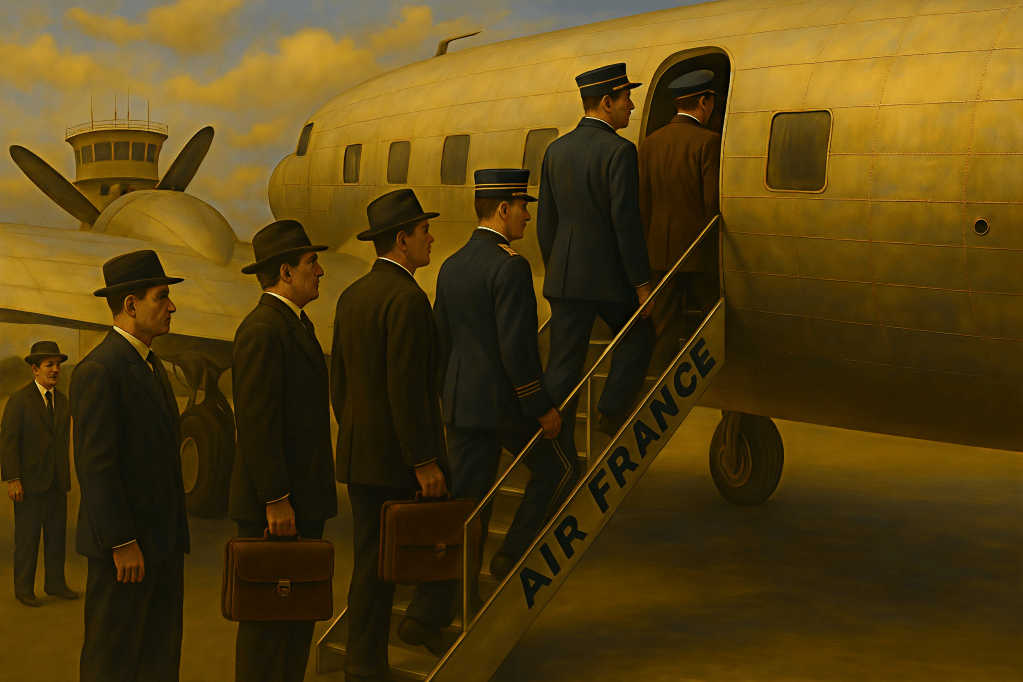
They processed me out of Avenue Foch on August 4th, 1941. Five months after my arrest. One hundred and forty-one days, though I hadn’t counted them. Returned my possessions—wallet, papers, nothing else. Gave me travel documents to Calais, then across to Dover. Warned me never to return to Paris.
Weber saw me out personally. “Don’t come back, Monsieur Penbury. We’ll be watching. And next time, there will be no exchange.”
“What happens to them?” I asked. “Colette, Élise, Antoine, Lucien?”
“That depends on the war. On how long it takes your Allies to lose. On whether they cooperate with interrogation. On many factors beyond your control or mine.” He paused. “They’re French citizens in German custody during wartime. You know the odds.”
I did. The odds were terrible.
“Go,” Weber said. “Be grateful you’re British. It saved your life.”
I walked out into Paris sunlight for the first time in five months. The brightness hurt. The heat was shocking after the constant cold of the cell. The street noises—traffic, voices, the ordinary sounds of occupation—felt overwhelming.
I stood on the pavement outside Avenue Foch, disoriented and free and guilty, and thought about going back inside. Refusing the exchange. Staying with them.
But that would help no one. Weber was right. My martyrdom served no purpose. I’d be imprisoned again, they’d remain imprisoned, and the trade that could have returned a German agent to Berlin would collapse.
So I walked. Away from Avenue Foch, away from the cells, away from the others still held in darkness.
I had a few hours before my train to Calais. I used them to walk through Paris one last time, carefully, knowing I was probably being followed but needing to see it anyway.
First, the boarding house in the 20th arrondissement where I’d lived before my arrest. The landlady didn’t recognise me—five months and ten kilos will do that. I told her I’d left some papers, paid her for the inconvenience, retrieved the small bundle from behind the loose board in my old room. Rupert’s letters. The transcribed sermons on Romans. All still there, miraculously untouched. I tucked them into my jacket and left.
Rue de l’Espoir: Marcel’s shop shuttered, windows dark, the narrow street unchanged. The defunct fountain still dry. The 18th-century buildings still the colour of old bone. Aspirational hope, Marcel had called it. I prayed it was. Prayed he’d made it out, was somewhere in France with false papers, surviving.
Parfums Garnier: Closed. The enamel and glass shopfront dark. Élise’s lab windows empty. Bernard dead, Élise imprisoned, the family business abandoned. I stood outside and thought about perfume #17, the formula that revealed hidden messages and smelled like hope. Wondered if the bottles still existed somewhere. Wondered if hope could survive this.
Notre-Dame: Still standing. Still watching over the Seine. The bells silent under occupation, but the cathedral itself enduring. Eternal. I stood on the Left Bank and looked at it across the water and thought about all the other occupations it had witnessed, all the other wars, all the other moments when darkness seemed to win but didn’t.
The light shines in the darkness, and the darkness has not overcome it.
Rupert’s favorite verse. Antoine’s certainty. The truth I’d learned in a cell at Avenue Foch.
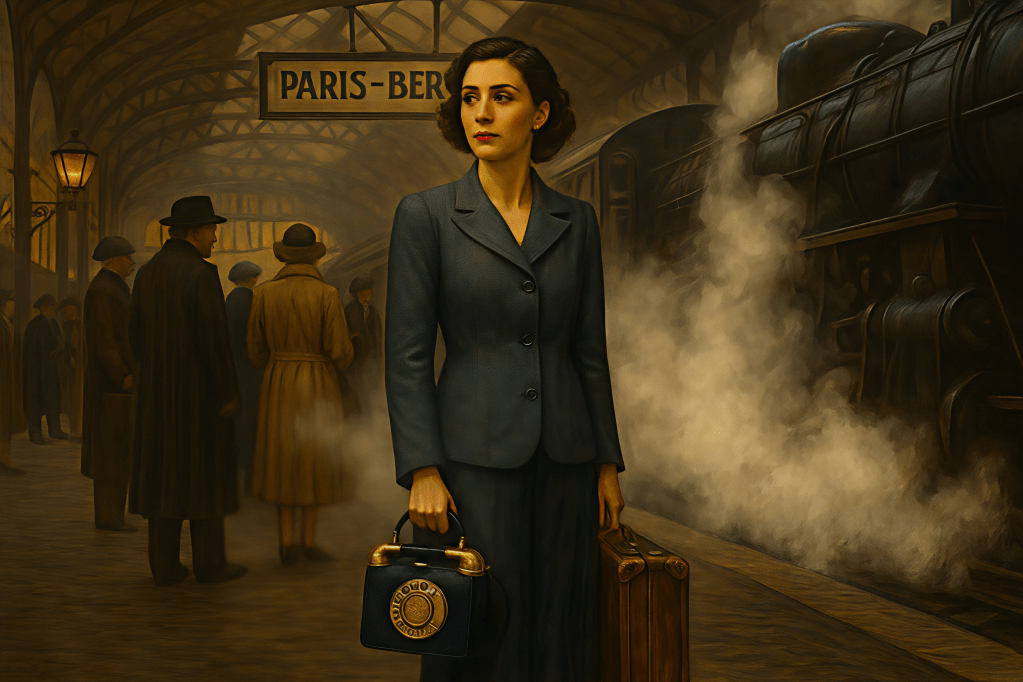
I turned away from Notre-Dame and walked to Gare du Nord to catch my train north.
London in August 1941 felt like a different world. Air raids. Rationing. The constant grinding tension of a country at war. But also: freedom, safety, the simple miracle of walking streets without being arrested.
Pemberton met me at his office the day after my arrival. Poured whisky without asking, studied my face with the careful assessment of a handler evaluating damaged assets.
“You look terrible.”
“Five months at Avenue Foch.”
“We heard. The exchange took longer to arrange than we’d hoped. The Germans were difficult about it.” He paused. “Your cell?”
“Compromised. Captured. Bernard Garnier died during interrogation—heart failure. Marcel Duval escaped, location unknown. Lucien Moreau, Antoine Moreau, Colette Marchand, Élise Garnier—all in German custody. Status unknown.”
“And the intelligence you gathered before the arrest?”
“Sent to you. Supply routes, German command structure, cultural asset looting, industrial planning. You received it all before March 1941.”
“We did. It was useful. Helped Allied planning for several operations. Your cell accomplished good work.”
“Did it matter enough?” The question came out harsh. “For what it cost? Bernard dead. The others imprisoned. Cell destroyed. Was the intelligence worth it?”
Pemberton sipped his whisky. “That’s not a question I can answer. We fight the war we’re given with the tools we have. Your cell provided valuable intelligence. Lives were probably saved because of what you sent us. Whether that redeems the cost…” He trailed off. “That’s above my pay grade. Above both of ours.”
I wanted to argue. To demand a calculus that made sense of Bernard’s death and Colette’s imprisonment and my freedom. To be told it was all worth it, that the intelligence had won battles or saved cities or changed the course of the war in ways that justified everything.
But Pemberton couldn’t give me that. No one could. Because the arithmetic of resistance didn’t work that way. You made choices. You resisted. People died. And then you had to live with not knowing if any of it had mattered enough.
I drank the whisky and said nothing.
A letter arrived at my temporary lodging three days later. Forwarded through Pemberton’s office, postmarked weeks earlier from somewhere in southern France.
I recognized the handwriting immediately. Marcel’s careful, precise script.
Inside was a brief note:
Miles,
I made it out. Used the papers Véronique made. I’m safe, though I can’t say where. I posted your letter to Rupert Brimble before I left. I hope it reached him. I hope this reaches you.
The others—I don’t know. I tried to warn them. Pray they scattered. Pray some survived.
Rue de l’Espoir still stands. Someday, when this is over, I’ll return to it. Aspirational hope. Remember?
Stay alive.
—M.
I read it three times. Then burned it—operational security even now. But the knowledge remained: Marcel survived. One, at least, had made it out. And my letter to Rupert—the one I’d written before walking into Weber’s trap, the one where I’d said I wasn’t saying no anymore—had been posted. Had presumably reached London.
Which meant Rupert knew. Knew I’d been arrested. Knew I’d been reaching toward faith even as Weber closed his trap. Knew to pray.
I pulled on a jacket and walked to Bloomsbury.
Rupert was at the café where we’d first met, sitting by the window with a book and cold tea. He looked up as I entered, and his face did something I couldn’t quite identify—relief, joy, concern, all mixed together.
“Miles.” He stood, pulled me into an embrace that was very un-British and didn’t care. “Thank God. I’ve been praying since March.”
We sat. He ordered fresh tea, looked at me properly, and I saw him register the weight loss, the exhaustion, the changes five months in a German cell had carved into my face.
“Marcel’s letter reached you,” I said. Not a question.
“Two months ago. I’ve been praying. Talking to Pemberton’s office when I could. Waiting for news. And now you’re here.”
“I’m here.”
“The others?”
“Still there. French citizens. Couldn’t be exchanged. Bernard died. The rest—imprisoned, interrogated. I don’t know if they’re alive.”
“I’m sorry.”
We sat in silence. Then Rupert said, quietly: “Your letter. The one Marcel posted. You said you weren’t saying no anymore. You said God might be making an appointment with you.”
“He did.” The words came out rough. “I don’t know how to explain it. In the cell. After Bernard died. After everything seemed futile and meaningless and dark. He was there. Not fixing anything. Not explaining anything. Just—there. Sovereign. Real. And I knew it the way you know you’re awake and not dreaming.”
“That’s faith. Not understanding. Not certainty. Just trust.”
“Yes.” I looked at him. “You told me God makes appointments with those He chooses. That He removes hearts of stone and gives hearts of flesh. I thought it was metaphor. It’s not, is it?”
“No. It’s descriptively precise. Ezekiel knew what he was talking about.”
“I left them behind.” The words broke. “I was exchanged. They weren’t. I walked free and they’re still there, still interrogated, still imprisoned. And I don’t know why. Why me? Why not them?”
I don’t know. God’s purposes aren’t always legible to us. But I know this—He’s sovereign over them too. Over their imprisonment as much as your freedom. Antoine is held—his faith will sustain him.
The others…” He paused. “I don’t know their hearts. Some may be called even now, in darkness, the way you were. Some may not. But their suffering isn’t meaningless. God is sovereign even over the suffering of those who don’t yet know Him. He can use even their resistance, even their courage, even their imprisonment—for purposes we can’t see.
“That’s not comfort.”
“No. But it’s truth. And sometimes truth is all we get until the fire stops burning.”
I thought about Antoine in that courtyard, the nod that said: You understand now? Thought about him still held at Fresnes or wherever Weber had moved him, still certain that God was sovereign, still sustained by faith I’d only just begun to grasp.
“What do I do now?” I asked.
“You live. You work. You pray for them. You trust that God’s economy doesn’t work like ours, that cost becomes means, that sacrifice becomes purpose. You remember them. And you testify—not to make sense of it, but to bear witness that the light shone in the darkness and the darkness didn’t overcome it.”
“Even when it looks like it did?”
“Especially then.”
The war went on. I worked at Pemberton’s office, analyzing intelligence from occupied France, coordinating with resistance networks, doing the desk work that my imprisonment had made me suited for. I couldn’t return to Paris—too known, too compromised. But I could help others who were still there, still resisting, still embedding beauty in codes and wearing defiance on runways and making perfume that smelled like hope.
I attended church quietly. Met with Rupert regularly. Read the letters he’d sent, the ones I’d kept close and half-believed. Read them differently now, with the eyes of someone who’d been given a heart of flesh instead of stone.
I prayed for the cell members. For Marcel, wherever he was in France. For Colette, Élise, Antoine, Lucien—imprisoned, fate unknown. I prayed for their survival, yes, but more—I prayed for their souls. That God would make appointments with them as He had with me. That some, at least, would know they were held. Bernard was beyond my prayers now—dead five months, his soul in God’s hands. For the work they’d done and the intelligence they’d gathered and the beauty they’d preserved.
And I waited. For news that never came. For the war to turn. For liberation to reach Paris. For word on whether they’d survived.
All I had was faith—new, fragile, still learning how to pray without understanding. And hope—not certainty, just the stubborn belief that God was sovereign even over German cells and interrogations and the terrible odds of resistance.
The light shines in the darkness, and the darkness has not overcome it.
I held to that. Even when I couldn’t see it. Even when the news from Paris was all bad. Even when months passed with no word on the others and every day made survival less likely.
I held to it because Someone had made an appointment with me in the darkness, and I’d learned that appointments kept in hell are more certain than certainties claimed in comfort.
So I worked. And prayed. And remembered. And trusted that even when I couldn’t see how any of it mattered, God was sovereign over all of it, and He said it mattered.
That had to be enough.
Because it was all I had.
Editorial Note: If you’ve made it sequentially to episode ten, thank you for staying with Miles through occupied Paris. One more episode to go.
I need to acknowledge a small publishing error: if you read episode 9 before January 17, 2026, you encountered Bernard’s death at the end of that episode—when it should only appear in episode 10. This was a cut-and-paste error from my manuscript revisions. The error has been corrected, and Episodes 9 and 10 now flow properly together.
If you’re just catching up, you won’t notice any disruption.
Now, onto preparing episode 11 for this coming Thursday (January 22, 2026). Thank you for reading.
—Felicity
 Lamp & Ledger