Tag: fiction

  • The Balcony – The Trade

    The Balcony – The Trade

    The Trade

    Episode #: The Trade

    Paris, January—March 1941  
    …as remembered in London, October 1946


    Winter 1941 was the winter Paris stopped pretending.

    The occupation had settled into routine: German patrols, French compliance, the daily arithmetic of survival. Food grew scarcer. Coal disappeared. The cold bit deeper because there was nothing to burn against it. And the arrests continued—steady, methodical, Weber’s patient dismantling of anything that looked like resistance.

    We worked carefully. Dead drops. Coded messages. Meeting only when absolutely necessary, in locations we used once and abandoned. The cell had contracted to its essential core: Marcel stitching intelligence into jacket linings, Élise developing formulas in her monitored lab, Lucien painting safe pictures whilst memorizing overheard conversations, Colette attending German functions and reporting back.

    And me, maintaining my threadbare cover as an importer who discussed fabric contracts no one expected to fulfill.

    We were still useful. Sending intelligence to London when we could. But we were also hunted. Weber hadn’t stopped after December’s sweep. He was building new cases, following new threads, waiting with the patience of someone who knew that eventually, everyone made mistakes.

    I received a letter from Rupert in January:

    Miles,

    Whatever darkness you’re in—and your silence suggests it’s deep—know this: “The light shines in the darkness, and the darkness has not overcome it” (John 1:5). Not yet. Not ever.

    I don’t know what you’re facing. But I know Who faces it with you, whether you believe He’s there or not. Keep calling out to Him. Even in anger. Especially in anger. Read the Psalms—they’re full of honest rage at God. That’s not faithlessness. That’s faith desperate enough to be honest.

    Praying for you. The Presslings are praying.

    —R.

    I kept it with the others, a growing collection of theology I didn’t quite believe but couldn’t quite dismiss.


    Bernard was arrested on February 3rd.

    Not by Weber. By French police acting on German orders. Something about black market perfume, unauthorized formulas, failure to report activities. The charges were fabricated—everyone knew that—but fabrication didn’t matter when Germans gave orders.

    Élise came to my boarding house that night, her face blank with shock.

    “They took him this morning. To French police headquarters, not Avenue Foch. But Weber’s involved. I saw his signature on the detention order.”

    “What does he want?”

    “I don’t know. They told me nothing. Just that he’s being held for questioning.”

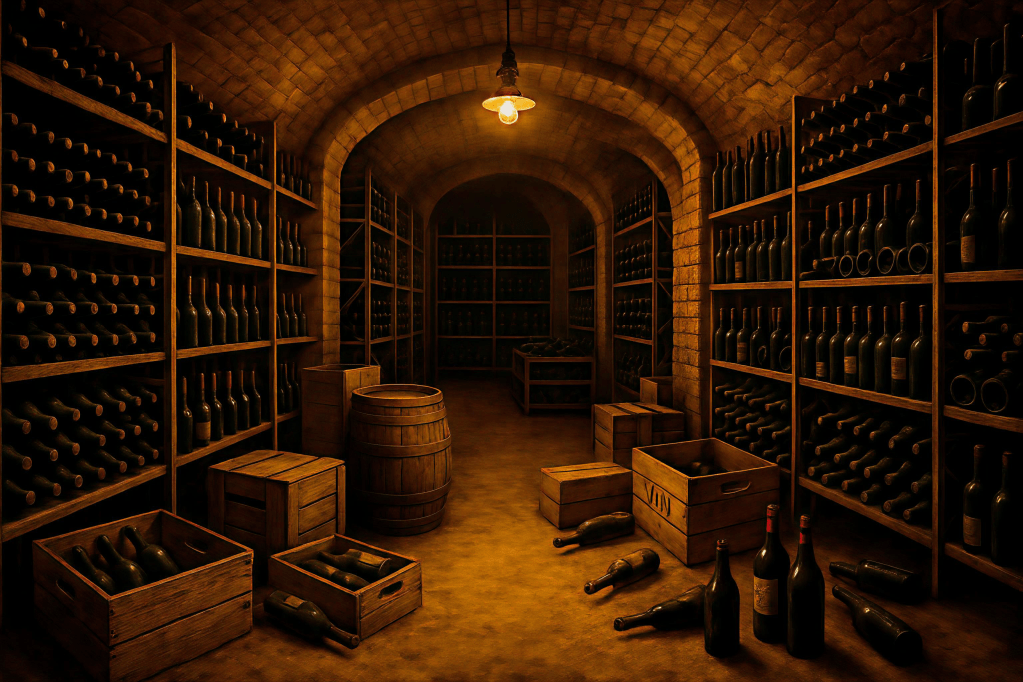
    We gathered what remained of the cell—Marcel, Lucien, Colette, Élise, me—in a wine cellar beneath a restaurant in the 12th that had closed months ago but whose owner still held the key.

    “It’s leverage,” Marcel said. “Weber knows Bernard is protected as culturally significant. He can’t just disappear him. So he’s arrested on other charges, waiting to see who comes asking questions.”

    “Me,” Élise said. “He’s waiting for me.”

    “Or for us,” I added. “To see if Bernard’s arrest triggers a response. If people mobilize. If networks activate.”

    “So we do nothing?” Lucien’s voice was tight.

    “We do what we can without exposing ourselves.” Marcel looked at Élise. “You go through official channels. Perfume business losing its director. Request to see him. Bring lawyers if you can find them. Make it visible, bureaucratic, boring.”

    “And if that doesn’t work?”

    “Then we consider other options.”

    But we all knew what “other options” meant. Trade. Bargain. Sacrifice someone to get someone back.

    The arithmetic of resistance, again.


    Élise tried official channels for a week. Applications to see Bernard. Requests through the perfume guild. Letters to German cultural authorities citing Hartmann’s previous protection orders.

    Nothing worked. Bernard remained held at French police headquarters, technically not in German custody but effectively untouchable.

    Then, on February 12th, a message arrived at the closed restaurant—delivered by a street child who vanished before anyone could ask questions.

    The note was typed, signed only with an initial:

    Mademoiselle Garnier: Your father is well. He could be released. In exchange for information about British intelligence operations in Paris. Specifically: confirmation that the English importer Miles Penbury is working for British intelligence, and details about his network. You have 48 hours to consider. Contact will be made. —W.

    Weber knew my name. But he wanted confirmation—proof that I was more than just an importer. Proof he could use. Enough to use Bernard as bait to force that confirmation.

    “They’ll torture him,” Élise said, her voice hollow. “If I don’t give them you, they’ll torture Papa until he tells them himself.”

    “He doesn’t know enough to give them me,” I said. “He knows I’m an importer. That we work together. Not that I report to London.”

    “He’ll invent something under torture. Everyone does. Whatever they want to hear, he’ll say it just to make it stop.”

    She wasn’t wrong.

    “So we have choices,” Marcel said slowly. “One: Miles disappears. Uses his false papers, leaves Paris, removes himself as a target.”

    “That abandons the cell,” Lucien objected. “Abandons all the work.”

    “Two: We let them have Bernard. He’s old. He’s already been imprisoned once. We calculate that losing him protects the rest of us.”

    “No.” Élise’s voice was flat. “We’re not doing that arithmetic with my father.”

    “Three,” Colette said quietly, “I tell Weber something. Feed him a partial truth. Confirm Miles is an operative but claim he works for someone else. Free French. Americans. Anything that redirects.”

    “That puts you under interrogation,” I said. “He’ll want proof. He’ll want details you can’t provide.”

    “Then I’ll invent them. I’ve been inventing things for Weber for months.”

    “Until you can’t anymore. Until he breaks you and you give him everything real.”

    We sat in the wine cellar, surrounded by empty bottles and the smell of fermentation, calculating who was expendable and who wasn’t.

    I thought about Rupert’s letters. About God using what He doesn’t condone. About whether any of this mattered or if we were just people making terrible choices in a world where all choices were terrible.

    “There’s a fourth option,” I said finally. “I turn myself in. Confirm what Weber suspects. But negotiate. My intelligence work in exchange for Bernard’s release. Give Weber what he wants—a British operative—but alive, able to be interrogated, potentially useful.”

    “That’s a death sentence,” Marcel said.

    “It’s a trade. Weber wants confirmation that British intelligence is operating in Paris. I give him that. He gets to claim victory, close a case, look efficient. In exchange, Bernard goes free.”

    “And then he interrogates you. For months. Until you’ve told him everything about everyone.”

    “I’ll hold out as long as I can. Long enough for you to dismantle and disappear. By the time I break—and I will break—there’ll be nothing left to give him.”

    “Except us,” Lucien said. “He’ll get names eventually. Marcel’s, mine, Colette’s, Élise’s.”

    “Only if you’re still here. If you’re using those names. If the network still exists.” I looked at each of them. “This buys you time to scatter. To become other people. To disappear so completely that whatever I tell Weber leads nowhere.”

    Élise was crying silently, her face composed but tears running down her cheeks. “I can’t ask you to do this.”

    “You’re not asking. I’m offering. Your father was saved once because Hartmann intervened. This time, I can intervene. It’s math. One older man for one operative. Weber accepts that trade.”

    “What about London?” Marcel asked. “What about your handlers? Won’t they consider this a betrayal? Giving up an agent?”

    “Pemberton will understand. I’m already compromised. Already suspected. This just confirms what Weber probably knows. And it protects the rest of you.”

    We argued for another hour, going in circles, always returning to the same impossible equation. Someone had to be sacrificed. The only question was who.

    In the end, it was Colette who made the decision.

    “Miles goes to Weber. Offers the trade. Bernard for confession. But—” She looked at me. —”I go with you. Not as operative. As your contact. Your fashion world connection. I confirm I’ve been feeding you information from German events. That makes your confession complete. Gives Weber two prizes instead of one.”

    “Colette—”

    “I’m already too close to Weber. Already under suspicion. This puts me in a position where I can shape what he learns. Control the narrative. Protect the others.”

    “By sacrificing yourself.”

    “By buying time. Like you said. Time for them to scatter. To disappear. To make whatever we tell Weber useless.”

    It was martyrdom disguised as strategy. We all knew it. But it was also the best option we had.


    We spent two days preparing. Destroying documents. Moving materials. Creating exit plans for Marcel, Lucien, and Élise. They would scatter: Marcel south, Lucien to Fontainebleau, Élise to Normandy with her father once he was released. They would take Véronique’s papers, become other people, disappear into the French countryside until the war ended.

    If it ended.

    If any of us survived to see it.

    I wrote a letter to Rupert. Not explaining what was happening—operational security even now—but saying goodbye in the only way I could:

    Rupert,

    I don’t have much time. Something is happening that I can’t explain. But I wanted you to know: I’ve been reading. Thinking. Praying, after a fashion. I’m not there yet—not where Antoine is, not where you are. But I’m not where I was either.

    If God is real—if He makes appointments like you say—then maybe He’s been making one with me. In the darkness. Through the loss. I’m not ready to say yes. But I’m not saying no anymore.

    Thank you for the letters. For praying. For not giving up on someone you barely know.

    If I don’t write again, know that the seeds you planted grew. Maybe not into faith yet. But into something. Into possibility.

    —M.

    I left it with Marcel to post after I was gone.


    We walked into Weber’s trap on February 16th, 1941.

    Not at Avenue Foch. At the French police headquarters where Bernard was held. I sent a message through official channels: Miles Penbury requesting meeting with Sturmbannführer Weber regarding detained French citizen Bernard Garnier.

    Weber received me in a commandeered office on the third floor, Colette with me as agreed. He sat behind a desk that had belonged to a French inspector, looking exactly as I’d expected: slim, elegant, intelligent eyes that catalogued everything.

    “Monsieur Penbury. At last. And Mademoiselle Marchand. How convenient that you both came.” He gestured to chairs. “Please. Sit. Let’s discuss this trade you’re proposing.”

    I sat. Colette remained standing, her model’s posture perfect, her face unreadable.

    “You have Bernard Garnier,” I said. “I’m offering a trade. His release in exchange for information.”

    “What information?”

    “Confirmation that I’m a British intelligence operative. That I’ve been using my import business as cover for espionage. That Mademoiselle Marchand has been my contact in the fashion world, providing intelligence about German activities.”

    Weber leant back, studying us both. “You’re confessing.”

    “I’m negotiating. You suspect this already. I’m confirming it. Giving you what you want: a British spy, confessed, ready for interrogation. In exchange, Bernard Garnier goes free. He’s an old man. He’s not involved in intelligence. He’s simply my business partner’s father.”

    “How altruistic. The spy trading himself for an innocent.” Weber smiled without warmth. “Except Monsieur Garnier isn’t innocent, is he? He was arrested once before for harbouring refugees. “And his daughter—has been quite useful to you, hasn’t she? Her perfume formulas. Her laboratory access.”

    “No,” Colette said sharply. “Élise knows nothing. Neither does Bernard. I’m Miles’s only French contact. Everything came through me.”

    “Really? How efficient. One model providing all the intelligence about German officers, their wives, their conversations, their movements.” Weber stood, walked to the window. “Let me tell you what I think. I think there’s a network. Small, careful, but real. I think you, Monsieur Penbury, are the British connection. I think Mademoiselle Marchand is your access to German social circles. But I think there are others. A tailor, perhaps. An artist. More people who’ve been very careful to seem irrelevant.”

    “Believe what you want. But the trade is simple: me for Bernard. Confirm it, and I’ll answer your questions. All of them.”

    Weber returned to his desk, pulled out a file, opened it. Inside were photographs. Surveillance photos. Marcel entering his shop. Lucien at a gallery. Élise at her laboratory.

    Antoine, standing on a street corner, smoking.

    “Your network,” Weber said. “I’ve been building this file for months. Since your courier was released. Since my colleague, Captain Hartmann, was transferred for being too sympathetic to French cultural preservation.” He smiled. “Did you think I didn’t notice? That I couldn’t connect the pieces? I’ve known since December. I’ve simply been waiting.”

    “Waiting for what?”

    “For you to panic. To make mistakes. To confirm everything through your actions.” He closed the file. “And now you’ve walked in voluntarily. With Mademoiselle Marchand. Offering a trade. Confirming exactly what I suspected.”

    It was a trap within a trap. We’d walked into it thinking we were making a sacrifice play. But Weber had been ten steps ahead, using Bernard’s arrest to force exactly this: confirmation through our own desperation.

    “So,” Weber said. “No trade is necessary. I already have Bernard. I’ll have you both. And soon, I’ll have the others. The only question is whether you cooperate, making this easier for everyone, or whether we do it the difficult way.”

    Colette moved before I could stop her. Pulled a small pistol from her handbag—where had she gotten a pistol?—aimed it at Weber.

    “You’ll release Bernard. Now. Or I’ll shoot you.”

    Weber didn’t flinch. “No, you won’t. Because the moment you fire, guards will come. You’ll be arrested. And everything you’ve tried to protect will be exposed immediately.”

    “Maybe. But you’ll be dead.”

    “Perhaps. But my files remain. My orders remain. The arrests will happen regardless. Shooting me accomplishes nothing except your immediate execution.”

    They stared at each other, Colette’s hand steady on the gun, Weber’s face calm, and I realised we’d lost. Completely. Thoroughly. There was no trade. No sacrifice play. No saving anyone.

    Just Weber’s patient dismantling of everything we’d built, and us walking into it like fools.

    “Put the gun down, Colette,” I said quietly.

    “No.”

    “Put it down. He’s right. Shooting him doesn’t save anyone.”

    Her hand trembled slightly, the first crack in her composure. “I can’t let him win.”

    “He’s already won. Put it down.”

    She lowered the gun slowly, and Weber gestured. Guards entered immediately—they’d been waiting outside the door, of course—and took the weapon.

    “Mademoiselle Marchand,” Weber said, “you’re under arrest for threatening a German officer. Monsieur Penbury, you’re under arrest for espionage against the German Reich. Both of you will be transferred to Avenue Foch for interrogation.”

    He turned to the guards. “Send word to arrest the tailor, Marcel Duval. The painter, Lucien Moreau. The perfumer, Élise Garnier. And Antoine Moreau—bring him in for additional questioning about his uncle’s activities.”

    “No,” Élise said from the doorway. We hadn’t seen her enter, hadn’t known she’d followed us. “Please. They’re not involved. It’s just Miles and Colette. Just them.”

    Weber looked at her with something that might have been pity. “Mademoiselle Garnier. You’re under arrest as well.”


    They separated us immediately. I was taken to Avenue Foch in a closed truck, no windows, no idea where Colette or Élise had been taken. The building smelt of bureaucracy and fear—paper and sweat and the particular staleness of air that never fully circulates.

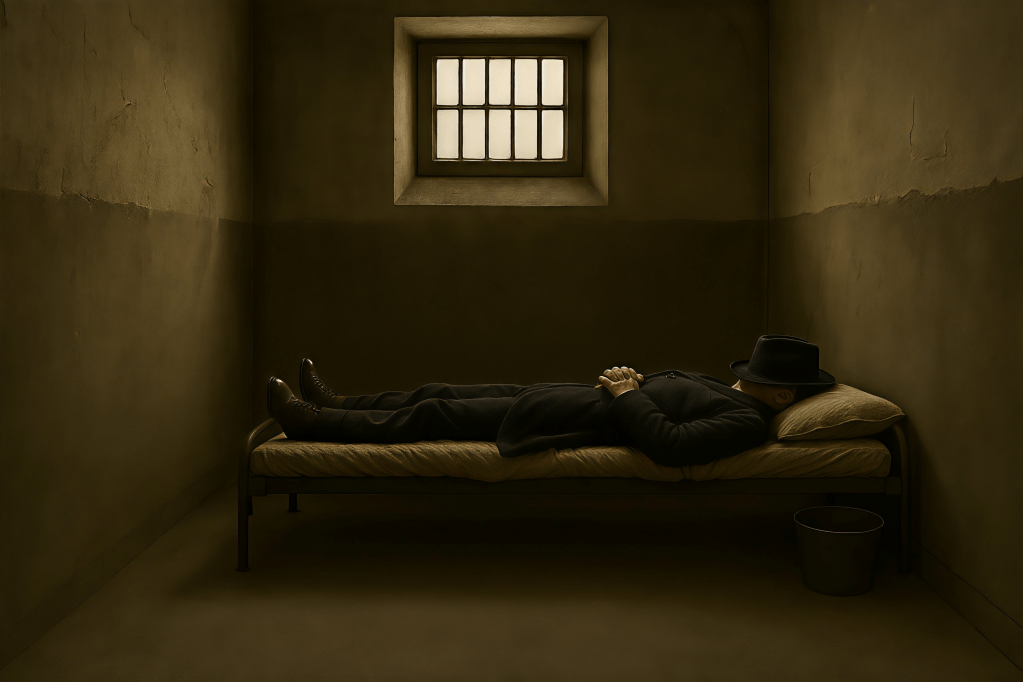
    I was put in a cell. Small. Cold. A cot, a bucket, nothing else. And I waited.

    Hours. Days. I lost track. They brought food occasionally. Water. No one spoke to me. No one asked questions. Just isolation and cold and the slow dissolution of certainty.

    On the third day—or maybe the fourth—a guard brought me paper and a pencil.

    “Write,” he said in German. “Your confession. Everything. Who you worked for. Who you worked with. What information you sent to London. Be thorough. Be honest. It will go easier for you.”

    I stared at the paper for hours. Thinking about what to write. What to protect. How long I could hold out before they moved from isolation to more active interrogation.

    I thought about Antoine, who’d been held here and been sustained by God. Who’d felt held through darkness.

    I thought about Rupert’s letters. About God working through what He doesn’t condone. About whether any of this mattered.

    And I prayed. Not eloquently. Not with faith. But with a desperation that might, eventually, become faith if I survived long enough:

    If you’re there. If you’re sovereign like Antoine says. If You make appointments like Rupert claims. Make one now. Not to save me. I’m probably done. But to save them. All of them. Marcel, Lucien, Antoine—let them scatter before Weber finds them. Bernard, Colette, Élise—let them survive. Let this mean something.

    The only answer was silence and cold and the blank paper waiting for confession.

    But I didn’t write. Not that day. Not the next. Not until they made me. And by then, I hoped, it would be too late for the others.

    I hoped they’d scattered.

    I hoped they’d disappeared.

    I hoped my silence was buying them time.

    Even as I knew that hope, like everything else in occupied Paris, was probably just another form of faith I didn’t yet fully possess.


    On the fifth day—or perhaps the sixth, I’d lost count—a different guard brought breakfast. As he set down the tray, he said casually:

    “The old perfumer. Garnier. Heart gave out during questioning. Died yesterday morning. Doctors tried, but—” He shrugged. “Too old. Too weak. These things happen.”

    He left before I could respond.

    I sat on the cot, bread untouched, and felt the room tilt.

    Bernard. Dead.

    The man I’d traded myself for. The catalyst that had brought us to Weber’s office. The trap we’d walked into thinking we were making a sacrifice play.

    Dead anyway.

    Heart failure. Age. Exhaustion. The arithmetic of resistance: one elderly perfumer minus his protection equals death in German custody.

    I’d accomplished nothing. Just confirmed what Weber already suspected, handed him Colette and Élise in the process, and Bernard had died regardless.

  • The Balcony – The Cost

    The Balcony – The Cost

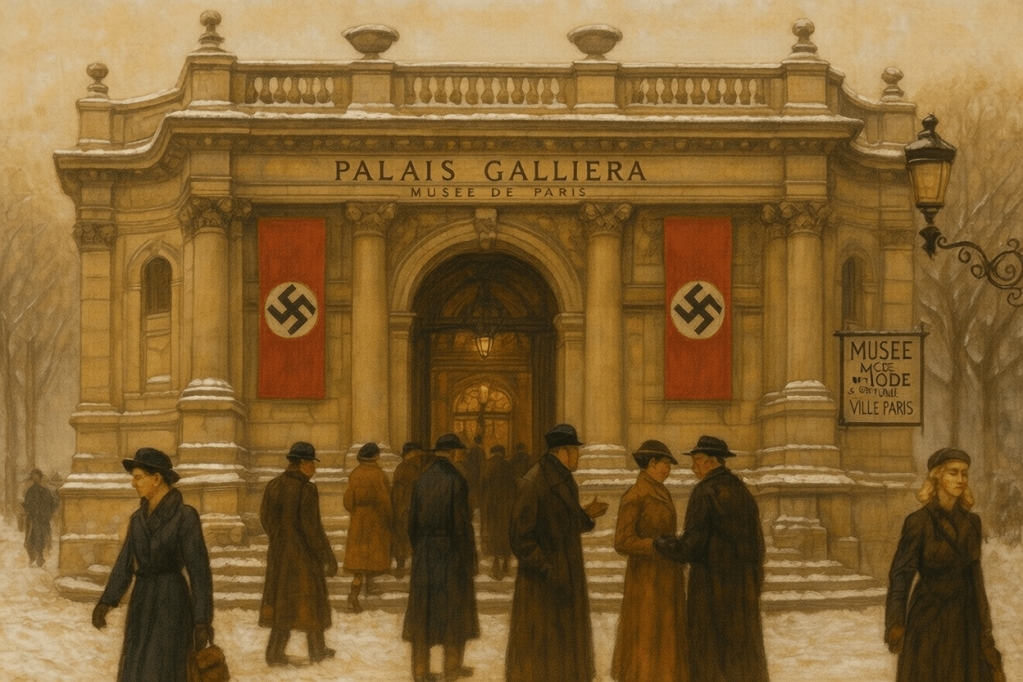
    Paris fashion show at the Palais Galliera, under German occupation 1939

    The Cost

    Episode 8: The Cost

    Paris, October—December 1940   
    …as remembered in London, October 1946


    Catherine Wells broke on the fourth day.

    I didn’t know this when it happened. None of us did. We were scattered, maintaining dead drops, communicating through messages left in agreed locations and picked up hours later. The system was slower, more cautious, designed to survive exactly what was happening: one of us in Avenue Foch, Weber’s patient questions stripping away layers of cover until nothing remained but truth.

    The news came through Hartmann, delivered via a note left at the wine merchant’s shop where we’d been meeting in the 5th arrondissement. The merchant’s cousin—a woman who asked no questions and remembered nothing—handed me a folded paper when I came to inspect a supposed shipment of Burgundy.

    She gave them a name. Not yours. Not the cell. But someone connected. A gallery owner in the 7th who facilitated meetings between British agents. Weber has arrested him. Two others from his network. She’s still talking. Move everyone. Again. —K.H.

    I burnt the note in an alley behind the shop, watching paper curl and blacken, and thought about how Catherine had lasted longer than I’d expected. Four days before breaking. Four days of isolation and cold and Weber’s methodical dismantling of resistance.

    Most people broke faster.

    She’d been brave. And bravery hadn’t mattered.


    We met that night in yet another location: an apartment above a pharmacy in the 11th arrondissement that belonged to Marcel’s second cousin, a woman who’d moved south in June and left her key with family. Empty rooms. Dust. The smell of abandonment.

    All of us came separately. Marcel first, then Élise, then Lucien. Colette arrived last, wearing a shapeless coat that made her invisible, her face drawn and older than her twenty-seven years.

    “Weber knows,” I said without preamble. “Catherine broke. Gave him a gallery owner. The man’s arrested along with his network.”

    “Which gallery?” Marcel asked.

    “She didn’t know specifics. Hartmann said 7th arrondissement. Someone who facilitated meetings.”

    “Madame Rousseau?” Lucien’s voice was tight.

    “Possibly. Or someone else. There are a dozen galleries in the 7th that handle discreet business.”

    “We should warn her,” Élise said.

    “And reveal we know about the arrests? That we have intelligence sources inside German command?” I shook my head. “No. If she’s the one, she’s already arrested. If she’s not, warning her makes her suspicious.”

    “So we do nothing,” Lucien said bitterly. “Let people get arrested because contacting them is too dangerous.”

    “Yes. That’s exactly what we do.”

    He stood, walked to the window, looked out at the dark street. “This is what we’ve become. People who calculate who’s worth saving and who’s acceptable loss.”

    “We’ve always been that,” Colette said quietly. “We just didn’t want to admit it.”

    We sat in heavy silence, in an empty apartment that smelt of dust and old perfume, considering what we’d known all along: resistance meant choosing. Who to help. Who to abandon. Who to sacrifice so that others might survive.

    It wasn’t noble. It was arithmetic.


    The next morning, I went to the Galerie Rousseau.

    The shutters were closed. A sign on the door: Fermé jusqu’à nouvel ordre. Closed until further notice.

    I tried the door anyway. Locked. Peered through the window. The gallery was empty—not just of people but of paintings. The walls were bare. The furniture remained but the art was gone, as if someone had systematically stripped the space of everything that mattered.

    A woman sweeping the shop next door saw me looking.

    “The owner was arrested,” she said, not bothering to lower her voice. Occupation had taught Paris that whispers and silence made no difference. “Two days ago. Germans took her and everything in the gallery. Paintings, records, everything.”

    “Do you know why?”

    “Does it matter? They don’t need reasons. They just take what they want.” She returned to her sweeping, the sound of bristles on stone marking the rhythm of a city learning to survive by not caring.

    I walked away slowly, hands in pockets, looking like a disappointed customer rather than someone who’d just lost an ally and safe meeting place. Madame Rousseau, shrewd and careful, had facilitated too many discreet meetings. Had let too many people use her back room for conversations that looked innocent but weren’t.

    Catherine hadn’t known her name. But Weber was methodical. He’d taken the gallery owner Catherine had mentioned, interrogated him, followed the threads. Found Madame Rousseau. Taken her paintings, her records, her freedom.

    She was sixty. She wouldn’t survive Avenue Foch.

    I thought about warning the others, about all the people we’d met through her gallery, about the network of contacts who thought art and commerce made them invisible.

    Then I thought about Lucien’s bitter words: People who calculate who’s worth saving and who’s acceptable loss.

    I went back to my boarding house in the 20th arrondissement and did nothing.

    Because doing nothing was the only way to keep doing anything at all.


    Colette saw Weber three days later.

    Not because she wanted to. Because he sent a car with two soldiers who knocked on her door at eight in the morning and said Sturmbannführer Weber requested her presence for breakfast at the Meurice. The phrasing—requested—made clear it wasn’t a request.

    She came to the empty apartment that night, her hands shaking slightly when she lit a cigarette.

    “He knows about Catherine,” she said. “Talked about her like they were old friends. Said she’d been misguided. Working for the wrong people. That it was tragic she’d chosen violence over cooperation.”

    “Did he mention you?” Marcel asked.

    “Not directly. But he—” She paused. “He asked if I knew any other British agents in Paris. Said the war was going to end soon, that Germany would win, that people who cooperated now would be remembered as practical. People who resisted would be remembered as traitors.”

    “What did you say?”

    “I said I was a model, not a spy. That I knew buyers and designers and people in fashion, but I had no interest in politics.” She drew on her cigarette. “He smiled. Said that was wise. Then he asked if I’d be willing to model for a fashion show the Germans are planning. French-German cooperation. Demonstrating that life continues under occupation. Very civilized. Very proper.”

    “You said yes,” I guessed.

    “I said I’d consider it. That I needed to check my commitments.” She looked at each of us. “But I’m going to say yes. Because saying no means I’m suspicious. And being suspicious means Avenue Foch.”

    “You’re getting too close,” Élise said. “Playing too deep.”

    “I’ve been too close since Berlin. Too deep since I put on that engagement ring for photographs.” She stubbed out her cigarette with more force than necessary. “But what’s the alternative? Run? Hide? Use Véronique’s papers and become someone else?”

    “Yes,” Lucien said immediately.

    “And abandon everything we’ve built? Let Weber win by default?” She shook her head. “No. I’m staying. Modeling their propaganda. Smiling at their officers. Being exactly what they expect: a beautiful French woman who’s chosen cooperation over principle.”

    “That’s not who you are,” Élise said quietly.

    “No. But it’s who I need them to think I am.” Colette stood, gathered her coat. “Weber’s smart. Patient. He suspects everyone and trusts no one. The only way to survive him is to be so boring, so predictable, so obviously non-threatening that he stops watching closely.”

    “That’s not a strategy,” Marcel objected.

    “Yes. And right now, hoping is all I have.”

    She left through the back stairs, disappearing into the October night, and I wondered how long someone could pretend to be harmless before the pretense became real.


    I received a letter from Rupert two days later, delivered through the mysterious channels that had been working all autumn:

    Miles,

    I don’t know what’s happening—your silence suggests something difficult—but I want you to know: loss is not failure. Sometimes faithfulness looks like surviving. Sometimes resistance is just refusing to stop when stopping would be easier.

    I’ve been reading Bonhoeffer’s letters. He’s in Germany now, watching his country destroy itself, trying to decide whether to stay or flee. He wrote: “When Christ calls a man, he bids him come and die.” Not necessarily physical death. But death to safety. Death to comfort. Death to the illusion that we can serve God without cost.

    You’re paying that cost now. I can sense it in what you’re not saying. Remember: the cost is not the same as waste. What you’re losing matters. But it matters because it’s worth losing for something larger.

    Keep praying. Even when prayer feels useless. Especially then.

    The Presslings ask about you. They’re praying too.

    —R.

    P.S. Read the Book of Job if you haven’t. Not for answers. For company.

    I kept the letter in my jacket pocket, pulling it out occasionally to reread. Not because it comforted me—it didn’t. But because it named what I was feeling: the sense of paying costs I couldn’t afford, losing things I couldn’t replace, watching people disappear into Avenue Foch or German arrests or the grinding machinery of occupation.

    Madame Rousseau. Catherine Wells. The gallery owner whose name I didn’t know. The network of people who’d thought art and beauty made them safe.

    All gone. All cost.

    And we remained, scattered and cautious and calculating who was worth saving next time Weber came asking questions.


    The fashion show was scheduled for November 15th, at the Palais Galliera, sponsored by German occupation authorities and featuring French designers who’d chosen cooperation over closure. The invitation list included Wehrmacht officers, Vichy officials, German industrialists’ wives, and carefully selected French society figures who wanted to demonstrate that Paris remained Paris even under swastikas.

    Colette was listed as one of the featured models.

    “It’s propaganda,” Marcel said when we met to discuss it, this time in a storage room behind a printer’s shop in the 15th that printed German occupation notices and therefore had reason for people coming and going at odd hours. “She’s legitimizing occupation. Making it look civilized.”

    “She’s surviving,” I corrected. “And gathering intelligence. She’ll see who’s there. Who’s comfortable with Germans. Which French are collaborating openly.”

    “That’s not worth the cost to her soul.”

    “Maybe not. But that’s her choice to make.”

    We’d been having versions of this argument for weeks. Marcel saw cooperation—even false cooperation—as betrayal. I saw it as tactics. Neither of us was wrong. Neither of us was right.

    The war had made morality into arithmetic, and none of us knew how to calculate correctly.


    I didn’t attend the fashion show. Too visible, too connected to the industry, too likely to be noticed by Weber or his people. But Lucien went, posing as an art critic covering cultural events for a small journal that paid him occasionally for reviews. He stood in the back, took notes, sketched quick impressions of the crowd.

    He came to the printer’s storage room two days later, looking older and more tired than I’d seen him.

    “It was obscene,” he said without preamble. “German officers and their wives sitting in the front row. Vichy officials preening. French designers showing collections like nothing had changed. And Colette—” He stopped. “She was perfect. Beautiful and smiling and gracious. Wore German-approved designs. Made polite conversation with officers during the reception. Played the role flawlessly.”

    “That’s what she’s supposed to do,” Élise said.

    “I know. But watching her do it—” He shook his head. “It looked real. That’s what terrified me. It looked like she actually enjoyed it. Like she’d become what she was pretending to be.”

    “She hasn’t,” I said, though I wasn’t entirely certain.

    “How do you know? How does she know? Where’s the line between pretending to collaborate and actually collaborating? Between playing a role and becoming it?”

    No one answered. Because none of us knew.


    Winter came early that year, bringing cold that settled over Paris like occupation itself—inescapable, grinding, making everything harder. Coal was rationed. Food was scarce. The Germans requisitioned buildings for their own use, displacing French families who had nowhere else to go.

    And we continued our work, such as it was. Marcel stitched codes into the linings of coats for German officers’ wives, embedding intelligence about troop movements overheard during fittings. Élise developed formulas that looked like perfume samples but contained compounds that could reveal hidden inks or corrode documents slowly over weeks. Lucien painted safe, boring pictures and attended galleries where German officers discussed art and, occasionally, military matters they thought no one was listening to.

    I maintained my cover as an importer, though importing had become nearly impossible with borders closed and shipping restricted. I met with German procurement officers, discussed fabric contracts that would never be fulfilled, smiled and nodded and played the role of boring English businessman who cared more about commerce than politics.

    And all of us sent intelligence to London when we could, through methods that grew increasingly dangerous as German security tightened. Dead drops. Coded messages hidden in legitimate correspondence. Occasionally, when absolutely necessary, face-to-face meetings with contacts whose names we didn’t know and wouldn’t remember if arrested.

    It wasn’t glorious. It wasn’t heroic. It was grinding, daily, careful work that accomplished small things and cost everything.


    The call came in late November, just as the first snow began to fall.

    Not a call exactly—a message left at the printer’s shop, written in handwriting I recognised as Hartmann’s:

    Weber has discovered my involvement. He hasn’t arrested me yet—political complications, my family connections—but I’m being transferred. Eastern Front. Punishment disguised as duty. This is my last warning: he’s planning a sweep. Multiple arrests. Before Christmas. Anyone connected to British intelligence, art galleries, fashion industry networks. Dozens of people. He’s been building cases for months. Catherine gave him the first name. Others have given him more. Get out if you can. If you can’t, hide deeper than you’ve ever hidden. —K.H.

    I burnt the note immediately, but the words remained.

    Before Christmas. Multiple arrests. Dozens of people.

    We met that night—all of us, together, for the first time in weeks—in the empty apartment in the 11th. It was too dangerous, too visible, but Hartmann’s warning demanded immediate coordination.

    “We can’t all run,” Marcel said. “Too visible. Too suspicious.”

    “We can’t all stay,” Lucien countered. “If Weber’s planning a sweep, anyone connected to galleries or fashion or British agents is a target.”

    “That’s all of us,” Élise said quietly.

    “Yes.”

    We sat in silence, calculating odds, considering options, knowing that whatever we chose would cost someone everything.

    “I have to stay,” Colette said finally. “If I disappear now, after modeling their show, after having breakfast with Weber—it proves I was hiding something. It puts everyone I’ve ever spoken to under suspicion.”

    “You’ll be arrested,” Lucien said.

    “Maybe. Or maybe I’m too visible now. Too useful as propaganda. Too connected to German approval to arrest without creating problems.” She paused. “I’m gambling that cooperation—false cooperation—has made me too valuable to touch.”

    “That’s not a bet I’d take,” Marcel said.

    “Good thing it’s not your bet to make.”

    I looked at each of them, these people who’d become a cell through accident and necessity, and tried to calculate who could leave and who had to stay. Who was most at risk and who was most valuable. Who we could afford to lose and who we couldn’t survive without.

    The arithmetic of resistance. The cost we’d been paying all along.

    “Marcel,” I said finally. “You can leave. Close your shop. Claim you’re visiting family in the south. Use Véronique’s papers if you need to. You’ve been careful—you’re probably not on Weber’s list.”

    “Probably isn’t certainly.”

    “Nothing is certain. But you have the best chance of getting out safely.”

    He considered this, his face unreadable. Then: “No. I’m staying. My shop, my work, my clients—they’re my cover. Leaving breaks that cover. Makes me suspicious. I stay.”

    “Élise?” I turned to her.

    “I can’t leave. Father needs me. The perfume lab needs me. And—” She paused. “And if I run, Bernard becomes an easy target. Weber will pressure him to find me. I stay to protect him.”

    “Lucien?”

    “My nephew is being watched because of me. If I flee, Antoine becomes a target.” He looked at me. “I stay.”

    I’d known they would. All of them. Because leaving meant abandoning cover, abandoning people, abandoning the work. Because resistance wasn’t just about fighting—it was about remaining. Being present. Refusing to disappear.

    Even when disappearing would be smarter.

    Even when staying meant arrest.

    Even when the cost became unpayable.

    “Then we prepare for the sweep,” I said. “Destroy everything incriminating. Move everything sensitive. Create alibis and cover stories. And—” I looked at each of them. “—we accept that some of us might not survive Christmas.”


    The sweep began on December 10th.

    I wasn’t arrested. Neither was Marcel or Élise or Lucien or Colette. We’d been careful, compartmentalized, protected by covers that held under scrutiny.

    But dozens of others weren’t as fortunate.

    Gallery owners across Paris. Fashion house staff. Perfume distributors. People who’d facilitated meetings or passed messages or simply knew too many foreigners. Weber had been building his cases for months, using Catherine’s initial confession to map networks, following threads, being methodical and patient and absolutely thorough.

    The arrests continued for a week. Each day brought news of more people taken to Avenue Foch. Each night brought the sound of trucks moving through dark streets, carrying prisoners to prisons or deportation or executions.

    Paris learnt to look away. To not notice. To survive by seeing nothing.

    And I stood on the narrow balcony of my boarding house in the 20th arrondissement, looking out at a city under snow and occupation, and prayed prayers that felt increasingly futile.

    Keep them alive. Keep them strong. Don’t let the darkness win.

    Show me how this serves your purposes.

    Show me how cost becomes meaning.

    But the only answer was silence and snow and the distant sound of German trucks rolling through occupied Paris.


    I didn’t see Hartmann before he left. He was transferred quietly, efficiently, shipped east towards a front where German soldiers were discovering that Russia was larger and colder and more determined than they’d expected.

    His last message arrived through the wine merchant, delivered by the cousin who asked no questions:

    I tried to help. I failed more than I succeeded. But I tried. Tell Lucien his paintings are beautiful. Tell Colette she’s braver than she knows. Tell Miles that choosing beauty over ugliness matters, even when beauty loses. Especially then. —K.H.

    I burnt it like I’d burnt all his messages. Then I went to a church in the 18th arrondissement—empty and cold, smelling of incense and stone—and sat alone in a pew, trying to pray, trying to understand.

    Hartmann was gone. Probably to die in Russia, like thousands of other German soldiers who’d been sent east as punishment or duty or the grinding requirements of war.

    The Hartmann Problem—the man who loved beauty but served ugliness—had been solved by removing him from the equation.

    It didn’t feel like a solution. It felt like loss.


    Christmas came quietly to occupied Paris. No celebrations. No joy. Just the mechanical observation of a holiday that felt increasingly irrelevant in a city where Germans celebrated and French endured.

    We didn’t meet as a cell. Too dangerous after the sweep. Too visible. Too likely to draw attention when Weber was still processing arrests and building new cases.

    But on Christmas Eve, a small package arrived at my boarding house, delivered by a street child who vanished before I could ask questions.

    Inside was a bottle of perfume. No label. Just glass and scent.

    And a note in Élise’s careful hand:

    Number 17. The formula you asked about last summer. It reveals hidden messages under heat. Also: it smells like hope. Merry Christmas. We’re still here. —É.

    I held the bottle, feeling its weight, smelling roses and something else—something sharp and clean and impossible to name.

    Hope, Élise had said. It smells like hope.

    I didn’t know if I believed that. But I kept the bottle anyway, hiding it with my false papers and Rupert’s letters and all the other things that could get me killed if discovered.

    Because if hope was a scent, then maybe resistance was a perfume. Something you wore even when no one could see it. Something that lingered even after you were gone.

    Something that persisted despite everything.


    The year ended without ceremony. No fireworks. No celebrations. Just the quiet turning of days into weeks, weeks into months, occupation becoming normalized, resistance becoming routine.

    We’d survived. Lost people. Paid costs. Watched networks collapse and friends disappear and the city we were trying to protect become something unrecognizable.

    And we remained. Scattered and careful and calculating odds and costs and who we might save next time Weber came asking questions.

    It wasn’t victory. It wasn’t even survival exactly. It was just—continuing. Refusing to stop. Being present in the darkness because absence would be surrender.

    I received one more letter from Rupert that December, delivered on the last day of the year:

    Miles,

    Whatever you’ve lost—and I sense you’ve lost much—remember this: God’s economy doesn’t work like ours. In His arithmetic, the cost becomes the means. The sacrifice becomes the purpose. What we lose for Him is never wasted, even when we can’t see how it matters.

    You’re being refined. That’s what this feels like. Not abandonment. Refinement. The dross burning away, leaving something purer behind.

    I know that’s not comfort. But it’s truth. And sometimes truth is all we get until the fire stops burning.

    Keep praying. Keep resisting. Keep being present in the darkness.

    The Presslings are praying. I’m praying. And whether you feel it or not, God is holding you through this.

    Happy New Year. May 1941 bring light you can’t yet see.

    —R.

    I read it on my narrow balcony, watching snow fall over occupied Paris, thinking about costs and purposes and whether anything we’d lost meant anything at all.

    I still didn’t have faith. Not exactly. But I had something. A door opening. A heart softening. A sense that maybe—maybe—the darkness wasn’t winning. Just costing us everything whilst teaching us what everything meant.

    It would have to be enough.

    Because the war wasn’t ending. The occupation was tightening. Weber was building new cases. And we were still here, still working, still refusing to disappear.

    Still paying costs we couldn’t afford for purposes we couldn’t see.

    Still hoping that beauty—small, fragile, hidden beauty—mattered more than ugliness.

    Even when ugliness kept winning.

    Especially then.

  • The Balcony – Collaborator

    The Balcony – Collaborator

    Collaborator

    Episode 7: Collaborator

    Paris, August—September 1940   
    …as remembered in London, October 1946


    Antoine came back on a Tuesday.

    I didn’t know he was free until I saw him standing outside the café on Rue de Buci where I’d been meeting a fabric supplier—legitimate business, documented, boring. He looked thinner, older somehow despite being gone only nine days. He wore the same clothes he’d been arrested in, and his hands shook slightly when he lit a cigarette, a habit I’d never seen him have before.

    I’d been expecting my own arrest for weeks now—a British national in occupied Paris was living on borrowed time—but somehow my import business and Hartmann’s quiet interventions had kept me free. For now.

    I finished my meeting, paid for weak coffee, and walked past him without acknowledgment. Three blocks later, in a narrow passage between buildings where the morning sun hadn’t yet reached, he caught up to me.

    “They let me go,” he said quietly. “Yesterday morning. Just—let me go.”

    “Why?”

    “I don’t know. Weber questioned me for three days. Not torture, not really. Just—sitting in a room. Cold. No sleep. Questions about who I worked for, who I delivered to, what I carried. I told him I was freelance. Just packages. Commercial goods.” He drew on the cigarette with the desperate intensity of someone who’d been denied one. “He didn’t believe me. But he couldn’t prove anything. And then Hartmann came. I heard them arguing through the door. Hartmann said arresting couriers without evidence was inefficient. That I was more useful watched than imprisoned. That releasing me might reveal larger networks.”

    “They’re going to follow you.”

    “Yes.” He looked at me directly. “I’m bait, Miles. They released me to see who I contact. Where I go. Who trusts me enough to use me again.”

    “Then we can’t.”

    “I know.” He ground out the cigarette under his heel. “But I had to tell you. Had to warn you. They’re not guessing anymore. They’re mapping. Watching. They know there’s a network. They just don’t know who’s in it or what we’re doing.”

    “Did you give them anything?”

    “No. God—” He stopped, and something in his face told me the certainty I’d envied had been tested in ways I couldn’t imagine. “I prayed the whole time. Not for rescue. Just for strength. For the ability to keep silent. And He—” Antoine’s voice cracked slightly. “—He held me. I don’t know how else to say it. Every time I thought I’d break, every time Weber pushed, I felt—held. Not saved from it. But sustained through it.”

    I thought about the prayers I’d attempted, awkward and faithless. Thought about Rupert’s letters about God’s presence in suffering. Thought about how different faith looked when it was tested rather than theorized.

    “You should leave Paris,” I said. “Go back to Le Chambon. Stay with your family until this is over.”

    “God is sovereign, Miles. Even over this.” He said it simply, without drama. “If He wants me here, I’m here. If He wants me to die, I’ll die. But I’m not running because Germans are watching.”

    “That’s not courage. That’s stubbornness.”

    “Maybe. But it’s also faith.” He looked up at the narrow strip of sky visible between buildings. “I know they’re watching. I know I can’t courier anymore. But I can still do something. Even if it’s just—being visible. Drawing their attention away from you. From the others.”

    “That’s martyrdom.”

    “No. Martyrdom is dying for something. This is living for something whilst knowing you might die.” He glanced back towards the street. “I have to go. They’ll wonder if I stand here too long. But Miles—be careful. They’re closer than we thought. And they’re patient.”

    He walked away, back towards the sunlit street, and I watched him disappear into the morning crowd of Parisians learning to survive under occupation.

    I didn’t follow. Didn’t contact him again. Didn’t acknowledge his existence.

    Because he was right. He was bait. And the only way to keep the Germans from catching anything was to cut the line completely.


    The cell met that night—what remained of it—in a new location: a storage attic above a wine merchant’s shop in the 5th arrondissement, accessed through a back staircase that smelt of cork and fermentation. Marcel had arranged it through a cousin who asked no questions and remembered nothing.

    All of us came separately, at different times, using different routes. Marcel arrived first, then Lucien, then Élise. Bernard stayed away—too visible, too monitored after his near-arrest. Colette came last, wearing a headscarf and dowdy coat that made her look like a cleaning woman rather than a model.

    I told them about Antoine. About the surveillance. About how the Germans were mapping networks without needing a collaborator.

    “So there was no traitor,” Élise said quietly. “They were just watching.”

    “Yes. Watching patterns. Courier routes. Who delivers where. Who meets whom. They’ve been building a map for months. Antoine’s arrest was them testing whether the map was accurate.”

    “And Hartmann got him released,” Marcel said. “Why?”

    “Because Hartmann understands that sometimes setting bait catches nothing but proves there’s something worth catching.” I looked at each of them. “They know we exist. They don’t know what we are or what we’re doing. But they know enough to keep watching.”

    “Then we stop,” Lucien said. “We scatter completely. Wait for the surveillance to ease.”

    “It won’t ease. Weber doesn’t forget. He’ll watch Antoine for months. Years if necessary. Waiting for one mistake. One contact. One proof that there’s something larger.”

    “So Antoine sacrificed himself,” Colette said. “Drew their attention so we could keep working.”

    “Yes.”

    We sat in silence, in an attic that smelt of wine and old wood, considering what it meant that a nineteen-year-old boy had become a deliberate target to protect the rest of us.

    “His faith held,” I said, surprising myself by mentioning it. “Under interrogation. He said he felt—held. By God. Not rescued, but sustained.”

    Marcel crossed himself, an automatic gesture. Lucien looked away. Élise said nothing.

    Colette studied me. “You sound almost envious.”

    “Maybe I am. That certainty. That sense of being sustained by something larger than yourself.” I paused. “I’ve been reading theology. Letters from someone in London. A man who claims God makes appointments with people. Chooses them. Changes them whether they want it or not.”

    “Do you believe it?” Élise asked.

    “I don’t know. But I’m reading. Thinking. Praying, after a fashion. Which is more than I was doing six months ago.”

    “War makes believers of everyone eventually,” Marcel said quietly. “Or it makes atheists. There’s not much middle ground in occupation.”

    “Which are you?”

    He smiled faintly. “I’m French. We’re Catholic by default and skeptical by nature. I light candles and hope someone’s listening. That’s as much faith as I can manage.”


    The knock came three days later.

    Not on my door. On Lucien’s studio in Montmartre. Two German soldiers and a French policeman, asking questions about his paintings, about his clients, about whether he knew a courier named Antoine Moreau.

    Lucien told them the truth: Antoine was his nephew. Estranged. Hadn’t seen him in years. Different politics, different lives. The Germans searched anyway, found nothing incriminating, left after two hours of methodical inspection.

    But they’d made their point. They were watching not just Antoine, but everyone connected to him. Mapping the family, the associates, the network of relationships that might hide something worth finding.

    “They know about me,” Lucien said when we met two nights later, this time on a balcony behind a boarding house in the 14th arrondissement that Marcel had secured. Not the ample balcony of the Montalembert with its view of Notre-Dame—this was barely wide enough for two people, looking down on a garbage-strewn courtyard where cats fought and rain pooled. But it was outside, exposed to air and sky, and something in me needed that. Needed the feeling of space, of seeing horizon, even if the horizon was just darkened rooftops under German curfew.

    “They searched your studio,” I said. “Did they find anything?”

    “No. I stopped painting coded work months ago. Everything there is clean. But Miles—they asked specifically about Antoine. About whether I’d seen him. Whether he’d come to me after his release.” Lucien lit a cigarette, his hands steadier than Antoine’s had been but his face older, harder. “They know he’s my nephew. They know we’re connected. Which means they’ll keep watching me. Following me. Waiting to see if he makes contact.”

    “He won’t.”

    “I know. But that doesn’t matter. They’ve marked me now. The uncle of the suspicious courier. The painter whose work hangs in galleries where Germans drink champagne and discuss French culture like it’s something they own.”

    “We can move you. False papers. Véronique—”

    “Véronique is gone. Fled before the trap closed. Smart woman.” He drew on his cigarette. “No, I’m staying. Painting my safe, boring pictures. Attending my galleries. Being exactly what they expect: a French artist surviving occupation by being harmless.”

    “While actually doing what?”

    “Nothing. For now. Until they stop watching.” He glanced at me. “That’s the clever thing about releasing Antoine. It doesn’t just compromise him. It compromises everyone connected to him. His family. His associates. Anyone who might trust him. They’ve turned one arrest into a dozen surveillance targets.”

    “Efficient,” I said bitterly.

    “Yes. Weber is very good at his work.” He paused. “Have you heard from Colette? About her dinner with him?”

    “She went last week. Said he was charming. Interested in her modeling career. Asked whether she’d consider working with German fashion houses. Establishing French-German cooperation in the luxury trades. All very civilized. Very proper.”

    “And underneath?”

    “Underneath, he’s circling. Testing. Seeing if she’s useful or dangerous or both.” I looked out at the dark courtyard, the rain-slicked cobblestones catching faint light from distant windows. “She’s playing a game with a man who invented the rules. Eventually, she’ll make a mistake. Or he’ll get impatient. Or both.”

    “Can we extract her?”

    “To where? London’s impossible now. Spain’s closed. Switzerland’s watching borders like hawks.” I shook my head. “She’s in it. Deep. And the only way out is through.”

    We stood in silence, two men on a narrow balcony, looking at a city that had become a prison neither of us knew how to escape.

    “What are you reading?” Lucien asked suddenly.

    “What?”

    “You mentioned theology. Letters from London. What are you reading?”

    I thought about Rupert’s letters, now arriving monthly through channels I still didn’t understand. About the transcribed sermons on Romans. About the quiet, persistent voice suggesting that God was working through darkness without being darkened by it.

    “Reformed theology. Calvinist. God’s sovereignty. Election. The idea that some people are chosen not because they deserve it but because—” I paused. “—because God makes appointments. Removes hearts of stone. Gives hearts of flesh instead.”

    “Do you believe it?”

    “I’m considering it. Which is more than I expected to do.”

    “War changes us,” Lucien said. “Makes us into people we don’t recognise. Antoine came back from Avenue Foch different. Older. You’re different than you were last year. We’re all—” He stopped. “—becoming something we weren’t. Whether that’s good or bad, I don’t know yet.”

    “Antoine says God is sovereign over all of it.”

    “Antoine is nineteen and believes what he was told in a field seven years ago.” Lucien’s voice wasn’t cruel, just weary. “I’m forty and I’ve seen too much to believe in appointments. I believe in choices. In people doing what they can with what they have. In resistance that costs something.”

    “That’s not incompatible with faith.”

    “Maybe. But it’s enough without it.”


    The woman arrived five days later.

    She found me at a legitimate meeting with a German procurement officer discussing fabric imports—tedious, documented, the kind of boring commerce that maintained my cover. When the meeting ended, she was waiting outside the office, leaning against the wall with the casual confidence of someone who belonged everywhere and nowhere.

    She was perhaps thirty-two, lean and sharp-featured, with dark blonde hair cut shorter than was fashionable and eyes that assessed me in the two seconds it took to approach.

    “Miles Penbury,” she said. Not a question.

    “Yes.”

    “Catherine Wells. London sent me. We should talk.”

    We walked to a café three blocks away, said nothing until coffee arrived, waited until the German officers at the next table finished their conversation and left.

    “You’re British intelligence,” I said quietly.

    “Obviously. Pemberton said you’d need support. That your network was compromised. That you’d lost your courier.”

    “We lost Antoine to surveillance. He’s bait now. Watched constantly.”

    “So I heard. Unfortunate.” She stirred her coffee with the indifference of someone discussing weather rather than human catastrophe. “But that’s why I’m here. Fresh face. No connections to your cell. Clean papers. I can move where you can’t.”

    “What’s your cover?”

    “American journalist. Freelance. Writing about life in occupied Paris. The human interest angle. Germans love it—makes the occupation look civilized. Gives me access to places you can’t go.”

    “Where are you staying?”

    “Hotel in the 9th. Nothing fancy. Cheap enough to be believable for a freelancer.” She sipped her coffee. “I’ve been briefed on your operation. Fashion, art, perfume as cover for intelligence gathering. Very clever. Very slow.”

    “Slow keeps us alive.”

    “Slow also keeps you useless.” She leant forward. “Pemberton sent me because London needs actionable intelligence. Troop movements. Supply routes. Command structure. The kind of information that wins wars, not the gossip you get from fashion shows.”

    “The gossip is intelligence. Who’s collaborating. Which businesses are working with Germans. Where money’s flowing. That matters.”

    “Maybe. But it doesn’t stop tanks.” She pulled out a cigarette, lit it without asking permission. “I’m here to accelerate things. Take risks you’re too careful to take. Get information that actually moves needles.”

    “You’ll get caught.”

    “Possibly. But I’ll get something useful first.” She smiled without warmth. “That’s the difference between us, Miles. You’re trying to survive the war. I’m trying to win it.”

    I wanted to argue. To explain that survival was itself a form of resistance. That staying alive and functional and gathering intelligence—even slow intelligence—was valuable. That recklessness got people killed and networks destroyed.

    But I looked at her and saw something I recognised: someone who’d decided dying mattered less than making a difference. Someone who’d calculated the odds and accepted them. Someone dangerous not because she was brave but because she didn’t particularly care whether she lived.

    “What do you need from me?” I asked.

    “Contacts. Introductions to your network. Access to whatever resources you’ve built.”

    “No.”

    “Excuse me?”

    “You’re not meeting my network. You’re not accessing my resources. You work parallel, not integrated. If you get caught—when you get caught—you don’t take us with you.”

    Her eyes hardened. “That’s not how Pemberton described this arrangement.”

    “Then Pemberton doesn’t understand how occupation works. You’re here, fine. You’re operating, fine. But you operate separately. We’ll share intelligence if we find something worth sharing. But you don’t meet Marcel. You don’t meet Colette. You don’t meet anyone whose name you could give up under interrogation.”

    “I wouldn’t talk.”

    “Everyone talks. Weber doesn’t use thumbscrews and racks. He uses isolation and deprivation and time. He’s patient. And eventually, everyone breaks.”

    “You sound afraid.”

    “I’m careful. There’s a difference.”

    She studied me for a long moment, then shrugged. “Fine. Parallel operation. But when I get something big—and I will—don’t expect me to wait for your permission to act on it.”

    “Just don’t get my people killed in the process.”

    “No promises, darling.” She stood, dropped coins on the table. “I’ll be in touch when I have something worth sharing. Try not to die of boredom in the meantime.”

    She left before I could respond, disappearing into the afternoon crowd of Germans and French moving through occupied Paris.

    I sat alone, drinking cold coffee, thinking about how she was going to get someone killed.

    Possibly herself.

    Possibly all of us.


    September arrived with rain that fell for days, turning Paris grey and sodden. The city smelt of wet stone and coal smoke and the particular melancholy of autumn coming early. The Germans consolidated their control: more checkpoints, more papers, more rules about who could be where and when.

    And we adapted. Marcel reopened his shop, taking German officers’ wives as clients, stitching their measurements into ledgers whilst listening to them talk about their husbands’ duties, their frustrations, their gossip. Élise continued her work at Parfums Garnier, developing formulas under German supervision, hiding her real work in plain sight. Lucien painted safe pictures and attended galleries where Wehrmacht officers bought art to send home as proof of their civilized occupation.

    Colette saw Weber twice more. Dinner once. A gallery opening the second time. Both times she returned to report the same thing: he was interested, suspicious, circling closer, testing whether she was ally or enemy or simply someone beautiful who could be useful.

    “He asked about you,” she told me at one of our rare meetings, this time in a church in the 7th arrondissement where we pretended to pray whilst actually talking in whispers. “By name. Asked if I knew an English importer. Miles Penbury. Said he’d heard I’d modeled for buyers from London.”

    “What did you say?”

    “That I knew the name. That you bought from Schiaparelli occasionally. That you were boring and commercial and cared more about fabric quality than fashion.” She paused. “He didn’t believe me. Or rather, he believed it but thought there was more. He’s building a picture, Miles. Connecting dots. You, me, the fashion world, the galleries. He doesn’t know what it means yet. But he’s getting closer.”

    “How much longer can you maintain this?”

    “I don’t know. He wants me to work for him. Officially. Report on people in the fashion industry. Who’s resistant, who’s cooperative, who might be useful. He’s offering money. Protection. The illusion of safety.”

    “Will you say yes?”

    “I don’t know.” She looked at the altar, at the crucified Christ hanging in suffering stillness. “If I say no, he’ll suspect I’m hiding something. If I say yes, I become what I’ve been pretending to be. Actually working for Gestapo. Actually betraying people.”

    “You could give him real collaborators. People who are actually helping Germans.”

    “That’s still betrayal.”

    “Of people who betrayed France first.”

    “Maybe.” She stood, adjusting her headscarf. “But where does it stop? Today I give him names of collaborators. Tomorrow he asks for names of resisters. And eventually I’ll give him those too, because the alternative is Avenue Foch and Weber’s patient questions and isolation until I break.”

    “Then leave. Hide. Use the false papers Véronique made.”

    “And go where? Become someone else? Live the rest of my life as—” She stopped. “No. I’m staying. Playing the game. Hoping I can play it longer than Weber can wait.”

    “That’s not a strategy. That’s a gamble.”

    “Everything is a gamble now, Miles. The only question is what we’re gambling for.”

    She left through the side entrance, and I remained alone in the church, looking at the suffering Christ, wondering if Antoine’s God who sustained through darkness was the same one who let that darkness exist in the first place.

    A letter from Rupert arrived two days later, delivered to my shabby hotel through the mysterious channels that had been working all summer:

    Miles,

    I’ve been praying for you. For your friends. For all of it.

    Here’s what I keep coming back to: God doesn’t promise to prevent suffering. He promises to be present in it. Not as explanation but as companionship. Not as rescuer but as sustainer.

    Perhaps, you’re beginning to understand it. The question isn’t whether God exists—He does. The question is whether you’ll trust Him when He doesn’t perform according to your expectations.

    Sovereignty doesn’t mean God prevents every tragedy. It means He works through them. Uses them. Transforms them into something that serves His purposes even when we can’t see how.

    That’s not comfort, exactly. But it’s truth. And sometimes truth is all we get.

    Keep reading Romans. Especially chapter 8, verses 28-39. Nothing—nothing—separates us from His love. Not even strife. Not even your doubt.

    —R.

    P.S. The Presslings ask about you when we meet. They’re praying too. You’re not alone, even when it feels that way.

    I read it three times, then hid it with the others, a growing collection of theology and pastoral care from a man I’d met once and corresponded with invisibly. I didn’t know who the Presslings were—some prayer group of Rupert’s, perhaps—but the notion of strangers in London praying for me felt less foolish than it would have six months ago.

    I didn’t believe it all. But I kept reading. Kept considering. Kept having conversations with a God I wasn’t sure existed about situations I couldn’t control.

    It wasn’t faith. But it was something. A door opening slowly. A heart of stone beginning to crack.


    Catherine Wells lasted three weeks.

    I didn’t know what she’d been doing—she’d kept her word about operating separately—but on September 24th, she sent an urgent message through a café waiter: Found something big. German supply depot. Meeting location tonight. Bring no one.

    I went to the location: a wine cellar in the 18th arrondissement, accessed through a restaurant that had closed months earlier. The door was unlocked. The stairs descended into darkness that smelt of mildew and old bottles.

    I found her in the cellar, sitting on a crate, smoking calmly.

    “There’s a supply depot in the 19th,” she said without preamble. “Weapons, ammunition, medical supplies for eastern front. Lightly guarded because it’s supposed to be secret. I’ve mapped the schedule. Guards change at midnight. There’s a fifteen-minute window.”

    “For what?”

    “Sabotage. Fire, explosion, something that disrupts their supply chain. Shows them we’re not just passive. That occupation has costs.”

    “That’s suicide.”

    “It’s necessary.” She stood. “I have explosives. Timers. A plan that works. I need someone to create a distraction on the other side of the compound. Draw guards away for five minutes. That’s all.”

    “No.”

    “Miles—”

    “No. You sabotage that depot, they’ll retaliate. Round up hundreds of French civilians. Execute them in reprisal. Turn this into a bloodbath that accomplishes nothing except making Weber tighten control.”

    “So we do nothing? Just watch them stockpile weapons?”

    “We report it to London. Let RAF bomb it if they want. But we don’t sacrifice French civilians for British objectives.”

    “You’re a coward.”

    “I’m realistic. And I’m not helping you commit massacre disguised as resistance.”

    She stared at me, and in her eyes I saw the calculation: whether to try convincing me, threatening me, or simply proceeding without me.

    “Fine,” she said finally. “I’ll do it myself. Alone. And when it works, when we show that resistance is possible, maybe you’ll stop being so damn careful.”

    “Catherine—”

    “Stay out of my way, Miles. I’m done asking permission.”

    She walked past me, up the stairs, out into the night.

    I stood in the wine cellar, surrounded by empty bottles and darkness, knowing I should stop her. Knowing I couldn’t. Knowing that in three days or three weeks she’d be caught and interrogated and killed, and there was nothing I could do to prevent it.

    I thought about praying. About asking Antoine’s sovereign God to protect a woman too reckless to protect herself.

    But the prayer wouldn’t come. Only the certainty that we’d just lost someone, even if she didn’t know it yet.


    The call came from Hartmann four days later. Not to me directly—that would be too visible. But through a note left at the wine merchant’s shop where we’d been meeting: The journalist has been arrested. Weber has her. She hasn’t talked yet but will. Burn everything. Move everyone. Do it tonight. —K.H.

    We scattered within hours. Marcel closed his shop, claimed illness, moved to his cousin’s flat in the suburbs. Lucien left his studio, temporarily relocated to a painter’s colony in Fontainebleau that asked no questions. Élise continued working at Parfums Garnier—too visible to disappear without raising suspicion—but moved everything sensitive out of her lab.

    And I changed hotels again, this time to a boarding house in the 20th arrondissement that rented rooms by the night and recorded nothing in ledgers.

    We didn’t meet for two weeks. Communicated only through dead drops: messages left in agreed locations, picked up hours later, destroyed immediately. Short, coded notes about safety, about status, about the constant fear that Catherine would break and give Weber everything.

    I received another letter from Rupert during this time, brief and somehow exactly what I needed:

    Miles,

    Whatever is happening—and I can sense from your silence that it’s bad—remember: God holds you even when you can’t feel Him holding. Especially then.

    Psalm 139: Where can I flee from Your presence? If I go up to the heavens, You are there. If I make my bed in the depths, You are there.

    Even in Paris. Even in occupation. Even in the moment you think He’s abandoned you.

    He hasn’t. He won’t. He can’t. That’s what sovereignty means.

    —R.

    I kept the letter in my jacket pocket, touching it occasionally like a talisman against despair.

    And late at night, alone in my rented room with its single window overlooking an alley where rats fought over garbage, I prayed. Still without faith. Still without certainty. But with something that might, eventually, become both.

    Keep her alive, I prayed to Antoine’s God. Don’t let her break. Don’t let this destroy what we’ve built.

    And if you’re real—if you’re sovereign over all of this—please, please show me how darkness serves your purposes.

    Because from where I’m standing, it just looks like darkness winning.

    The only answer was silence and the sound of rain on windows and the distant rumble of German trucks moving through occupied Paris.

    But I kept praying anyway.

    And somewhere in London, Rupert Brimble and the Presslings kept praying too.

    It would have to be enough.

    Because it was all we had left.

  • The Balcony – The Fall

    The Balcony – The Fall

    The Fall

    Episode 5: The Fall

    London / Paris, November 1939-July 1940   
    …as remembered in London, October 1946


    The winter of 1939 was the coldest I can remember, though perhaps memory makes it colder than it was. The kind of cold that settles into buildings and bones and doesn’t leave even when spring finally comes. The British called it the Phoney War; the French, drôle de guerre—as if giving it different names would make it less real. As if we could laugh at the absurdity of armies facing each other across borders, waiting, not fighting, preparing for violence that everyone knew was coming but no one wanted to begin.

    The months between October and May felt suspended, neither peace nor war but something in between. Paris tried to pretend. The theaters stayed open. The cafés served watered wine and called it patriotic rationing. The fashion houses prepared spring collections for women who might not live to wear them. And we worked, quietly, in the spaces between what Paris was and what it was about to become.

    I travelled less that winter. The borders were difficult, the questions more pointed, the scrutiny more intense. But I made three trips to London between November and March, carrying messages stitched into jacket linings and shipping manifests that contained intelligence about German industrial movements, about which French businesses were preparing to collaborate, about the machinery of occupation being assembled in Berlin.

    Pemberton grew grayer each time I saw him. His office, which had once smelt of pipe tobacco and old paper, now smelt of something else. Fear, perhaps. Or exhaustion.

    “How much longer?” he asked in February, pouring whisky that was too good for the conversation we were having.

    “Weeks. Maybe days. The spring offensive will come through Belgium and the Netherlands. Around the Maginot Line. It’s what we’ve been saying for months.”

    “We know. Churchill knows. Everyone knows.” He drank. “But knowing and preventing are different things.”

    “Will you evacuate me when it happens?”

    He was quiet for a long time. “Do you want to be evacuated?”

    “I’m asking if I should be.”

    “That’s not the same question, Penbury.” He looked at me over his glass. “You’re useful where you are. You have networks, contacts, cover that will survive occupation. If you leave now, we lose all of that. But if you stay—” He stopped.

    “If I stay, I might not survive to be useful.”

    “Yes.”

    We sat in silence, two Englishmen drinking whisky in an office near Westminster whilst Europe prepared to burn.

    “I’ll stay,” I said. “For now. Until staying becomes dying.”

    “How will you know the difference?”

    “I suppose I won’t. Not until it’s too late.”

    He nodded, unsurprised. “Then be careful. And if you need extraction, send the signal. We’ll do what we can.”

    “Will you?”

    “Probably not. But we’ll try.”

    It was the most honest thing anyone had said to me in months.


    The offensive began on May 10th, just as Colette had predicted six months earlier.

    Belgium. The Netherlands. Luxembourg. The Germans came through the north in a mechanized wave that made the previous war look like a medieval siege. Tanks and aircraft and coordination that shattered the Allied lines in days.

    We gathered in Lucien’s studio on May 12th, listening to radio reports that grew more desperate by the hour. The government was preparing to evacuate. The roads south were clogged with refugees. The hospitals were filling with wounded from battles that hadn’t even reached France yet.

    “How long?” Élise asked.

    “Three weeks,” Marcel said. “Maybe four. Then they’ll be here.”

    “What do we do?”

    “We survive. We hide what needs hiding. We prepare to work under occupation.” He looked at each of us. “And we decide now—tonight—who stays and who goes.”

    “I’m staying,” Antoine said immediately. “This is my country.”

    “You’re nineteen,” Lucien told his nephew. “You could leave. Get to Spain, to England. Fight from there.”

    “I can fight from here.”

    “You can die from here.”

    Antoine met his uncle’s eyes. “Then I’ll die. But I’m not running.”

    It was said with such simple certainty that no one argued. In the months I’d worked with Antoine, I’d learnt that he possessed something the rest of us lacked: an absolute conviction that certain things were right and certain things were wrong, and that choosing right mattered regardless of cost. He’d grown up in Le Chambon-sur-Lignon, a Protestant village in the Cévennes that had been sheltering religious refugees since the 1600s. His parents had taught him to help people. His village had taught him that resistance to evil was not optional.

    And something else—something he rarely spoke about but that shaped everything he did. At thirteen, working in a field outside his village, he’d had what he could only describe as an encounter. With God, he said, though he couldn’t explain what that meant. Just that one moment he’d been alone, and the next he’d known, with certainty that defied explanation, that God was real and had chosen him for something.

    His parents thought it was their teaching finally taking root. Antoine knew better. “They gave me common grace,” he’d said once, in one of our late-night conversations. “Morality, kindness, all that. But this—” He’d gestured vaguely. —”this was different. This was God doing something they couldn’t do. Something I couldn’t do to myself.”

    I’d found it unsettling, that certainty. That claim to knowledge without evidence. But watching him now, volunteering to stay in a city that was about to become a prison, I envied it. To know, without needing to understand. To be certain when certainty was impossible.

    I had no such certainty about anything.


    The Germans were closing in on Paris. On June 10, the government fled to Tours, then Bordeaux. Three days later, the city was declared open—undefended, surrendered without a fight to preserve its architecture and art. A practical decision. A devastating one.

    I stood on my balcony at the Montalembert on the evening of June 13th, watching the last light fade over Notre-Dame, and thought about God for the first time in years.

    Not prayer. Not belief. Just the question that had been forming since winter: If there was a God who saw everything, who supposedly cared about justice and mercy and the suffering of the innocent, where was He now? Where was He when the armies rolled through Europe? Where was He when children died in bombed-out streets? Where was He when evil won and good people prepared to die resisting it?

    The silence from heaven felt like answer enough.

    Marcel found me there, smoking, watching the city prepare for occupation.

    “They’ll be here tomorrow,” he said. “Or the next day.”

    “I know.”

    “We should move the operations completely. No more meetings at my shop, no more using your hotel. Everything underground from now on.”

    “Agreed.”

    He was quiet for a moment, then: “Do you pray, Miles?”

    The question surprised me. Marcel was Catholic the way most French were Catholic—culturally, historically, a matter of identity rather than conviction. I’d never heard him discuss faith.

    “No,” I said. “Do you?”

    “Sometimes. Old habit. Mostly I light candles for the dead.” He paused. “My mother believed. Really believed. She said God watched everything. That He knew every sparrow that fell.”

    “And you?”

    “I think if God is watching sparrows fall, He’s doing a damn poor job of catching them.” He said it without bitterness, just weariness. “But I still light the candles. Just in case.”

    “In case of what?”

    “In case she was right. In case He’s listening. In case—” He stopped. “I don’t know. In case it matters.”

    I thought about Antoine, about his certainty. About Élise, who’d never mentioned God at all. About Bernard, Jewish by birth but secular by choice, who’d told me once that if God existed, He’d abandoned His people in Germany years ago.

    “If there’s a God,” I said quietly, “and He’s watching this—watching what’s about to happen to this city, to France, to all of it—then either He can’t stop it or He won’t. I’m not sure which is worse.”

    Marcel lit a cigarette, the match flaring briefly in the darkness. “Maybe it’s neither. Maybe He’s just waiting.”

    “For what?”

    “For us to do what needs doing. For sparrows to learn to fly.”

    It was the most theological thing I’d ever heard him say. It was also completely unsatisfying.

    We stood there until the cold drove us inside, two men on a balcony, watching a city fall without a shot fired.


    The Germans entered Paris on June 14th, 1940.

    I watched them from my hotel window: columns of soldiers in field grey, marching down the Champs-Élysées with the precision of a parade. Staff cars. Motorcycles. Officers who looked like they were on holiday rather than conquering a nation. The swastika flags went up over government buildings. The clocks were changed to Berlin time. And Paris, beautiful and helpless, became a German city.

    We didn’t meet for three days. Too dangerous, too visible. But on June 17th, Marcel sent word through Antoine: emergency meeting. Lucien’s studio. Everyone.

    When I arrived, climbing the five flights through the now-closed bakery, I found them already gathered. And with them, someone I hadn’t seen since she left for Berlin a year ago.

    Colette.

    She sat in the corner, wrapped in a coat despite the June heat, her face thinner and harder than I remembered. Her hair was different—shorter, darker. She looked like someone who’d learnt to become invisible by disappearing into plainness.

    Her eyes moved across the room as I entered—Marcel, Lucien, Élise, me. Then stopped on the young man by the window. A stranger.

    “Who’s he?” she asked, her voice flat, careful.

    “My nephew,” Lucien said. “Antoine. He joined after you left. He’s—”

    “A courier,” Antoine finished. He didn’t move from the window, watching her with the cautious curiosity of someone meeting a legend he’d only heard about. “I’ve heard about you. About Berlin. About the intelligence you sent.”

    Colette studied him for a moment—assessing, calculating, the way she’d learnt to assess everyone in the past year. Finally, she nodded once. “Then you know more about me than I know about you.”

    “Jesus,” Lucien whispered, looking at Colette properly now. “Colette—”

    “Don’t,” she said quietly, still watching Antoine. “Don’t ask questions yet. Just listen.”

    She’d returned two days ago, slipping across the border from Belgium in the chaos of the refugee exodus. She’d been in Berlin until May, working—sleeping with, she said bluntly—Richter’s assistant and feeding information to British contacts when she could. Then Weber had appeared, had begun asking questions, had started watching her with the focused attention of a man who suspected something but couldn’t prove it.

    “He knew,” she said. “Or suspected. I don’t know how much. But in late April, he told me he wanted me to return to Paris. To continue my modeling work. To be his eyes and ears in the fashion world when the occupation came.” She paused. “He gave me a list of names. People to watch. People to report on.”

    “Were we on it?” I asked.

    “Yes. All of you. Marcel’s shop. Lucien’s studio. Élise’s perfume lab. Even the Galerie Rousseau.” She glanced at Antoine, something shifting in her expression. “There was another name I didn’t recognize when I saw the list. Antoine Moreau. Marked as a courier with questionable delivery patterns. I didn’t know who that was then.” She paused. “Now I do. You’re not connected to anything specific yet in their files—that’s why you’re still valuable. You’re invisible to them.”

    “For now,” Marcel said quietly.

    “For now,” Colette agreed. “But Weber is patient. He’ll keep watching. Keep building cases. Eventually, everyone on his watch list either makes the arrest list or proves themselves innocent.” She looked back at Antoine. “Be more careful than you’ve ever been. Because you’re not invisible forever.”

    She turned to me. “You weren’t on the list, Miles. Which means either he doesn’t suspect you, or he’s watching you differently.”

    “The engagement,” Élise said. “The photograph. Was that real?”

    “No. Performance. Propaganda. Weber wanted it known that a French model was cooperating, was willing to—” She stopped. “It wasn’t real. But it had to look real. And I had to leave before it became something I couldn’t escape.”

    “How did you get out?” Marcel asked.

    “Hartmann.” She said it simply. “He arranged papers. Transit documents. He said Weber was getting too close, that I needed to leave whilst leaving was still possible. He said—” She paused. —”he said to tell you he’s been posted to Paris. Cultural Affairs. He’ll be at the Hôtel Meurice. And he said: ‘The paintings remember everything.’”

    We sat in silence, processing what that meant.

    Hartmann, who’d bought Lucien’s coded paintings. Hartmann, who’d warned us to prepare. Hartmann, who was now in Paris, in uniform, in a position to either protect us or destroy us.

    “Can we trust him?” Antoine asked. It was the first real question he’d posed since she’d arrived—speaking to her directly now, as if her story about Berlin had earned him the right. Marcel had told him about the model in Berlin, the one who’d been gathering intelligence at extraordinary risk. But hearing it was different from seeing her: thin, hard, older than her twenty-seven years.

    “I don’t know,” Colette admitted. “But he got me out. That has to count for something.”

    “Or it’s a long game,” Lucien said. “Establish trust, then spring the trap.”

    “Maybe. But I’m here. I’m alive. And I have this.” She pulled a folded paper from her coat. “Weber’s complete list. Everyone he’s watching. Everyone he suspects. Everyone he plans to arrest once the occupation is established.”

    She spread it on the worktable. Thirty, maybe forty names. Artists, writers, journalists, business owners. Jews and Communists and people whose only crime was being insufficiently enthusiastic about German rule.

    And there, near the bottom: Bernard Garnier. Parfumeur. Suspected of harboring refugees. To be detained for interrogation.

    Élise went pale. “Papa.”

    “He’s not arrested yet,” Colette said quickly. “But he will be. Soon. Weber is methodical. He’ll work through this list systematically.”

    “When?”

    “Days. Maybe a week. The prisons are being reorganized. French prisoners transferred out, German authority established. Once that’s done—” She didn’t need to finish.

    “We have to get him out,” Élise said. “Before they take him.”

    “Out where?” Marcel asked. “The borders are closed. The south is flooded with refugees. Switzerland is sealed. Where do we hide a man the Gestapo is actively looking for?”

    “We hide him in plain sight,” I said slowly. “We make him too valuable to arrest. We make the Germans need him.”

    “How?”

    I thought about Hartmann. About his love of Paris, his desire to preserve what was beautiful. About the words Colette had brought back: The paintings remember everything.

    “We ask Hartmann for help,” I said.


    It took three days to arrange the meeting. Three days of Antoine carrying messages through streets that were filling with German soldiers and French collaborators. Three days of Bernard hiding in Élise’s apartment, burning papers, destroying records, preparing for arrest or flight or whatever came next.

    Finally, on June 20th, word came back: Hartmann would see me. Alone. At the Hôtel Meurice. His office, fourth floor, 2 PM.

    I went carrying a leather portfolio that contained fabric samples and perfume contracts and all the ordinary business of an importer maintaining cover. But underneath, hidden in the lining, was Colette’s list. Weber’s list. The names of everyone he planned to destroy.

    The Meurice had been transformed. Where once it had hosted wealthy tourists and Parisian society, it now housed German command. Officers moved through the lobby with the casual authority of conquerors. Secretaries typed. Telephones rang. The machinery of occupation humming efficiently.

    Hartmann’s office was smaller than I’d expected: a converted hotel room with a desk, filing cabinets, and windows that looked out over the Tuileries. His rapid commission—student to Hauptmann in barely a year—wasn’t unusual for men with his credentials. The Wehrmacht was expanding Cultural Affairs offices across occupied territories, and they needed educated specialists who understood art, architecture, and the diplomatic nuances of preservation. University men with doctoral work and language skills were being fast-tracked into these positions. Hartmann’s Sorbonne pedigree made him ideal for Paris.

    He stood when I entered, still in uniform, still wearing wire-rimmed glasses, still looking like someone who’d rather be reading Baudelaire than administering conquest.

    “Monsieur Penbury.” He shook my hand. “It’s been a long time.”

    “Over a year.”

    “Yes. Much has changed.” He gestured to a chair. “Coffee? It’s real. One of the few privileges of occupation.”

    “Thank you.”

    He poured from a silver service that probably belonged to the hotel. We sat across from each other like businessmen discussing contracts, not two men who knew too much about each other’s secrets.

    “You stayed,” he said. “I thought you might have evacuated.”

    “I have business here.”

    “Business.” He smiled faintly. “Yes. That’s one word for it.” He removed his glasses, cleaned them. “I helped Mademoiselle Marchand leave Berlin. Did she tell you?”

    “She did.”

    “Weber was becoming… interested. Too interested. I thought it best she return to Paris before questions became accusations.” He put his glasses back on. “She’s very brave. Or very foolish. Possibly both.”

    “She said you remember the paintings.”

    “I do. I have them still, in my apartment in Munich. I look at them when I need to remember why I’m doing this work.” He paused. “Preserving Paris. Protecting what’s beautiful. Trying to be the man who loved this city rather than the man who conquered it.”

    “It’s not easy, I imagine.”

    “No. It’s not.” He stood, walked to the window. “I have a problem, Monsieur Penbury. My commanding officer believes in efficiency. In control. In making examples. He’s Gestapo, transferred from Poland, and he has… strong opinions about how occupation should be administered.”

    “Weber.”

    “Yes.” He turned. “You know about him.”

    “We know he has a list. People he plans to arrest.”

    “He has many lists. This is one of his more moderate projects.” Hartmann returned to his desk. “I’m Cultural Affairs. My job is to preserve Paris’s cultural heritage. Art, architecture, museums, galleries. And by extension, the people who create and maintain that culture. Artists. Writers. Craftsmen. People who make Paris what it is.”

    “Perfumers,” I said quietly.

    “Yes. Perfumers.” He looked at me directly. “Bernard Garnier is on Weber’s list. I’ve seen it. ‘Suspected of harboring refugees.’ Which probably means he did harbour refugees, and now Weber wants to make an example.”

    “Can you stop it?”

    “Perhaps. If I can argue that Parfums Garnier is culturally significant. That French perfume is part of Paris’s identity. That arresting Bernard Garnier would damage the very culture we’re supposed to be preserving.” He paused. “But I need leverage. I need proof that his work matters. That losing him would be a genuine loss to French cultural heritage.”

    “I can provide that. Letters from London buyers. Contracts. Testimony about the significance of French perfume to international trade.”

    “That would help. But it’s not enough. Weber wants blood. He wants to demonstrate German authority. If I deny him one target, he’ll simply choose another.”

    We sat in silence, both understanding what he was saying: saving Bernard meant condemning someone else.

    “How do we do this?” I asked finally.

    “You provide me documentation. I file reports. I make the case that certain individuals are too valuable to arrest. I route it through channels, bury it in bureaucracy, make Weber’s list get lost in the machinery of occupation.” He paused. “It won’t save everyone. But it might save some.”

    “That’s not much.”

    “No. But it’s what I can offer.” He looked tired suddenly, older than his thirty-eight years. “I’m trying, Monsieur Penbury. To be the man who protected Paris. To make small choices that matter in a war where most choices don’t matter at all. But I’m also a Wehrmacht officer. I follow orders. I serve a regime I don’t believe in. I’m complicit in conquest.”

    “The Hartmann Problem,” I said.

    He smiled faintly. “Yes. That’s still what I am.”


    We worked through the afternoon, Hartmann and I, creating the paperwork that would make Bernard Garnier too valuable to arrest. Contracts, letters, statements about the economic and cultural significance of French perfume. It was bureaucracy as resistance, paperwork as weapon.

    As I was leaving, Hartmann stopped me at the door.

    “Monsieur Penbury—Miles—you should know. Weber is watching you. Not actively yet, but you’re on his awareness list. He knows you travel. He knows you have connections. He suspects you’re more than an importer.”

    “What should I do?”

    “Be exactly what you claim to be. Be boring. Be commercial. Be someone whose biggest concern is whether the spring shipments will be delayed.” He paused. “And be careful who you trust. There are people in Paris who will trade information for safety. For ration cards. For the illusion of German favour.”

    “Are you one of them?”

    “I don’t know yet,” he said honestly. “I’m trying not to be. But war makes traitors of everyone, given enough time and pressure.”


    Bernard was never arrested. Hartmann’s paperwork worked its way through channels, and within days Bernard Garnier was listed as a protected cultural asset, essential to maintaining Paris’s luxury goods industry. He was to report weekly to German authorities, to keep detailed records of his work, to accept German oversight of his business.

    But he was alive. And he was free.

    “Thank you,” he said when we met in Élise’s apartment three days later. He looked older, grayer, but his hands were steady. “You saved my life.”

    “Hartmann saved your life. I just carried papers.”

    “Then thank him for me. If you see him.”

    “I will.”

    But I wondered, even as I said it, whether I should be thanking a man who was also responsible for the occupation that made saving necessary. Whether gratitude was appropriate for someone who could only protect by being part of the system that threatened.

    The Hartmann Problem, still unsolved.


    The cell regrouped slowly through late June. Colette recovered in Lucien’s studio, sleeping twelve hours a day, eating mechanically, slowly returning to the world. Antoine continued his courier work, now more dangerous with German checkpoints and patrols. Marcel adapted his tailoring business, taking on German officers’ wives as clients whilst stitching resistance into their hems.

    And I maintained my cover, the boring English importer, discussing fabric contracts and perfume shipments whilst watching Paris transform into something unrecognizable.

    On June 28th, exactly two weeks after the Germans arrived, Colette came to my hotel. She looked different—rested, harder, more like herself and less like the ghost who’d returned from Berlin.

    “I need to tell you something,” she said, standing on my balcony, looking towards Notre-Dame. “About Weber.”

    “What about him?”

    “He’s coming to Paris. Permanently. He’s been assigned here. Gestapo headquarters, overseeing security and counterintelligence.” She paused. “And he asked about me specifically. He wants to know if I made it back safely. If I’m continuing my modeling work. If I’m—” She stopped.

    “If you’re available,” I finished.

    “Yes.”

    “What will you do?”

    “What I have to. See him. Let him think I’m considering his attention. Feed him information that’s true enough to be valuable and false enough to protect us.” She looked at me. “I’m going to be his asset, Miles. Or let him think I am. It’s the only way to stay close. To know what he’s planning.”

    “That’s incredibly dangerous.”

    “Everything is dangerous now. This way, at least the danger is useful.”

    I thought about Hartmann, about the choices we all made in service of survival. About how resistance required becoming someone you didn’t want to be.

    “Be careful,” Élise said.

    “There’s no such thing as careful anymore.” Colette stood, gathering her coat. “There’s only useful or dead. I’m choosing useful for as long as I can.”

    She moved toward the door, paused at the threshold, then turned back to look at Antoine.

    “You stayed in Berlin for a year,” Antoine said quietly. “Alone. Gathering intelligence while sleeping with the enemy. That’s braver than anything I’ve done.”

    Colette looked at him properly then, reassessing. “You’re how old?”

    “Nineteen.”

    “Then you have time to catch up.” She almost smiled, though it didn’t reach her eyes. “Or better—time to be smarter than I was. Don’t volunteer for things you can’t take back.”

    “I’m a courier,” Antoine said simply. “I already have.”

    “Couriers can disappear. Change routes. Become someone else.” She paused. “What I did—what I became in Berlin—that doesn’t wash off. I’ll see Weber in my sleep for the rest of my life. However long that is.”

    “Then it mattered,” Antoine said with that simple certainty that defined him. “If it cost you that much, it mattered.”

    Colette studied him for a long moment. Then she looked at me. “Keep him safe, Miles. He still believes things matter. Don’t let this city take that from him.”

    “I’ll try.”

    “Don’t try. Do it.” She left before I could respond, and I watched her disappear into the June heat, leaving us with the knowledge that everything had just become more dangerous.


    July arrived with heat that settled over the city like occupation itself: inescapable, oppressive, making everything harder. The Germans established curfews and checkpoints and the constant paper-checking that would define life under their rule. Food grew scarce. Wine grew scarcer. The black market flourished.

    And slowly, the resistance organised.

    Not us alone—we were too small, too focused on intelligence gathering and careful observation. But others. Communists and Catholics and ordinary French citizens who decided that occupation was intolerable. They printed illegal newspapers. They helped British soldiers escape. They committed small acts of sabotage that accomplished little but meant everything.

    Some of them got caught. Some of them died. And we watched, and learnt, and tried to be more careful than they’d been.

    It was during this time that Antoine said the thing I couldn’t forget.

    We were in Lucien’s studio, late at night, watching German patrols move through the streets below. The conversation had turned, as it often did, to the impossibility of what we were trying to do. The odds against us. The likelihood that we’d all be dead within a year.

    “I don’t understand how you do it,” I said to Antoine. “How you stay certain. How you believe that any of this matters when everything keeps getting worse.”

    He was quiet for a long moment. Then: “I believe God is real. That He sees everything. That He chose me, in a field when I was thirteen, for reasons I don’t understand. And if He chose me for this—for being here, for helping people, for resisting evil—then it matters. Even if I die. Even if we all die. It matters because He says it does.”

    “That’s not an explanation.”

    “No. But it’s true anyway.” He looked at me. “You want proof. Evidence. Reasons. But sometimes God just—” He gestured vaguely. “—does things. Chooses people. Makes appointments. And you either believe it happened or you don’t. I can’t convince you. I can only tell you: it happened to me.”

    “And that’s enough? That certainty?”

    “It has to be. Because without it, this—” He gestured at the city, at the occupation, at all of it. “—this is just darkness. Just evil winning. But if God is real, if He’s working even when we can’t see it, then maybe the darkness doesn’t win. Maybe it just hasn’t lost yet.”

    I wanted to believe him. To have his certainty, his faith, his sense that someone was watching and that watching mattered.

    But all I felt was doubt. And the weight of knowing that if there was a God, He was letting terrible things happen to people who deserved better.

    Antoine saw my face, understood. “It’s okay to doubt, Miles. God doesn’t need you to believe. He just needs you to be where you are, doing what you’re doing. The rest—” He shrugged. “—the rest is His problem, not yours.”

    It was the most theological thing he’d ever said to me. It was also the least comforting.

    But I thought about it anyway, later, standing on my balcony watching Notre-Dame darken against the sky.

    God doesn’t need you to believe.

    He just needs you to be where you are.

    I didn’t believe it. But I thought about it anyway. And that, somehow, felt like the beginning of something I didn’t yet understand.


    On July 10th, two things happened.

    First: Weber arrived in Paris, taking up residence at Gestapo headquarters on Avenue Foch. He sent word to Colette: he would like to see her. For dinner. To discuss her work. To continue their conversation from Berlin.

    Second: A package arrived at my hotel. No return address. Just a small parcel wrapped in brown paper.

    Inside was a slim volume, clearly hand-bound. The title page read: Sermons on Romans: Notes and Reflections by Martyn Lloyd-Jones, with a handwritten inscription below: “These are transcriptions from his Westminster Chapel sermons, 1939-1940. I’ve been attending when I can. Thought you might find them useful. —R.B.”

    And tucked inside the front cover, a note in the same handwriting:

    For Miles Penbury, who asks good questions but hasn’t found good answers yet. If you’re ever in London, I’d like to talk. I think God has been making appointments with you, whether you’ve noticed or not. —Rupert Brimble

    I stood in my hotel room, holding the slim volume, reading the inscription and note three times.

    I didn’t know anyone named Rupert Brimble. I hadn’t ordered these sermons. I had no idea how he’d found me or why he thought I needed what he was offering.

    But I kept the volume anyway. Hid it with my false papers and Colette’s list and all the other things that could get me killed if discovered.

    And late that night, alone on my balcony, I opened it and began to read the transcribed sermons on Romans 8.

    Not because I believed. Not because I was seeking. Just because Antoine’s certainty bothered me. Because Marcel’s candles bothered me. Because the question of where God was in all this darkness wouldn’t leave me alone.

    I read until dawn, until the light changed over Notre-Dame and the city woke to another day of occupation.

    I didn’t believe any of it. But I kept reading anyway.

    And somewhere in London, a man named Rupert Brimble had somehow known I would.

  • The Balcony – Shadows

    The Balcony – Shadows

    Shadows

    Episode 4: Shadows

    Paris, July—October 1939  
    …as remembered in London, October 1946


    War, when it finally came, arrived not with fire but with paperwork.

    Through July and August, Paris held its breath. The cafés remained full, the fashion houses prepared their autumn collections, men of military age went to work each morning knowing they might be called up any day. We practiced with gas masks. We watched the newspapers. We waited.

    Then September arrived, and with it, the inevitable. Mobilization notices. The machinery of the state grinding into a new configuration. Within days, the men of military age had mostly gone, leaving Paris to the old, the young, the women, and the foreigners whose papers were examined more carefully now, whose movements were watched with new interest.

    By October, the city had learnt to live with blackout curtains and the first whispers of rationing. Identity checks. The slow transformation from peacetime bureaucracy into something harder, more suspicious, more aware of who belonged and who didn’t.

    I remained, my British passport and letters of credit from London fashion houses providing justification that satisfied the authorities if not their suspicions. An importer of luxury goods, continuing his work because beauty, apparently, mattered even in wartime. Perhaps especially in wartime.

    It was a good cover. It was also becoming more dangerous by the day.

    The work had begun in summer, before mobilization changed everything.

    We met in Lucien’s studio now, the Montmartre space with its narrow balcony and back stairs through the bakery below. Five floors up, cramped and hot in the summer heat, smelling of oil paint and turpentine and the yeast that rose through the floorboards. Not as comfortable as my balcony at the Montalembert had been, but safer. Harder to watch. Easier to explain.

    Artists and their circle. Models posing. The usual bohemian chaos.

    It was at one of these meetings, in mid-July, that Marcel brought the problem we’d been dreading.

    “We need papers,” he said, laying out a collection of identity cards on Lucien’s worktable. “Good ones. Not just for us, but for people who’ll need to disappear when the Germans come.”

    “When,” Élise said quietly. “Not if.”

    “When,” Marcel agreed. “Colette’s intelligence was clear. Spring 1940. Maybe sooner if Poland falls quickly.” He gestured at the cards. “These won’t be good enough. The Germans are meticulous about documentation. We need someone who can forge papers that will survive scrutiny.”

    “I know someone,” Antoine said from the window, where he’d been watching the street below. “In the Marais. A bookshop owner. She did papers for refugees coming through Brussels. Very good work.”

    “Can you trust her?”

    “I don’t know. But she’s careful. And—” He paused. “she has her own reasons to help.”

    “What reasons?”

    “Jewish,” he said simply. “Not practicing, not obvious. But documented. If the Germans come and they’re anything like they are in Germany—”

    He didn’t need to finish. We all knew what happened to Jews in Germany.

    “Take Miles,” Marcel said. “British importer looking for rare books. Legitimate reason to visit a bookshop.”

    “And if she refuses?” I asked.

    “Then we find someone else. But Antoine says she’s good. And we need good.”


    The bookshop was called Librairie Blum, tucked into a narrow building on Rue des Rosiers, between a tailor and a café that smelt of coffee and onions. The windows were dusty, the shelves visible through them crammed with volumes in French, German, Yiddish, Hebrew. A cat sat in the window, orange and fat, watching the street with the bored attention of someone who had seen everything twice.

    A bell chimed when we entered. The interior was exactly what a bookshop should be: dim and cluttered and smelling of paper and time. Books were stacked on every surface, piled on chairs, forming towers that looked architecturally unsound but somehow held. A ladder leant against shelves that reached the ceiling.

    The woman who emerged from the back was perhaps forty-five, with dark hair going grey and eyes that assessed us in the time it took to cross the threshold. She wore a cardigan despite the heat, and her hands were ink-stained.

    “Messieurs,” she said. “Can I help you?”

    “I’m looking for a first edition,” I said, using the phrase Antoine had told me to use. “Something rare. Something that might not officially exist.”

    Her expression didn’t change, but something shifted behind her eyes. “First editions are expensive. And rare books often come with questions about provenance.”

    “I’m willing to pay. And I don’t ask questions about provenance.”

    She studied me for a long moment, then glanced at Antoine. “You brought him.”

    “Yes, Madame Blum.”

    “Véronique,” she corrected. “If we’re to do business, use my name.” She turned back to me. “You’re English.”

    “Yes.”

    “Importer?”

    “Of fashion and perfume, mostly. But I appreciate books.”

    “Do you.” It wasn’t a question. She moved to the front door, turned the sign to Fermé, locked it. “Come. We’ll talk in the back.”


    The back room was smaller, lined with different books—older, more valuable, many in languages I didn’t read. A workbench stood against one wall, covered with tools I recognised: cutting blades, stamps, inks, papers of different weights and textures.

    Forger’s tools.

    “You want papers,” Véronique said, not bothering with preamble. “For whom?”

    “People who’ll need new identities when the Germans come.”

    “When. Not if.”

    “When,” I agreed.

    She picked up a magnifying glass, examined one of the stamps on her workbench. “I did this work in Germany. Before I left. Before it became impossible to stay. I helped people become other people. Christians with Jewish names became Christians with Christian names. Jews became Swiss. Germans became French.” She set down the glass. “Then I came here, and for four years I’ve been just a bookshop owner. Just Véronique Blum, selling rare editions to collectors and refugees who want something from home.”

    “But you kept your tools.”

    “I kept my tools.” She looked at me. “Because I knew. I knew it would follow me. That what happened in Germany would happen here. That one day someone would walk into my shop and ask for papers.”

    “Will you make them?”

    “That depends. Who are you? Really?”

    I glanced at Antoine. He nodded slightly.

    “I’m an importer,” I said. “That part is true. But I also report to British intelligence. And I work with a small group here in Paris. People who watch. Who pass information. Who prepare for occupation.”

    “Resistance,” she said softly.

    “Of a sort. Very small. Very careful.”

    “There’s no such thing as careful resistance,” Véronique said. “Only lucky resistance and dead resistance.” She paused. “But yes. I’ll make your papers. Not for money—I have enough to survive. But for a promise.”

    “What promise?”

    “That when the Germans come, if I need to disappear, you’ll help me. You’ll use whatever resources you have—British, French, whatever—to get me out. To Spain, to London, wherever. Because I’m on lists, Monsieur. I know I am. German lists of Jews who helped other Jews escape. And when they come, those lists will come with them.”

    “I promise,” I said.

    “Don’t promise what you can’t deliver.”

    “I promise,” I repeated, “that if you need to disappear, we’ll do everything we can to help. That’s the best anyone can offer.”

    She studied my face, looking for something. Whatever she found seemed to satisfy her.

    “Then we have an agreement.” She pulled a drawer open, removed a folder. “I’ll need photographs. Descriptions. New names—you choose them, I’ll make them real. Give me two weeks.”

    “We don’t have two weeks.”

    “Then give me ten days and bring double payment. Not in money. In information. I want to know what you know about German plans for Paris. I want to know which neighborhoods they’ll occupy first. Which buildings they’ll seize. I want to know where to hide and where to run.”

    “We don’t know everything,” Antoine said.

    “But you know something. And something is more than I have now.” She looked at both of us. “Ten days. Come back with photographs and information. I’ll have papers that will fool anyone short of Gestapo headquarters.”

    “And Gestapo headquarters?”

    “Nothing fools them forever, Monsieur. We can only hope to fool them long enough.”


    We brought her the photographs four days later: Marcel, Élise, Lucien, Antoine, myself. Five sets of papers, five new identities that might save us if everything fell apart. Colette we left off the list—she was in Berlin, unreachable, and besides, her face was too recognizable to hide behind false papers.

    In return, we gave Véronique everything Colette had learnt: the neighborhoods marked for occupation, the buildings listed for requisition, the timelines we suspected. It wasn’t much, but it was more than she’d had.

    “They’ll come through the Marais early,” she said, studying Colette’s notes. “Jewish quarter. They’ll want to secure it, control it. I need to move my stock. The valuable books. The ones that prove where they came from.”

    “Where will you take them?”

    “I have a cousin in the 16th. Good Catholic neighborhood. She’ll keep them in her cellar, say they’re her late husband’s collection if anyone asks.” Véronique looked up. “And I’ll need help moving them. Soon. Before autumn.”

    “Antoine can help,” I said.

    “I can,” he agreed.

    “Good. Come next week. We’ll work at night.”


    It became a pattern through July and August: Antoine and Véronique moving books through dark streets, a young courier and a middle-aged forger slowly emptying a shop of its most incriminating contents. Sometimes I helped, sometimes Lucien. We moved like shadows through a city that was learning to look away, to not notice, to survive by seeing less.

    And slowly, Véronique became part of our circle. Not quite a member of the cell—she was too pragmatic for that, too focused on her own survival to commit to anything beyond mutual assistance—but an ally. Someone who could make us disappear on paper if we needed to disappear in fact.

    “She’s useful,” Marcel said one night in Lucien’s studio, examining the papers she’d produced. “These are perfect. Better than perfect. The stamps, the signatures—”

    “She’s a professional,” Élise said. “She did this for years in Germany. Probably saved hundreds of lives.”

    “And now she’s saving ours,” Lucien added. “Or preparing to.”

    We didn’t like thinking about what it would mean to need false papers. To become other people. To erase ourselves and hope we remembered who we’d been.

    But we kept the papers anyway. Hidden in different locations, wrapped in oilcloth, buried in the walls of our various safe houses.

    Just in case.


    August brought heat and news from Poland that made the heat seem irrelevant. The Germans were massing on the border. The Soviets too, from the east. Everyone knew what was coming. The only question was when.

    Colette’s messages from Berlin had continued through July—brief, coded, hidden in fashion magazines that arrived via circuitous routes. Then, in early August, they stopped.

    August 5th: nothing.

    August 12th: nothing.

    August 19th: nothing.

    We tried not to worry. Communications were difficult in wartime. Mail was intercepted. Packages lost. There were a dozen explanations that didn’t involve capture or death.

    But we worried anyway.


    On August 23rd, the news broke about the German-Soviet pact, and we knew Poland was doomed. Knew France would be next. Knew that everything we’d prepared for was about to become real.

    And still, no word from Colette.

    “She’s dead,” Lucien said flatly, standing at the studio window, looking out at Paris. “Or captured. Either way, we have to assume she’s compromised.”

    “No,” I said. “If she were captured, we’d know. They’d be here already. They’d have used whatever she told them.”

    “Maybe she told them nothing.”

    “No one tells them nothing, Uncle,” Antoine said quietly. “Not forever.”

    It was Bernard who offered a different possibility. He’d been quieter lately, his time in German custody having taught him something about what could be endured and what couldn’t. But he still came to meetings, still helped plan, still contributed his particular knowledge of how industries worked and how they could be exploited.

    “Berlin is lockdown,” he said. “I have contacts there, in the perfume trade. They say the city is sealed. No mail out, everything monitored. If Colette is smart—and she is—she’s gone silent deliberately. Waiting for things to loosen.”

    “Or she’s dead,” Lucien repeated.

    “Perhaps. But we won’t know until the invasion comes. Until we see who survives.” Bernard looked at each of us. “We have to plan as if she’s alive and compromised, or alive and silent, or dead. All three possibilities. We have to be ready for any of them.”

    He was right, of course. So we planned. We created contingencies for scenarios where Colette returned safely, where she returned as a German asset, where she never returned at all.

    It was exhausting work. The kind that hollows you out from the inside.


    September arrived with cooler air and the invasion of Poland. We gathered in Lucien’s studio on September 1st, listening to the radio reports, watching the map of Europe redraw itself in real time.

    Poland would fall in weeks. Everyone knew. And after Poland—

    “Six months,” Marcel said, echoing Colette’s estimate from her last report. “Maybe less. They’ll come through the Low Countries in spring.”

    “What do we do until then?” Élise asked.

    “We watch. We gather intelligence. We prepare.” I paused. “And we hope Colette is still alive to send us warning when they’re ready to move.”

    But Colette sent no warning. Through September, as Poland fell and Paris settled into its strange wartime routine, there was only silence from Berlin.

    Silence that felt like held breath.

    Silence that felt like countdown.


    It was Véronique who brought the first sign that everything was about to change.

    She came to Lucien’s studio on a rainy evening in late September, climbing the five flights with the deliberate pace of someone who’d learnt to conserve energy. She was wet, breathing hard, and carrying a book wrapped in oilcloth.

    “This came today,” she said, unwrapping it. “Delivered by regular post. No return address. Just this.”

    It was a German art catalog. Not unusual—she dealt in books from all over Europe. But inside, tucked between pages 47 and 48, was a photograph.

    The photograph showed a gallery opening in Berlin. Dozens of well-dressed people, wine glasses, paintings on walls. And in the middle was Colette.

    She was standing next to a man in Wehrmacht uniform. She was smiling. She looked healthy, unharmed, and completely at ease in a room full of German officers and their wives.

    “She’s alive,” Élise whispered.

    “Or she’s turned,” Lucien said.

    I studied the photograph more carefully. Colette’s dress. Her posture. The way she held her wine glass—

    “Left hand,” I said. “She’s holding the glass in her left hand.”

    “So?”

    “Colette is right-handed. Always. She uses her left hand deliberately, when she’s signaling.” I pointed to her wrist, just visible in the photograph. “And that watch.”

    “What about it?” Lucien asked.

    “Colette never wears a watch. Says they ruin the line of an outfit.” I looked closer. “And this one doesn’t match—it’s too masculine, too utilitarian for that dress. But look at the time it shows.”

    Marcel leant closer. “Six o’clock!”

    “Exactly six. The six o’clock signal. Emergency. Danger.”

    “She’s alive,” I said. “And she’s in danger. And she’s telling us—” I looked at the photograph again, at the background details, at the other faces visible in the frame.

    One face in particular. A man in civilian clothes, thin, intense, watching Colette with the focused attention of someone conducting surveillance.

    “Who is he?” Antoine asked.

    “I don’t know. But he’s watching her. And she knows it.” I looked at Véronique. “This came today?”

    “This afternoon.”

    “And you brought it directly here?”

    “Yes. I thought—” She paused. “I thought you should know. She’s alive. But something is wrong.”

    We stood in silence, studying the photograph, trying to read the story it told.

    Colette in Berlin. Colette in danger. Colette unable to communicate except through the simplicity of a man’s watch and the hand she used to hold a wine glass.

    “We have to get her out,” Élise said.

    “We can’t,” Marcel replied. “Berlin is sealed. No one gets in or out without papers, without approval, without—”

    “Then we wait,” I interrupted. “We wait and we watch for her next signal. She’s alive. She’s working. And she’ll find a way to tell us what she’s learnt.”

    “Or she’ll die trying,” Lucien said quietly.

    “Yes,” I agreed. “Or that.”


    The envelope arrived three days later.

    Not through our usual channels—not Antoine, not Véronique, not any courier we recognised. It came to the Montalembert by regular post, addressed to me in typed letters, the postmark Berlin.

    Inside was a single sheet, also typed, in German. Official letterhead: Sicherheitsdienst – Kulturelle Angelegenheiten (Security Service’s division for Cultural Affairs.).

    Intelligence Assessment – Paris Cultural Networks
    September 1939

    Subject: British commercial interests, potential resistance connections

    Persons of interest:
    Miles Penbury – British importer, frequent cross-border travel, extensive contacts in luxury trades, gallery acquisitions
    Marcel Duval – Tailor, Rue de l’Espoir, suspected network facilitator
    Lucien Moreau – Painter, Montmartre, coded works flagged for analysis
    Élise Garnier – Parfumeur, family history of refugee assistance
    Colette Marchand – Model, currently Berlin, personal surveillance ongoing

    Recommendation: Continued observation. Network mapping in progress. Assessment: organized but cautious. No immediate action recommended pending occupation protocols.

    —Weber, K., Sturmbannführer

    At the bottom, added in pen in a hand I recognised as Hartmann’s:

    This was filed last week. He’s building cases. You have time, but not much. Destroy this. —K.H.

    I burnt it immediately, watching the paper curl and blacken in my ashtray, then took the ashes to the bathroom and flushed them. Then I stood at my window, looking out at Paris in September sunshine, and felt the walls closing in.

    Weber knew our names. All of them. Was watching all of us. Building files, mapping connections, waiting for occupation to give him the authority to act.

    And Hartmann had risked himself to warn us.


    I went to Lucien’s studio that evening.

    We met after dark—emergency meeting, all of us crowded into Lucien’s studio, speaking in low voices even though we were five floors up and the bakery below was closed.

    “They know our names,” Lucien said after I’d told them. “All of us. Written down in Gestapo files.”

    “They’re mapping networks,” I said. “Building intelligence. But they haven’t acted because they don’t have authority yet. No occupation, no arrests. Just surveillance and documentation.”

    “Until the invasion comes,” Marcel said.

    “Yes. Until then.”

    “This Weber,” Élise said quietly. “The same one from the photograph? The one Colette is—”

    “Yes. The same.” I paused. “Which means he’s been using her. Watching her connections, following them back to us. Building his case through her.”

    “Or she’s aware of it,” Antoine said. “And she made sure Hartmann saw the report. Made sure it reached us as a warning.”

    “Either way, we’re compromised,” Bernard said. “Known. Documented. Just not arrested yet.”

    “What do we do?” Antoine asked.

    “We assume we’re being watched. Every meeting observed, every conversation potentially monitored. We stop meeting here—it’s too regular, too predictable.” I paused. “We scatter. Work independently. Only come together when absolutely necessary.”

    “That makes us weaker,” Marcel objected.

    “It makes us harder to capture all at once.”

    “It also makes us easier to isolate and eliminate one by one,” Bernard said quietly.

    He was right. There was no good choice. Only different kinds of danger.

    “We need to warn Colette,” Élise said. “Tell her we know about the surveillance.”

    “She probably already knows,” I said. “She may be the one who ensured Hartmann saw the report. The question isn’t whether she knows—it’s whether she’s safe enough to keep operating.”

    “And if she’s not?” Lucien asked.

    “Then we wait. Watch for her signals. Hope she can extract herself before Weber decides she’s more valuable as an interrogation subject than an asset.”

    We sat in heavy silence, each of us calculating our own risk, our own exposure, our own chances of surviving what was coming.

    Finally, Véronique spoke. She’d been quiet until now, listening, assessing.

    “I should go,” she said. “I’m not part of your cell. Weber doesn’t know me, doesn’t have reason to watch me. I should leave whilst I still can.”

    “Where will you go?” I asked.

    “South, maybe. Or Switzerland if I can get papers. Somewhere that’s not Paris when the Germans arrive.” She looked at each of us. “You should all consider the same. Leave whilst leaving is still possible. Before this becomes a city you can’t escape.”

    “We can’t leave,” Marcel said. “This is where we work. Where we matter.”

    “Then you’ll die here,” Véronique said bluntly. “But that’s your choice. I’ve already died once, in Germany. I don’t intend to do it again in France.”

    She was right, of course. The smart thing would be to leave. To scatter. To survive by running.

    But we’d committed to something that required staying. Required being here when the city fell, being inside the prison when it closed.

    “Ten days,” Véronique said. “I’ll stay ten more days, finish your papers, make sure everything is ready. Then I’m leaving. With or without permission. With or without papers that will definitely work.” She stood. “I suggest you spend those ten days deciding whether you’re staying or going. Because once the Germans are here, that choice won’t be yours anymore.”


    She left on October 3rd, 1939, before dawn, carrying two suitcases and papers that claimed she was someone else. Swiss. Catholic. Widowed. A woman whose books were sold, whose shop was closed, whose reason for being in Paris had ended.

    Antoine helped her to the train station, saw her off, reported back that she’d boarded safely.

    “She said to tell you she’ll write if she can. That if you need her, send word to the cousin in the 16th. She’ll know how to find her.”

    “Will she?” Lucien asked.

    “I don’t know,” Antoine admitted. “But she’s gone. And we’re still here.”

    Yes. We were still here.

    In a city being mapped by Germans who asked questions about art and fashion and the networks that connected people who knew too much.

    In a city where Colette was somewhere in Berlin, wearing a masculine watch set at six o’clock and holding wine glasses in the wrong hand, signaling danger we couldn’t prevent.

    In a city where we’d just lost our forger, our exit route, our way to become someone else if we needed to disappear.

    We were still here. And “here” was becoming more dangerous by the day.


    The second photograph arrived on October 8th, 1939.

    This time it came to Lucien’s studio, delivered by a street child who couldn’t have been more than twelve. He handed Antoine the envelope, said “Pour Monsieur Moreau,” and vanished before anyone could ask questions.

    Inside was another image from Berlin. Another gallery opening. And in this one, Colette stood next to the same thin, intense man from the first photograph. And she was wearing the thin, intense man’s wedding ring.

    On the back, in handwriting we didn’t recognise:

    Félicitations à  Mademoiselle Marchand pour son engagement à  Sturmbannführer Weber. Le mariage aura lieu à  Paris au printemps.

    Congratulations to Mademoiselle Marchand on her engagement to Sturmbannführer Weber. The wedding will take place in Paris in the spring.

    We stared at it, trying to make sense of what it meant.

    Colette engaged to Weber.

    The same Weber who had come to Paris asking about us.

    The same Weber who was Gestapo.

    “She’s turned,” Lucien said, his voice hollow. “She’s working for them.”

    “Or she’s deeper than we thought,” I said. “Playing a longer game.”

    “Or she’s been captured and this is how they’re telling us,” Marcel added.

    “Or she’s marrying him to survive,” Élise said quietly. “To stay alive and stay useful. Because dead resistance fighters don’t resist.”

    We looked at the photograph. At Colette’s face. At the ring on Weber’s finger. At the smile that might be genuine or might be the greatest performance of her life.

    “What do we do?” Antoine asked.

    I studied the photograph one more time. Looked for signals. For coded gestures. For any sign that would tell us what Colette needed us to know.

    And I found it. In the background. A painting on the gallery wall. Barely visible, but unmistakable if you knew what to look for.

    One of Lucien’s pieces. Interior with Apples.

    The same painting Hartmann had bought. The same painting with the coded wallpaper.

    “She’s telling us,” I said slowly, “that Hartmann is involved. That he’s still watching. That whatever is happening with Weber—” I paused. “Hartmann knows about it.”

    “Is that good or bad?” Antoine asked.

    “I don’t know,” I admitted.

    And I didn’t. None of us did.

    We only knew that Colette was in Berlin, engaged to a Gestapo officer, under surveillance by the same man who’d bought paintings that proved we existed.

    We knew that spring would bring invasion.

    We knew that Weber was coming to Paris, and when he came, he would be looking for us.

    And we knew that we had perhaps six months to prepare for a future where everything we’d built would be tested in ways we couldn’t predict or prevent.

    Six months.

    It felt like forever.

    It felt like no time at all.

  • The Balcony – The Berlin Question

    The Balcony – The Berlin Question

    The Berlin Question

    Episode 3: The Berlin Question

    Paris, April—June 1939   
    …as remembered in London, October 1946


    Spring came to Paris like a rumor no one wanted to believe. The chestnut trees bloomed along the boulevards, the café terraces filled with people drinking wine in the afternoon sun, and beneath it all ran a current of dread that everyone felt and no one mentioned. War was coming. Everyone knew. The only questions were when and how badly.

    We met on my balcony three nights after Colette showed me Richter’s card. All five of us, plus Bernard Garnier, who had insisted on attending despite Élise’s protests. He sat quietly in the corner, still thin from his time in German custody—three months in 1937 near the border, detained for helping Jews escape, released only through diplomatic pressure and industry connections—listening with the focused attention of someone who has learnt that missing details can cost lives.

    “Absolutely not,” Marcel said for the third time. “It’s dangerous.”

    “It’s an opportunity,” Colette replied, her voice level. She stood at the railing, smoking, backlit by the glow from the street below. “Richter wants me in Berlin. He thinks I’m valuable. That means I can get close to their planning.”

    “Or it means you disappear into Germany and we never hear from you again.” Lucien was pacing, agitated. “They’re not asking you to model, Colette. They’re recruiting you for something else.”

    “I know that.”

    “Then you know it’s a trap.”

    “Maybe. Or maybe it’s our chance to see what’s coming before it arrives.” She turned to face us. “We’ve spent six months watching and reporting. Being reactive. If I go to Berlin, we can be proactive. We can learn their plans for Paris. For the fashion houses. For—” She gestured vaguely. “—for all of this.”

    “At what cost?” Marcel’s voice was quiet but hard. “You, alone, in enemy territory? With no way to communicate safely? No way to extract you if things go wrong?”

    “I’ll find a way to communicate.”

    “How?”

    She looked at me. “Miles travels. He has business reasons to visit Berlin. Fashion buyers do it all the time.”

    “Not for much longer,” I said. “If war comes—”

    “When war comes,” she corrected, “the fashion industry won’t stop. It will adapt. German officers will want their wives dressed in French fashion. There will be reasons for buyers to cross borders. Especially British buyers who appear neutral.” She paused. “You could visit me. Carry messages.”

    “That’s insane,” Lucien said.

    “No,” Bernard spoke for the first time, his voice rough from disuse. “It’s strategic. The Germans are obsessed with legitimacy. With proving that life continues normally under their control. They’ll want French fashion to thrive. They’ll want trade to continue. A British importer visiting Berlin to discuss fashion contracts? That’s exactly the kind of normal they’ll encourage.”

    “Until they arrest him,” Marcel said.

    “Perhaps. But Monsieur Penbury has survived this long by being careful. By appearing exactly like what he claims to be.” Bernard looked at me. “Could you do it? Visit Berlin without arousing suspicion?”

    I thought about Pemberton, about the careful instructions he’d given me. About the business I’d built precisely to justify being in places where questions might be asked.

    “Yes,” I said. “I could do it. Once, maybe twice. But not regularly. Not safely.”

    “Once might be enough,” Colette said.

    We argued for another hour, circling the same points. Marcel insisted it was too dangerous. Lucien said we were gambling with Colette’s life for uncertain gains. Élise was quiet, watching her father, perhaps thinking about what it cost to be saved and what it might cost to save someone else.

    Finally, as midnight approached and Notre-Dame was a dark silhouette against darker sky, I said what we were all thinking:

    “The real question isn’t whether this is dangerous. Everything we do is dangerous. The question is whether Colette going to Berlin gives us an advantage worth the risk.”

    “And does it?” Marcel asked.

    “I don’t know. But I know this: Richter approached her specifically. He mentioned Lucien’s work by name. That means they’re already watching us. They already suspect something. We can either hide and hope they lose interest, or we can use their interest against them.”

    “By feeding Colette to them,” Lucien said bitterly.

    “By letting me volunteer,” Colette corrected. “There’s a difference.”

    Marcel stood, walked to the railing, looked down at the empty street. When he spoke, his voice was very tired. “If you go, you go with nothing. No codes, no contacts, no way to signal distress. You become invisible to us. And if you’re captured, if you’re interrogated—”

    “I know nothing about the rest of you,” Colette said. “I know Miles because he’s my importer. I know some artists and fashion people. That’s all. The cell doesn’t exist in my story.”

    “They’ll make you tell them everything.”

    “They can try.”

    The way she said it—flat, certain—made something cold move through the room.

    “When would you leave?” Élise asked quietly.

    “June. After the spring shows. Richter wants me to visit Berlin, meet some people, see the opportunities. He’s offered to pay for everything. A week, he said. Maybe two.”

    “And if you don’t come back?”

    Colette looked at each of us in turn. “Then you assume I’m dead or compromised and you move on. That’s the deal. That’s the only way this works.”


    She left for Berlin on June 12th, carrying a single suitcase and a letter of introduction from Schiaparelli that was both genuine and utterly false. I walked her to the Gare de l’Est, playing the role of concerned business associate, making sure she was seen, that our connection was public and explicable.

    At the platform, she turned to me. “Two weeks. If you don’t hear from me by June 26th, assume the worst.”

    “How will you contact me?”

    “I’ll find a way. Watch the fashion magazines. Watch for—” She paused, thinking. “—for anything that seems deliberate. A model wearing the wrong scarf. A photograph staged oddly. I’ll find a way to signal.”

    “Colette—”

    “Don’t.” She touched my arm briefly. “Don’t make this harder than it is. I’m doing this because it matters. Because we need to know what’s coming. Because—” She stopped, looked away. “Because I’m tired of being beautiful and useless. I want to be beautiful and dangerous.”

    “You already are.”

    She smiled faintly. “Then I want to be more dangerous.”

    The train whistle blew. She picked up her suitcase, turned towards the platform, then paused.

    “Miles? If I don’t come back—tell Marcel he was right. Tell him I was foolish and reckless and everything he said I was.” She looked back at me. “But tell him I’d do it again.”

    Then she was gone, swallowed by the crowd and the steam and the great machine of Europe grinding towards war.


    The city felt different after she left. Emptier, somehow, as if her absence had removed something essential. We met on the balcony twice a week, but the conversations were muted, distracted. We were all waiting for news that might never come.

    Marcel threw himself into work, stitching codes into jacket linings with almost manic precision. Lucien painted furiously, domestic scenes that grew darker, more abstracted, the hidden messages more urgent. Élise developed new formulas—compounds that could burn slowly, invisibly, eating through paper over days rather than hours.

    And I travelled. To London, to report what little we knew. To Lyon, to establish new contacts. To Brussels, where the streets were full of refugees who could read the future better than any diplomat.

    It was in Brussels, in a café near the Grand Place, that I met Antoine.


    He was perhaps seventeen or eighteen, thin and wiry, with dark hair that needed cutting and the restless energy of someone who hasn’t learnt to sit still. He worked as a bicycle courier, delivering packages and messages across the city for anyone who would pay. I noticed him because he was watching me—not obviously, but with the focused attention of someone gathering information.

    When he approached my table, he didn’t ask permission to sit.

    “You’re English,” he said in accented but serviceable English.

    “Yes.”

    “You buy things. Fashion. Perfume.”

    “Sometimes.”

    “You travel a lot. Paris, London, here.”

    I set down my coffee carefully. “Is there a reason you’re telling me things I already know?”

    “Because I think you’re more than a buyer.” He leant forward. “I think you carry things that aren’t on manifests. I think you talk to people who don’t want to be seen talking. I think—” He paused. “—I think you’re preparing for something.”

    “That’s a dangerous thing to think.”

    “Everything is dangerous now, monsieur. The question is which dangers are worth taking.” He looked away briefly, then back. “I’m from Le Chambon-sur-Lignon. Small village in the Cévennes. Protestant place—we’ve been sheltering refugees since the 1600s. My parents taught me to help people when they need it. That’s what we do. What God calls us to do.”

    I studied him: too young to have much past, old enough to have seen things that aged him. “Why are you telling me this?”

    “Because I want to help. Because I’m fast and invisible and everyone trusts couriers. Because—” He stopped, looked away. “Because I’m French, and France is about to be invaded. And I want to do something that matters before that happens.”

    “What makes you think I can offer you that?”

    “You’re sitting in a café in Brussels reading fashion magazines whilst everyone else is reading newspapers about the war. Either you’re insane or you’re hiding in plain sight.” He met my eyes. “I think you’re hiding.”

    “And if I am?”

    “Then you need someone who can move fast. Who knows the backstreets. Who can cross borders without papers because he’s done it a hundred times carrying packages that lazy customs officials don’t want to spend time examining too closely.” He paused. “I can be useful, monsieur. If you let me.”

    I thought about Colette in Berlin, alone and unreachable. I thought about the cell in Paris, undermanned and overextended. I thought about Pemberton’s careful instructions to build networks, establish contacts, prepare for contingencies.

    “What’s your name?”

    “Antoine Moreau.”

    I felt something cold in my chest. “Moreau? Any relation to Lucien Moreau? The painter?”

    His face closed. “He’s my uncle. I haven’t seen him in three years. We—” He stopped. “We disagreed about things. But I know his work. I know what he’s doing.”

    “And what is he doing?”

    “Hiding messages in paintings. Selling resistance disguised as art.” He leant back. “I told you. I notice things. I watch. And I want to help.”


    I brought Antoine to Paris two weeks later, after checking his story with contacts in Brussels and confirming that he was exactly what he appeared to be: a courier with quick hands and few scruples about what he carried.

    Lucien’s reaction was not what I expected.

    “Non.” He said it flatly, standing on the balcony with his arms crossed. “Absolutely not.”

    “He’s your nephew,” I said.

    “Which is exactly why he can’t be involved. If I’m caught, if this all falls apart, I don’t want him dragged down with me.”

    “He’s already involved. He figured out what you’re doing. He wants to help.”

    “He’s nineteen years old. He’s a child.”

    “I’m not a child,” Antoine said from the doorway. Neither of us had heard him come up the stairs. He stepped onto the balcony, looked at his uncle. “I stopped being a child when Papa died in ‘37. When Maman sent me to work in Brussels because there was no money. When I learnt to cross borders with packages that would get me shot if I was caught.” He paused. “You don’t get to decide what risks I take, Uncle. Not anymore.”

    They stared at each other, separated by three years and a gulf of things unsaid.

    “You’re too much like me,” Lucien said finally. “That’s the problem. You think you’re invincible.”

    “No. I think I’m useful. There’s a difference.”

    Marcel had been watching quietly. Now he spoke. “Can you ride from Paris to Brussels in one day?”

    “Depends. Train to Lille, then cycle? Ten to twelve hours. All bicycle if I need to avoid stations? Eighteen to twenty, maybe less if I push hard and get lucky. ”

    “Can you memorize messages? Twenty, thirty lines of text?”

    “Yes.”

    “Can you lie to border guards without hesitating?”

    “Yes, I think so.”

    Marcel looked at me, then at Lucien. “We need him. Colette is in Berlin. We’re down a courier. And if war comes—when war comes—we’ll need someone who can move fast without papers.”

    “He’s my nephew,” Lucien said again, but his voice had lost its certainty.

    “Which means you taught him to pay attention,” Antoine said quietly. “You taught me to look at things carefully. To see what others miss. You taught me that, Uncle. Now let me use it.”


    Antoine proved himself three days later.

    We’d sent him to Lyon with a message for a contact there—a fabric merchant who reported on German business movements through Alsace. Simple enough. Antoine was supposed to deliver the message, wait for a reply, return to Paris.

    He came back early, arriving at the Montalembert just after dawn, out of breath and bleeding from a cut above his eye.

    “We have a problem,” he said, standing in my room whilst I made coffee and Élise cleaned his wound. “Your contact in Lyon. Monsieur Beaumont.”

    “What about him?”

    “He’s talking to Germans. I saw him at a restaurant, having dinner with two men in civilian clothes. German accents. They were discussing fabric contracts, but—” He winced as Élise applied iodine. “—but they were also discussing you. By name. They know you’re buying more than fabric.”

    “Did they see you?”

    “No. I was delivering to the restaurant. Just another courier. Invisible.” He paused. “But Monsieur Penbury, Beaumont gave them your hotel in Paris. They know where you’re staying.”

    I felt the room tilt slightly. “When was this?”

    “Yesterday afternoon. I left immediately, rode through the night.”

    “Sixteen hours,” Marcel said softly. He’d arrived moments earlier, summoned by a note from Élise. “You rode sixteen hours to warn us.”

    “Yes.”

    Marcel looked at Lucien. “He’s useful.”

    “He’s reckless,” Lucien replied, but there was something else in his voice now. Pride, perhaps. Or fear.

    “We need to move you,” Élise said to me. “If they know the Montalembert—”

    “No.” I was thinking quickly, calculating. “If I move suddenly, that confirms their suspicions. But if I stay, if I continue business as usual—”

    “They’ll watch you,” Marcel finished.

    “Let them watch. Let them see exactly what I claim to be: a buyer of French luxury goods. Nothing more.” I paused. “But we can’t meet here anymore. Not on the balcony. It’s too visible.”

    “Where, then?”

    “Lucien’s studio,” Antoine suggested. “Montmartre. Five stories up, back entrance through the bakery. No one notices artists coming and going.”

    We looked at him: nineteen years old, bleeding and exhausted, and already thinking tactically.

    “Welcome to the group,” Marcel said quietly.


    We moved operations to Lucien’s studio the next week. It was smaller than the balcony, more cramped, but harder to watch and easier to explain. Artists and their friends. Models posing. The usual bohemian chaos of Montmartre.

    The balcony at the Montalembert I kept for show—for meetings with legitimate clients, for the visible life that justified my presence in Paris. I still stood there in the evenings, watching Notre-Dame, smoking, playing the role of contemplative English businessman. And I knew, sometimes, that I was being watched.

    Let them watch, I thought. Let them see nothing but what I wanted them to see.

    But in Montmartre, above a bakery that smelt of bread and yeast, we planned for war.


    June 26th came and went. No word from Colette.

    June 27th. Nothing.

    June 28th. Still nothing.

    On June 29th, a package arrived at the Montalembert. Inside was a fashion magazine—Eleganz, a German publication I’d never seen before. No note. No return address. Just the magazine, wrapped in plain paper.

    I took it to Lucien’s studio, where the others were waiting.

    “It’s from her,” I said, though I didn’t know how I knew.

    We went through it page by page. Fashion photographs, advertisements, articles about summer collections. Nothing obvious. Nothing that screamed message.

    Then Lucien, leaning over my shoulder, said: “There. Page forty-three.”

    It was a photograph from a fashion show in Berlin. Models on a runway, wearing evening gowns. And in the background, barely visible, a woman watching from the audience.

    Colette.

    She wore a dark suit. Her hair was different, shorter. But it was unmistakably her. And around her neck, visible if you knew to look, was a scarf we recognised—one of Marcel’s pieces, with a specific pattern we’d used for coded messages.

    The pattern said: Safe. Working. Three months.

    “Three months,” Élise said softly. “She’s asking for three months.”

    “Or warning us we have three months,” Lucien added.

    “Before what?”

    No one answered. We didn’t need to. We all knew what was coming.

    War. Occupation. The end of everything we’d built.

    Three months.


    July passed in a fever dream of preparation. We established backup meeting points. Developed new codes. Moved supplies to safe houses. Antoine proved invaluable—fast, clever, invisible in the way only the young can be invisible.

    Marcel created a new identity for himself, papers that would let him claim Swiss citizenship if needed. Élise moved her most sensitive formulas to three different locations, burying them in the kinds of places no one would think to search. Lucien painted less, watched more, his eyes darkening with the knowledge of what was coming.

    And I travelled. To London, to Brussels, to Lyon—where I confronted Beaumont in his shop and discovered he wasn’t a traitor, just a businessman trying to survive by keeping channels open to everyone. Not evil. Just practical in a way that would get people killed.

    I told Pemberton what Colette was doing. He was silent for a long time.

    “That’s extraordinarily brave,” he said finally.

    “Or extraordinarily foolish.”

    “In war, Penbury, those are often the same thing.” He paused. “If she’s discovered—”

    “Then she’s dead. I know.”

    “And the cell?”

    “We’ll survive. We have to.”

    “Yes,” he agreed. “You do.”


    August brought heat that settled over Paris like a threat. The cafés were still full, but the conversations had changed. People spoke in lower voices. Looked over their shoulders. Made plans to leave, then postponed them, then made new plans.

    And then, on August 23rd, the impossible happened: Germany and the Soviet Union signed a non-aggression pact.

    We met in Lucien’s studio that night, all of us, including Bernard and Antoine, and looked at each other with the knowledge that everything had just changed.

    “Poland will be invaded within days,” Bernard said. “And after Poland—”

    “France,” Marcel finished.

    “How long?” Élise asked.

    “Months. Maybe a year if we’re lucky.”

    We weren’t lucky.

    On September 1st, Germany invaded Poland. On September 3rd, Britain and France declared war.

    And on September 4th, a letter arrived at the Montalembert, delivered by regular post, addressed to Miles Penbury in a hand I didn’t recognise.

    Inside was a single sentence in German, written in careful copperplate:

    Sie hat recht. Der Krieg kommt früher als gedacht. Bereiten Sie sich vor. —K.H.

    My German was serviceable. I translated it aloud for the others:

    “She was right. War comes sooner than expected. Prepare yourselves. —K.H.”

    “Hartmann,” Marcel said.

    “Yes.”

    “Colette told him about us.”

    “Or he figured it out and she confirmed it. Either way—” I looked at the letter. “—he’s warning us.”

    “Or setting us up,” Lucien said.

    “Maybe. But I don’t think so.”

    “Why not?”

    I thought about the man in the café, the one who’d bought paintings because they were beautiful and dangerous. The one who’d chosen not to report what he’d seen because he wanted to believe resistance was possible.

    “Because he’s still the same problem he always was,” I said. “A man who loves beauty but serves ugliness. And right now, we’re the beauty he’s trying to protect.”

    “Then we’re in even more danger than we thought,” Antoine said quietly. “Because men like that always have to choose eventually. And when they do—”

    He didn’t finish. He didn’t need to.

    We all knew that when Hartmann finally chose, it would cost someone everything.


    The last message from Colette came in mid-September, hidden in another fashion magazine. This time, the photograph showed a model on a Berlin street, wearing a coat we recognised and carrying a handbag positioned at a specific angle.

    The message was brief: Leaving. Return October. Trust Hartmann.

    Two weeks later, on September 29th, she walked into Lucien’s studio as if she’d only been gone for an afternoon.

    She was thinner. Her eyes were harder. She moved differently, with a wariness that suggested she’d learnt to expect violence from any direction.

    But she was alive.

    We gave her wine and bread and let her sit in silence for ten minutes before asking anything.

    Finally, Marcel spoke. “What did you learn?”

    Colette looked at each of us in turn. Then she said, very quietly:

    “They’re coming. Not this year, probably not this winter. But spring. May, maybe June. They’ll come through Belgium and around the Maginot Line. They’ll take Paris in weeks, maybe days.” She paused. “And they’re planning for it. For the occupation. For how to control the city. For which businesses to seize and which to protect. For who will collaborate and who will resist.”

    “How do you know this?”

    “Because I slept with Richter’s assistant. And I read his files whilst he was sleeping.” She said it flatly, without emotion. “I learnt what they’re planning for Paris. For the fashion houses. For the art world. For all of it.”

    She pulled papers from her coat—carbon copies, notes, sketches. Lists of names. Buildings. Businesses.

    “Parfums Garnier is on here,” she said, handing one to Élise. “Marked for ‘protection and monitoring.’ They want Bernard to keep working. They want French perfume to continue. But they’ll watch every bottle, every formula.”

    She handed another sheet to Lucien. “Galerie Rousseau. Listed for ‘cultural preservation.’ Which means they’ll control what art is shown and who buys it.”

    Another to Marcel. “Fashion houses. All the major ones. They’re planning to keep them open, keep them functioning. They want Paris to look normal. They want French fashion to legitimize German rule.”

    “And us?” I asked.

    She looked at me. “You’re not on any list. Which either means they don’t know about you, or—” She paused. “—or they’re waiting to see what you do.”

    “Hartmann?”

    “Is in the Wehrmacht now. Captain—they fast-tracked him because of his doctorate. He’ll be posted to Paris when they take it. Cultural Affairs office. He’ll be responsible for protecting art, architecture, monuments.” She paused. “And he told me to tell you: he remembers the paintings. He remembers what you said about choosing beauty. And he’ll try.”

    “That’s not a promise,” Marcel said.

    “No,” Colette agreed. “But it’s the best we’re going to get.”


    We worked through the night, planning. Creating contingencies. Identifying what could be saved and what would have to be sacrificed. Learning to think like people who might not survive but whose work needed to.

    As dawn approached, I found myself alone on the studio’s small balcony—not the ample one at the Montalembert, but a narrow ledge barely wide enough for one person. Paris spread below, the rooftops grey in the early light, Notre-Dame distant but visible.

    Marcel joined me, lighting a cigarette against the chill.

    “She’s still there,” he said quietly. “Still in Berlin. Still in danger.”

    “Yes.”

    “The intelligence she’s sent—it’s extraordinary. Detailed. Precise.” He paused. “It’s also a death sentence if they discover what she’s doing.”

    I thought about Colette in Berlin, alone, gathering intelligence that could get her killed. About the note she’d included: I’m staying as long as I can.

    “How long do you think she can maintain it?” Marcel asked.

    “Her note said three months. But based on these documents—” I gestured back toward the studio where the others were still studying Colette’s intelligence. “—based on what she’s describing, I’d say six months. Maybe eight. And then everything changes.”

    “And if she’s still there when the invasion comes?”

    I had no answer for that. None of us did.

    Behind us, through the studio window, I could see the others: Élise organizing the documents by category, Lucien sketching maps based on Colette’s notes, Antoine sleeping in a chair, exhausted from another sixteen-hour ride.

    A tailor, a chemist, a painter, a courier, a model still in Berlin, and an importer who had all decided that beauty was worth fighting for.

    It wasn’t much of an army.

    But it was ours.

    “She’ll come back,” I said, though I didn’t know if I believed it. “When she can. When it’s safe.”

    “And if it’s never safe?”

    We stood there as the city woke, two men on a narrow balcony, watching Paris prepare itself for an invasion that would come whether it was ready or not.

    And in Berlin, Colette Marchand continued her work, gathering intelligence, playing her dangerous game, staying as long as she could.

    We wouldn’t see her again until Paris fell.


    By June of 1940, Paris would fall, and we would learn what it cost to resist from the inside of our own prison.

    But that morning, in late September 1939, we still had time. Not much. But enough.

    Enough to prepare.

    Enough to hope.

    Enough to believe that when the Germans came, we would be ready.

    We weren’t ready. No one ever is.

    But we were waiting.

    And that would have to be enough.

  • The Balcony – The Hartmann Problem

    The Balcony – The Hartmann Problem

    The Hartmann Problem

    Episode 2: The Hartmann Problem

    Paris, January—March 1939   
    …as remembered in London, October 1946


    Winter settled over Paris like a held breath. By January, the city had learnt to live with the possibility of war the way one lives with a chronic illness—acknowledged but not discussed, always present but carefully ignored. The cafés remained full. The fashion houses prepared their spring collections. Notre-Dame stood against grey skies, and from my balcony at the Montalembert, I could watch the city pretend that nothing was going to change.

    But everything was changing, slowly, in ways that only became visible later.

    The cell had found its rhythm. We met twice a week on my balcony, usually after dark, ostensibly to discuss art and fashion and the commerce that justified my presence in Paris. Marcel brought fabric samples with messages stitched into selvages where the threads changed colour. Colette practiced the gestural codes she would use on runways—three fingers on a scarf meant urgent, a turned wrist meant wait, a specific tilt of the head meant compromised. Lucien painted domestic scenes where the wallpaper patterns formed letters if you knew the key. Élise developed invisible inks that revealed themselves under heat or specific chemical treatments.

    And I carried it all back to London once a month: intelligence about German business investments in France, about which French industrialists were preparing to collaborate, about military movements observed by people who sold them fabric or perfume or art.

    We were useful. Small, but useful. Pemberton’s careful letters acknowledged this with the bureaucratic praise of men who cannot afford to be effusive.

    But by February, I had begun to notice something troubling: we were being watched.


    Not by the French police, though they were certainly paying attention to foreigners—like me. Not by obvious agents or suspicious men in cafés. The watching was subtler than that—a sense of pattern, of repetition, of someone interested in the same things we were interested in.

    It started at the Galerie Rousseau.

    I had gone on a Thursday afternoon to view an exhibition of recent work by younger painters—Lucien amongst them, though his name on the program was listed simply as “L. Moreau” to avoid too much attention. The gallery was nearly empty: Madame Rousseau at her desk, an elderly couple examining a Braque, and a young man in a dark coat standing in front of one of Lucien’s paintings.

    He stood there for twenty minutes. Not moving, barely blinking, studying the canvas with the intensity of someone reading text rather than viewing art.

    The painting was called Interior with Apples—a woman at a kitchen table, peeling fruit, afternoon light coming through a window. Beautiful in its ordinariness. And, if you knew how to look, the wallpaper behind her, a coded cipher—coordinates, perhaps, or names hidden in motif.

    The young man took notes in a small leather journal. Then he moved to the next Moreau painting and did the same thing.

    I approached casually, hands in pockets. “Interesting work,” I said in French.

    He glanced at me—fair hair, wire-rimmed glasses, the thin face of someone who reads more than he sleeps. Mid-thirties, perhaps. German accent when he replied. “Very interesting. You know his work?”

    “A little. I’m in the import business. Art, fashion, that sort of thing.”

    “Ah.” He closed his journal. “Then you understand quality.”

    “I understand what sells.”

    “Not always the same thing.” He smiled slightly, turned back to the painting. “But this—this is both. Beautiful and useful.”

    Something cold moved through me. “Useful?”

    “Structurally. The composition. The way he uses pattern to create depth.” He gestured at the wallpaper. “See how it repeats? But not randomly. There’s an order to it. Almost mathematical.”

    “I hadn’t noticed.”

    “Most people don’t.” He extended his hand. “Klaus Hartmann. I’m a student at the Sorbonne. Art history.”

    “Miles Penbury.”

    His grip was firm, brief. “English?”

    “Yes.”

    “You’re far from home.”

    “So are you.”

    He laughed, surprising both of us. “True. But Paris is—” He paused, searching for words. “—where one comes to understand what art means. What beauty can do.”

    “And what can it do?”

    “Change how we see the world. Make the invisible visible.” He looked at me directly. “Make us pay attention to things we might otherwise miss.”

    We talked for perhaps fifteen minutes—about Cézanne’s influence on Cubism, about whether abstraction was liberation or retreat, about the difference between German and French approaches to modernity. He was intelligent, articulate, and genuinely passionate about art in a way that made me almost forget he was German.

    Almost.

    When he left, I realized he must be the buyer Madame Rousseau had written about. The student who’d purchased Interior with Apples but hadn’t collected it yet. The one who wanted to study it further.

    I stayed behind, pretending to examine other works.

    “How long has he been coming here?” I asked Madame Rousseau quietly.

    “Since 1935. Three, four times a year. Always buys something. Always French modernists.” She adjusted her glasses. “Why?”

    “Just curious.”

    “Monsieur Penbury.” Her voice was very soft. “If there’s something I should know about that painting—”

    “There isn’t,” I lied. “It’s just a painting.”


    I told them that night, on the balcony, whilst frost formed on the railing and Notre-Dame was a dark shape against darker sky.

    Lucien went pale. “The German student who bought it—you saw him?”

    “Yes. At the gallery. Studying it. He hasn’t collected it yet.”

    “My God,” Lucien said. “If he decodes it—”

    “He may have already,” Marcel said quietly. “That’s why he’s still studying it.”

    “We have to assume he knows,” Colette said, lighting a cigarette with hands that weren’t quite steady. “We have to assume he’s Abwehr or SD—German intelligence, one branch or another.”

    “He’s a student,” I interrupted. “At the Sorbonne. I checked with the university registrar this afternoon. Klaus Hartmann, enrolled since 1935, doctoral candidate in art history. Thesis on Cézanne’s influence on French Cubism. No political affiliations listed. No connections to German intelligence that I can find.”

    “That you can find,” Marcel repeated. “Which means nothing.”

    “It means he’s either very good at hiding, or he’s exactly what he appears to be.”

    “No one is exactly what they appear to be,” Élise said quietly. “Not anymore.”

    She was right, of course. We were proof of that.

    “What was the message?” I asked Lucien. “In the painting he bought.”

    Lucien closed his eyes, remembering. “It said: ‘Three shipments stopped at Strasbourg. Check manifests.’ It was intelligence about German materials moving through Alsace. Six weeks old. Probably useless now.”

    “But enough to prove what you’re doing.”

    “Yes.”

    We sat in silence, watching our breath cloud in the cold air.

    “We have three options,” Marcel said finally. “We stop. We run. Or we find out what Hartmann knows and what he plans to do with it.”

    “How do we do that?” Colette asked.

    They all looked at me.


    I found him three days later at a café near the Sorbonne, reading Baudelaire and drinking coffee that smelt better than anything else in Paris that winter.

    “Monsieur Hartmann.”

    He looked up, not surprised. “Monsieur Penbury. Would you like—”

    I sat before he could finish. “I want to talk about the painting you purchased.”

    Interior with Apples? I haven’t collected it yet. Still studying it before I have it shipped to Munich.”

    “That’s what I’m afraid of.”

    “Why would you be afraid of a painting?”

    “Because,” I said carefully, “I think you noticed something that most people miss.”

    He set down his book, removed his glasses, cleaned them with meticulous care. When he put them back on, his eyes behind them were very clear, very direct.

    “The wallpaper,” he said quietly.

    “Yes.”

    “It forms letters. A message. I worked it out on the train after my first visit. It took me three hours, but I found the key.”

    My heart was pounding, but I kept my voice level. “And what did you do with that information?”

    “I came back to the gallery. To study it more carefully. To see if I was right.” He paused. “It’s very beautiful.”

    “That’s all?”

    “What else would I do?”

    “Report it. Tell your embassy. Tell—” I stopped. “Why didn’t you?”

    He was quiet for a long time, watching steam rise from his coffee. “Do you know why I came to Paris, Monsieur Penbury?”

    “To study art.”

    “To escape.” He said it simply, without drama. “To escape Germany. To escape what Germany is becoming. I grew up in Munich, in a Lutheran family, very traditional. Reformation heritage, all of that. But I watched the German Christians accept the Aryan Paragraph in ’33, watched them turn Luther into Reich theology. When I was twenty-two, I had a choice: stay and watch it happen, or leave whilst leaving was still possible. So I came to Paris.”

    “To study art.”

    “To escape. And yes, to study. To learn that beauty itself can be truth. That paying attention to it matters.” He paused. “But eventually, the law catches everyone. Wehrmacht conscription. All German men of military age. So I’ll return, serve as required, and hope they assign me to something that lets me preserve rather than destroy.”

    “You’ll wear a uniform you don’t believe in.”

    “Yes. That’s the cost of being German now. You serve, whether you agree or not. The question is whether you can keep your soul whilst doing it.”

    “And you’re not going to report it.”

    “No.”

    “Why not?”

    “Because I want to believe that resistance is possible. That there are still people who care enough to hide messages in wallpaper. That Paris hasn’t given up.” He leant forward. “Are you one of those people, Monsieur Penbury?”

    It was the moment where everything could break. Where I could lie and possibly be believed, or tell the truth and possibly be destroyed.

    I chose something in between.

    “I know people who are,” I said.

    “Good.” He sat back, picked up his coffee. “Then I’ll keep buying paintings. And I’ll keep not noticing what’s hidden in them. And maybe, when the war comes—and it will come, we both know that—I’ll remember that there were people in Paris who believed that beauty could mean something more than decoration.”

    “You’re going back to Germany.”

    “Next month. My studies are nearly finished. And there’s—” He stopped. “There’s military service. I’m being called up. I’ll be an officer. Cultural affairs, probably, because of my background. But still. An officer.”

    “In the army that will invade France.”

    “Yes.” His voice was very quiet. “That’s the cost of my choices. I can’t escape that.”

    “You could stay here.”

    “And be what? A refugee? A traitor? I can’t betray my country, Monsieur Penbury. But I can remember what I loved about Paris.”


    We met twice more before he left Paris—once at the Galerie Rousseau, where he bought another Moreau painting, and once on a cold March evening at the café near the Panthéon where he said goodbye to a city he might see again only as a conqueror.

    “If the war comes,” he said, “and if I’m posted to Paris—”

    “Will you protect it?”

    “I’ll try to protect what I can. Art. Architecture. The things that make Paris Paris.” He paused. “And if I encounter people like your friends—people who hide messages in paintings—I’ll remember this conversation.”

    “That’s not a promise.”

    “No. It’s not. I can’t promise anything. I’m going to wear a uniform that represents things I don’t believe in. I’m going to follow orders I don’t agree with. I’m going to be part of an occupation that will destroy everything I loved about being here.” He looked at me. “But I’ll try to be the man who bought paintings because they were beautiful. Even when they were dangerous.”

    “The Hartmann Problem,” I said.

    “What?”

    “That’s what we’ll call it. The problem of men who love beauty but serve ugliness.”

    He smiled sadly. “Yes. That’s me. A problem with no solution.”

    “Maybe the solution is just to keep choosing beauty. Every time you can.”

    “Maybe.” He stood, gathered his coat. “Goodbye, Monsieur Penbury. I hope we don’t meet again. But if we do, I hope you’ll remember that I could have reported that painting and didn’t.”

    “I’ll remember.”

    And then he was gone, walking away through streets that would soon be German streets, a man caught between two identities and loyal to neither.


    I told them everything that night—Hartmann’s confession, his promise that wasn’t a promise, his return to Germany and probable return to Paris in uniform.

    “It’s a trap,” Marcel said immediately. “He’s gaining your trust so that when he comes back—”

    “Then why wait?” I interrupted. “Why not arrest us now? Why buy paintings and have conversations and leave evidence that he knew and did nothing?”

    “Maybe he wants bigger fish. Maybe he’s building a case.”

    “For four months? While studying Cézanne?” I shook my head. “No. I think he’s exactly what he says he is: a man who loves Paris and hates what his country is becoming.”

    “That doesn’t make him safe,” Colette said.

    “No. But it makes him possible.”

    Lucien had been quiet, staring at his hands. “He has two of my paintings now. Two coded messages. If he decodes them both—”

    “Then he knows we’re watching German materials movements through Alsace and that we have contacts in the fashion industry who report on German business investments.” I paused. “Old information. Useful but not devastating.”

    “Yet,” Élise added.

    “Yet,” I agreed.

    We stood on the balcony, watching Notre-Dame fade into darkness, and considered what we had created: a network that was known to at least one German who would soon be an officer. A vulnerability that could destroy us or, possibly, protect us.

    “We change nothing,” Marcel said finally. “We assume he’s hostile. We plan for him to be posted to Paris when the invasion comes. We prepare to either use him or avoid him.”

    “Or kill him,” Lucien said quietly.

    No one disagreed.


    Hartmann left Paris in late March, just as the trees along the Seine began to bud and the city started to believe, briefly, that maybe war wouldn’t come after all.

    I saw him once more, by accident, at the train station. He was buying a ticket to Munich, carrying a single suitcase and a portfolio that probably held books and notes and perhaps, tucked carefully inside, two paintings by an artist who hid messages in wallpaper.

    Our eyes met across the station. He nodded once, a gesture so small it might have been imagination.

    I nodded back.

    And then he was gone, and I was alone in a train station that smelt of coal smoke and goodbye, wondering if I had just made an alliance that would save us or a mistake that would kill us all.


    That night, I stood on my balcony and looked at Notre-Dame—solid, eternal, indifferent to the small dramas of people who thought they could resist what was coming.

    Élise joined me, bringing coffee that was nearly real and cigarettes that weren’t.

    “Do you think he’ll keep his word?” she asked.

    “I don’t know. I don’t know if he even knows.”

    “Then why did you trust him?”

    I thought about that for a long time. “Because he bought a painting that could have destroyed him. Because he studied it for three hours instead of three minutes. Because he wanted to believe that resistance was possible.” I paused. “Because I needed to believe that not all Germans are monsters.”

    “That’s a dangerous thing to need.”

    “Everything we do is dangerous.”

    “Yes.” She smoked in silence, watching the city. “But some dangers feel different. This one feels—” She searched for the word. “—personal.”

    “It is personal. That’s what makes it dangerous. And that’s what makes it possible.”

    We stood there until the cold drove us inside, two people on a balcony in a city that was running out of time, hoping that beauty and art and the memory of someone who loved Paris might be enough to matter when the war finally came.

    It would have to be enough.

    We had nothing else.


    Two weeks after Hartmann left Paris, Colette came to my balcony alone.

    It was late afternoon, the kind of pale spring light that makes everything look temporary. She didn’t wait for me to offer her a chair or cigarette. She simply stood at the railing, looking towards Notre-Dame, and said:

    “I’ve been approached.”

    The air between us changed. “By whom?”

    “A businessman. German. He said his name was Richter. He was at the Schiaparelli show last week, sitting in the front row. Afterward, he waited by the changing rooms.” She lit her own cigarette, her hands steady. “He said he represented German interests. Fashion interests. He said that when—not if, when—Germany establishes closer relations with France, there would be opportunities for models who understood how to appeal to German sensibilities.”

    “What did you say?”

    “I said I’d think about it.” She turned to look at me. “He gave me a card. An address in Berlin. He said I should visit. That I’d be well compensated for my time. That beautiful French women would be very valuable in the new Europe.”

    I felt something cold settle in my chest. “He’s recruiting you.”

    “Yes.”

    “For what? Intelligence? Propaganda?”

    “I don’t know. Maybe both. Maybe he just wants a pretty French face to legitimize German fashion houses. Or maybe—” She paused. “—maybe someone told him I’m worth recruiting. Someone who thinks I might be useful for more than just modeling.”

    We both understood what she meant. Someone who knew, or suspected, what we were doing.

    “Hartmann,” I said quietly.

    “Maybe. Or maybe Richter is just what he appears to be: a businessman preparing for occupation.” She dropped her cigarette, ground it under her heel. “But Miles, if they’re recruiting me now—in March, before anything has even started—then they’re planning something bigger than we thought. And they’re planning for us specifically. For the fashion industry. For the luxury trades.”

    “For the things we use to hide our work.”

    “Yes.”

    Below us, Paris moved through its evening routines, oblivious. From somewhere came the sound of accordion music, and laughter, and the rattle of a passing cart.

    “What do you want to do?” I asked.

    She looked at me with those sharp, dark eyes. “I want to say yes.”

    “Colette—”

    “If they’re recruiting me, it means they see me as valuable. It means I could get close to them. Learn their plans. Maybe even—” She stopped. “We’ve been playing defence, Miles. Watching and reporting. But if I say yes to Richter, we could play offense. We could see what’s coming before it arrives.”

    “Or you could disappear into Germany and never come back.”

    “That’s possible.” She said it calmly, as if discussing the weather. “But if I don’t go, we’ll spend the next year wondering what we missed. What we could have prevented.”

    I thought about Hartmann, about the choice he’d made to notice our work and do nothing. About the problem of people caught between two identities.

    “You’d be alone,” I said. “In Berlin. No backup. No way to get messages out safely.”

    “I know.”

    “Marcel will say no.”

    “Marcel doesn’t decide.” Her voice was quiet but absolute. “None of you decide. This is my risk to take.”

    We stood there as the light faded, two people on a balcony, looking at a city that was running out of time.

    “The card,” I said finally. “Let me see it.”

    She handed it to me: heavy stock, expensive. An address in Berlin. A telephone number. And a name printed in elegant script:

    Dieter Richter   Handelskammer für Deutsche Modeinteressen   Berlin

    Chamber of Commerce for German Fashion Interests.

    I turned it over. On the back, written in pencil in a hand I didn’t recognise:

    We should discuss Lucien Moreau’s work. I think you understand its value.

    My blood went cold.

    “He knows,” I said.

    “Yes.” Colette took the card back, studied it. “The question is: does he want to use what we’re doing, or stop it?”

    “Or both.”

    “Or both.”

    She tucked the card into her coat pocket, straightened her scarf with that particular grace that made every gesture look deliberate, coded.

    “I’m going to say yes,” she said. “Not now. Not immediately. I’ll make him wait. Make him think I’m considering. But eventually, I’ll go to Berlin.” She looked at me. “And when I do, you need to be ready to either extract me or forget I existed.”

    “Colette—”

    “Promise me, Miles. If this goes wrong, you cut me loose. You protect the others. You keep working.”

    I wanted to argue. To tell her it was too dangerous, too uncertain, too much like something that would destroy her.

    But I looked at her face—twenty-five years old and already harder than most people ever become—and I knew she had already decided.

    “I promise,” I said.

    She nodded once, then turned towards the door. At the threshold, she paused.

    “Tell Marcel I’ll be at the next meeting. Tell him we need to discuss Berlin.” She smiled faintly. “Tell him the war is starting sooner than we thought. And we’re already in it.”

    Then she was gone, and I was alone on the balcony with a German business card and the knowledge that everything had just changed.

    Below, Notre-Dame stood against the darkening sky, eternal and indifferent.

    I wondered how much longer we had before the city fell.

    I wondered if Colette would still be alive when it did.

  • The Balcony – Hôtel Montalembert

    The Balcony – Hôtel Montalembert

    Hôtel Montalembert

    Episode 1

    Paris, 1938—1940   
    …as remembered in London, October 1946


    I arrived in Paris on a Tuesday in late September, when the chestnut trees along the Seine had just begun to rust at the edges and the light fell through the city in that particular amber slant that makes everything—even war, even memory—beautiful. It was 1938. I was thirty-seven years old. I had come, as I always did, to buy things.

    That, at least, was what my passport said. What my letters of introduction claimed. What the concierge at the Hôtel Montalembert believed when I tipped him generously for the third-floor room with the ample balcony that overlooked Rue du Bac. From that balcony, if one stood at the right angle, Notre-Dame rose above the rooftops like a promise the city had made to itself centuries ago. I requested that room specifically. The view, I told the concierge, inspired me.

    This was true, though not in the way he imagined.

    Miles Penbury, importer of French luxury goods: silk scarves, evening gowns, bottles of perfume stoppered with glass shaped like doves. I had built a decent business ferrying beauty across the Channel for English women who wanted to smell like Paris and look like Schiaparelli. It was respectable work. Profitable, even.

    It was also, by the autumn of 1938, a lie.

    Not entirely, of course. The best covers never are. I still bought perfume. I still attended fashion shows, took meetings with ateliers, signed contracts for shipments of Chantilly lace. But now I also reported to a man named Pemberton who worked out of an unmarked office near Westminster and who had, with great delicacy and no small amount of brandy, explained to me that His Majesty’s government had a rather urgent need for men who could move freely through Paris, who knew the luxury trade, who might be trusted to keep their eyes open and their mouths shut.

    “You’re not a soldier, Penbury,” he’d said, lighting his pipe. “And we’re not asking you to be one. Just… watch. Listen. There are people in Paris who matter. People who talk. You’d be surprised what gets said over a fitting for a gown or a contract for rose oil.”

    I was not particularly surprised. I had spent fifteen years listening to people who thought commerce made them invisible.

    So I came to Paris that September with two sets of instructions: one from Pemberton, written in a hand so careful it might have been calligraphy, and one from Madame Richaud of the Parfumerie Fontaine, who wanted eight cases of Nuit de Longchamp and had very specific opinions about packaging.

    The former I burnt in my hotel ashtray the night I arrived, watching the ash drift over the balcony railing towards the street below.

    The latter led me, eventually, to Rue de l’Espoir.


    The street itself was unremarkable: a narrow passage in the 6th arrondissement that curved between Boulevard Saint-Germain and a small square with a defunct fountain and a café that served mediocre coffee. The buildings were eighteenth-century, their façades the colour of old bone, their shutters painted a faded green that might once have been fashionable. There were three shops on the ground floors: a bookseller, a tobacconist, and a tailor.

    It was the tailor I needed.

    I had been told—by whom, I no longer precisely remember, though it may have been Richaud or possibly the fitter at Lanvin—that if one wanted a suit made well and without fuss, one went to Marcel Duval on Rue de l’Espoir. He specialised in both men and women’s tailoring, which was unusual, but his work was discreet and impeccable. “He understands structure,” the fitter had said, which I took to mean he understood how clothes could transform a body into an idea.

    I wanted a jacket. Something between English reserve and French elegance, suitable for meetings that might be in drawing rooms or, increasingly, in basement wine cellars where the air smelt of damp stone and old fear.

    Marcel Duval’s shop was narrow and dim, its windows dressed with a single mannequin in a charcoal suit that looked like architecture. A bell chimed when I entered. The interior smelt of wool and steam and something else—lavender, perhaps, or rosemary. The kind of smell that makes a space feel like a secret.

    He emerged from the back almost immediately: a man in his early forties, lean and compact, with dark hair graying at the temples and hands that moved with the deliberate precision of someone who has spent a lifetime measuring small distances. He wore a waistcoat without a jacket, shirt sleeves rolled to the elbows, a tape measure draped around his neck like a stole.

    “Monsieur?” His voice was quiet, nearly flat.

    “I’m looking for a jacket,” I said in French. “Something I can wear in London and Paris both.”

    He studied me for a moment—not my face, but my shoulders, my posture, the way I stood. “English,” he said. It was not a question.

    “Yes.”

    “You want to look French, or you want to look English in France?”

    “I want to look like myself.”

    Something shifted in his expression. Not quite a smile. “That,” he said, “is more difficult.”

    He gestured towards a chair and began to take measurements, his hands moving over my shoulders and chest with the impersonal intimacy of a surgeon. He asked questions about fabric weight, lapel width, button stance—technical questions delivered in a tone that suggested he already knew the answers but wanted to hear how I would phrase them.

    Halfway through, he paused. “You work in fashion?”

    “Importing,” I said. “Perfume, mostly. Some textiles.”

    “Ah.” He made a note on a small card. “Then you know quality.”

    “I know what sells.”

    “Not always the same thing.” He stepped back, considering. “I can have this ready in two weeks. There’s a fitting in ten days.”

    “That’s fine.”

    He wrote the appointment on the card and handed it to me. His handwriting was small and very neat, almost copperplate. “Rue de l’Espoir,” he said. “Easy to remember.”

    “Yes.”

    “Most people think it’s ironic. A street called Hope in times like these.”

    I glanced up. His face was unreadable.

    “I think,” he said quietly, “it’s aspirational.”


    I met Colette Marchand three days later, at a show for Schiaparelli’s autumn collection in a gilt-trimmed salon on Place Vendôme.

    I had gone because Madame Richaud wanted my opinion on a handbag shaped like a telephone—an absurdity that would, she assured me, sell magnificently in London—and because Pemberton’s careful instructions had included the phrase “attend fashion events whenever possible.” I did not expect to find anything more interesting than overpriced whimsy and champagne that tasted of wire.

    I was wrong.

    She appeared near the end of the show, walking with the particular gliding precision of models who have learnt to make movement look effortless. She wore a black suit with a nipped waist and shoulders like the prow of a ship, and at her throat, a silk scarf printed with a pattern I couldn’t quite decipher from my seat—something geometric, vaguely Cubist, in shades of red and gold.

    But it was the way she moved that caught my attention. There was a deliberateness to it, a kind of coded grammar. She paused at the end of the runway, adjusted the scarf with her left hand—three distinct movements—and turned, letting the jacket flare slightly before she walked back.

    I have never been good at reading signals in cloth, but I am good at reading people. And I knew, watching her, that she was saying something.

    After the show, I lingered near the champagne. She appeared beside me as if conjured, still wearing the suit, the scarf now loosened.

    “You’re English,” she said. Her English was flawless, barely accented.

    “Guilty.”

    “You don’t look like a critic.”

    “I’m not. I buy things.”

    “Ah.” She accepted a glass of champagne from a passing waiter. “What did you think of the telephone bag?”

    “I think it will sell very well.”

    “That’s not what I asked.”

    I smiled despite myself. “I think it’s ridiculous.”

    “Good,” she said. “So do I. But Elsa likes jokes.” She sipped her champagne, watching me over the rim. “You’re the importer. Penbury, yes? I’ve heard about you.”

    “Nothing slanderous, I hope.”

    “Only that you have good taste and pay on time. In Paris, that makes you a saint.”

    We talked for perhaps ten minutes—about fabrics, about London, about nothing in particular. She was twenty-five, I later learnt, though she had the self-possession of someone much older. Her beauty was the kind that photographs exaggerated and real life complicated: sharp cheekbones, dark eyes, a mouth that suggested irony even in repose.

    As she turned to leave, she touched my arm lightly. “If you’re staying in Paris,” she said, “you should visit Rue de l’Espoir. There’s a tailor there. Marcel Duval. He’s very good.”

    “I know,” I said. “I’ve already been.”

    Her smile was brief, knowing. “Then you’ll go back.”


    I returned to Marcel’s shop for my fitting on a wet October afternoon when the rain fell in sheets and the Seine looked like hammered pewter. He worked in silence, pinning and adjusting, his face a mask of concentration. The jacket fit perfectly—too perfectly, perhaps, as if he had measured not just my body but some deeper architecture of identity.

    When he finished, he stepped back and regarded me with an expression I couldn’t quite read. “You have the balcony,” he said. “At the Montalembert.”

    It was not a question.

    “Yes.”

    “The one that faces Notre-Dame.”

    I felt something shift in the air between us. “How did you know?”

    “Because,” he said quietly, “I was told to look for an Englishman who would request it specifically.” He paused. “There are people who would like to meet you. Tonight, if possible. At your hotel.”

    “What people?”

    “The kind who think a balcony with a view of the cathedral might be useful for more than admiring architecture.”


    They arrived separately, just after dark, when the streets were wet and the lights of the city reflected on the cobblestones like scattered coins.

    Marcel came first, carrying a parcel wrapped in brown paper that turned out to contain my finished jacket. Colette arrived ten minutes later, wearing a dark coat and a hat that shadowed her face. The man who came last was someone I hadn’t met: early thirties, dark-haired, with paint under his fingernails and the restless energy of someone who thinks in images rather than words.

    “Monsieur Penbury,” Colette said, making introductions on my balcony as if we were at a dinner party. “This is Lucien Moreau. He paints.”

    “Badly,” Lucien said, shaking my hand. His grip was firm, callused.

    “He’s lying,” Colette said. “He paints beautifully. But usefully.”

    From inside my room, Lucien retrieved a small canvas he’d brought wrapped in cloth: a domestic scene, a woman at a table peeling apples. It took me a moment to notice the pattern in the wallpaper behind her—a repeated motif that, if you knew how to look, formed letters.

    “Jesus,” I said softly.

    “Exactly,” Marcel said.

    We stood on the balcony, the four of us, with Notre-Dame visible in the distance and the sound of the city moving below. They explained it in low voices, speaking quickly, efficiently, as if they had rehearsed.

    Marcel embedded codes in seams and linings, messages that could be carried across borders in pockets and hems. Colette wore them—on scarves, in jewelry, in the way she moved on runways where German officers and Vichy bureaucrats would soon watch with hungry eyes. Lucien painted them into still lifes and landscapes that hung in galleries where people spoke too freely.

    They needed someone who could move between worlds. Someone with reasons to travel, to ask questions, to buy and sell and carry things across borders without suspicion.

    Someone like me.

    “We’re not asking you to be brave,” Marcel said. “Only careful.”

    I thought of Pemberton, of his careful handwriting and careful words. I thought of the jacket that fit too well, of the balcony I had requested without fully understanding why. I thought about whether any of this mattered—whether beauty and resistance and small acts of defiance meant anything in a world sliding towards war.

    “I’m already careful,” I said.

    Colette leant against the railing, looking out towards the cathedral. “Then we’ll teach you to be careless in the right ways.”

    “There’s someone else,” Marcel added. “A fifth. She works with perfume. You’ll need to meet her.”

    “When?”

    “Soon. But first, we need to know if you’ll use this space.” He gestured at the balcony, at the open air, at the view that made my room visible and vulnerable and somehow safe all at once. “It’s exposed, but that’s useful. People expect an Englishman to take air on his balcony. To smoke. To watch the city.”

    “To meet with artists and models and tailors,” Colette added, “discussing fashion and art and commerce.”

    “While doing something else entirely,” Lucien finished.

    I looked at them: three French citizens who had decided that clothes and paintings and beauty could be turned into weapons. Who had chosen, in their separate ways, to fight with the tools they had.

    I looked at Notre-Dame, grey and eternal against the darkening sky.

    “Yes,” I said. “You can use it.”


    I met Élise Garnier two weeks later, in a laboratory that smelt of roses and chemicals.

    The perfume house—Parfums Garnier—occupied a narrow building near the Seine, its ground floor a shop of enamel and glass, its upper floors a warren of workrooms where fragrance was made by people who understood that scent was a kind of alchemy. Élise worked in the smallest room, at the back, where the windows overlooked the river and the light was always grey.

    She was twenty-two, small and precise, with dark hair pinned back and eyeglasses that magnified her eyes into something owlish and intent. She wore a white coat over a plain dress and no jewelry except a watch. When Marcel introduced us, she shook my hand gravely, like a surgeon meeting a patient.

    “Monsieur Penbury imports perfume,” Marcel said.

    “I know,” Élise said. “I’ve read his orders. He has good instincts.”

    “Thank you.”

    “You prefer aldehydes to florals. Amber bases. Nothing too sweet.”

    “I sell to English women. They don’t trust sweetness.”

    She smiled faintly. “Wise of them.”

    Marcel left us. Élise gestured towards a workbench cluttered with beakers and pipettes and small brown bottles labeled in a hand even neater than Marcel’s.

    “Marcel says you might be able to help us,” she said.

    “That depends on what you need.”

    She picked up a bottle—clear glass, unremarkable—and held it to the light. “This is a solvent,” she said. “Odorless. Invisible on paper. But if you apply heat, it reveals what’s written beneath.” She set it down, picked up another. “This one smells like machine oil. Very slightly. Enough to make an officer think a truck has been sabotaged, even if nothing’s wrong. It wastes time. Creates confusion.”

    “You make weapons out of scent.”

    “I make tools,” she said. “Some are weapons.”

    She was brilliant and methodical and utterly unafraid. Over the next months, she would teach me how to read messages written in invisible ink, how to recognise the faint chemical trace of forged documents, how to carry vials that looked like perfume samples but contained compounds that could burn or blind or simply make a man sick enough to miss his train.

    But that afternoon, she only showed me her workbench and explained, with the patience of a teacher, how beauty could be turned to purpose.

    “Everything here,” she said, gesturing at the bottles, “is something else in disguise.”

    “Like people,” I said.

    “Exactly like people.”


    The cell formed slowly, over autumn and into winter. We met on my balcony at the Montalembert, usually after dark, when the city had settled into its evening rhythms and a group of people taking air above Rue du Bac would seem unremarkable. Sometimes we met in Lucien’s studio in Montmartre, or in Marcel’s shop after hours, or in the back room of a gallery on Rue de Seine where Lucien’s paintings hung beside works by artists who had already fled.

    But it was the balcony that became our centre. The place where Marcel brought fabric samples with messages stitched into the selvage. Where Colette practiced the gestures she would use on runways, teaching us to read the language of her hands. Where Lucien sketched quick studies of Notre-Dame whilst explaining how he embedded codes in the perspective lines of his paintings. Where Élise brought small vials and taught us the grammar of scent.

    We learnt each other’s rhythms, our languages, the small gestures that meant yes or wait or danger.

    We were not soldiers. We were not heroes. We were a tailor, a model, a painter, a perfumer, and an importer who had learnt to lie with his credentials.

    We were what Paris had left to fight with.

    By the spring of 1939, the work had settled into a pattern. I travelled to London once a month, carrying messages stitched into jacket linings or coded into shipping manifests. Colette walked runways and attended parties, her scarves and bracelets speaking a language only we could read. Lucien painted scenes that hung in galleries patronized by men we needed to watch. Élise developed formulas that turned ordinary objects into quiet acts of resistance.

    And Marcel stitched it all together, literally and otherwise, from his shop on a street called Hope.

    From my balcony, I could watch Notre-Dame change with the light and the seasons. I could see the city prepare itself for what was coming, even as it pretended that nothing would change.

    I knew better.

    We all did.


    The message arrived on a cold afternoon in late December, delivered by Madame Rousseau’s courier—a nervous boy who couldn’t have been more than about sixteen or seventeen.

    He found me at a café near the Sorbonne, handed me a folded note, and disappeared before I could tip him.

    The note was in Madame Rousseau’s careful hand:

    One of the Moreau paintings purchased this morning. German buyer—a student, very interested in the work. Paid cash but won’t collect it until January. Says he wants to study it further before shipping. The painting is “Interior with Apples.” He returns Thursday afternoon. I thought you should know. —R.

    I sat very still, the note burning in my hand.

    Interior with Apples. The painting with the wallpaper code. The one that said: “Three shipments stopped at Strasbourg. Check manifests.”

    Someone had bought it. Someone German. Someone who wanted to study it further before taking it home. Someone who might already understand exactly what it meant.

    I stood on my balcony that night, alone, watching Notre-Dame darken against the winter sky. Below, the city moved through its evening rhythms, unaware that in three days, a German student would return to a gallery to study a painting he’d already purchased—to examine, perhaps to decode, certainly to understand.

    We had perhaps three days to discover who he was and what he knew.

    Three days to find out if we’d been compromised.

    Three days to decide whether to run, or fight, or simply wait for the knock on the door that would end everything we’d built.