Beauty Remains
Episode 11: Beauty Remains
London and Paris, 1941—1946
…as remembered in London, October 1946
I’ve been writing this account for three weeks now, since returning from Paris. Trying to make sense of what we did and what it cost and whether any of it mattered.
It’s October 1946. Five years since I walked out of Avenue Foch a free man whilst the others remained imprisoned. One year since the war ended in Europe and the full accounting began—the lists of camps, the names of dead, the slow return of survivors who looked like ghosts wearing human skin.
I went back to Paris. Second time since my release from Avenue Foch—the first was chaotic, urgent, finding who survived amid liberation. This time I went to remember. To visit graves. To mark five years since the arrests that destroyed us and somehow, impossibly, created something that endured.
Rupert thought it would help—seeing the city again, visiting the places we worked, meeting with the survivors. I wasn’t sure. But I needed to know if Rue de l’Espoir still stood. Needed to gather with whoever remained. Needed to testify to what we did and what it cost.
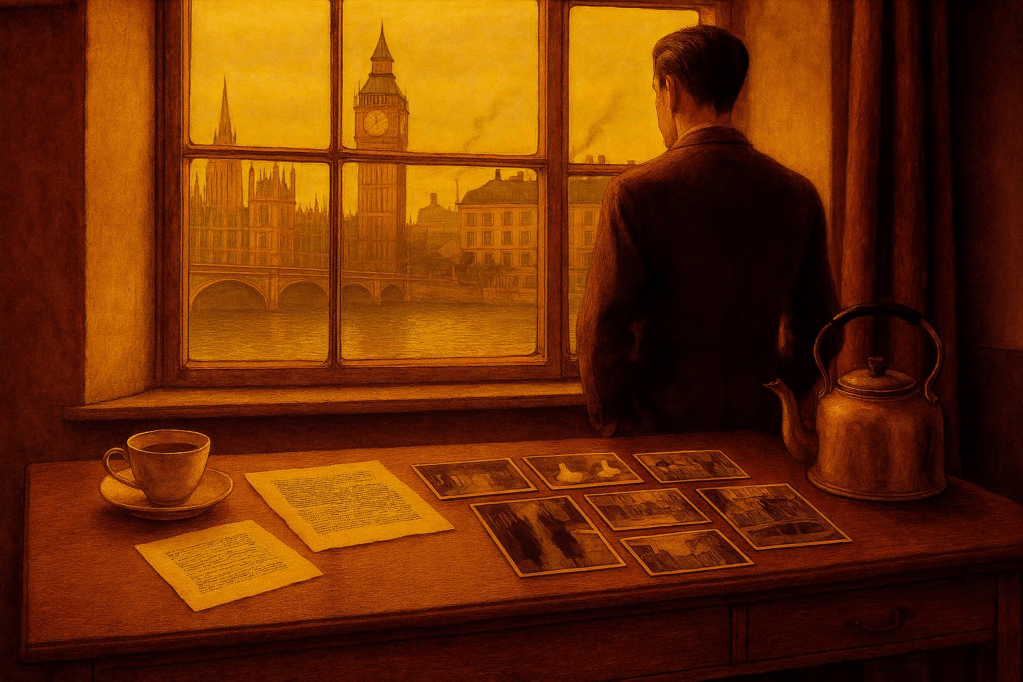
The papers are spread across my desk. Rupert’s letters from 1941-1945. Marcel’s brief note from southern France. The Red Cross lists from liberated camps. Photographs—one in particular, taken in 1939 on my balcony at the Hôtel Montalembert. All seven of us, young and hopeful and alive: Miles, Marcel, Colette, Lucien, Élise, Antoine, Bernard.
Three are dead now. I know that much. Bernard died during my imprisonment—heart failure in German custody. The others I learnt about later, through lists and letters and the slow reconstruction of what happened in the years between arrest and liberation.
I need to write it down. All of it. Not just what I saw but what I learnt afterwards. Not to make it make sense—I don’t think it ever will, completely—but to testify. To remember. To make sure their deaths and their survival meant something.
So I’m writing this final section from the future looking back, trying to piece together what happened to people I loved and left behind.
1941-1942: London
I recovered slowly. The weight came back, though I never quite filled out the way I had before Avenue Foch. Sleep remained difficult—nightmares about cells and interrogations and Bernard’s face when I learnt he’d died. But I worked. Pemberton gave me desk duties analysing intelligence from occupied France, coordinating with resistance networks, helping plan operations I could no longer participate in directly.
I met with Rupert weekly. Sometimes at the Bloomsbury café, sometimes at his rooms near the university, once or twice at a church in Clerkenwell where I sat in the back and tried to pray without fully understanding what I was doing. He was patient with me, the way a good teacher is patient with a student who’s learning a difficult language. Faith, I discovered, was exactly that—a language I’d barely begun to speak.
“You want certainty,” he told me one afternoon over tea. “You want to know why Bernard died and you didn’t. Why Marcel escaped and Lucien was caught. Why God saved you and not them. But faith doesn’t work like that. It’s not a mathematical formula where suffering plus prayer equals rescue. It’s trust in Someone sovereign even when His purposes aren’t legible to you.”
“That’s hard.”
“Yes. But it’s true.”
So I learnt to pray differently. Not demanding understanding or rescue or fair outcomes. Just submission: You’re sovereign. I trust that. Even when I can’t see it. Even when people I love are still imprisoned and I’m free and none of it makes sense.
Some days I believed it. Some days I just said the words and hoped they’d become true.
In December 1941, the United States entered the war after Pearl Harbor. First time I felt something like hope—that maybe the tide could turn, that maybe liberation could come, that maybe the others were still alive to see it.
1943-1944: The Turn
The news from the Eastern Front came through intelligence reports in March 1943: heavy German casualties at Stalingrad, a major defeat, the tide of war shifting.
Buried in one report was a casualty list. Officers killed in action. I scanned it without expecting to find anything relevant and then stopped on a name: Hauptmann Klaus Hartmann, Wehrmacht Cultural Affairs, KIA February 1943, Stalingrad.
The Hartmann Problem, finally resolved—but not the way I’d expected. I felt grief, genuine and complicated. The man who’d saved Bernard’s life, helped Colette escape Berlin, bought Lucien’s paintings and chose not to report them, warned us repeatedly, secured Antoine’s release. He’d died frozen in Russia, serving ugliness he despised, a thousand miles from the city he’d tried to preserve.
When I told Rupert, he was quiet for a long time. Then: “We can’t know what passed between Hartmann and God. Whether grace found him. Whether faith came in those final moments. That’s not ours to determine. But I know this—he made choices towards beauty whilst trapped in a system devoted to ugliness. Those choices cost him. Maybe cost him everything.”
“Does that count for something?”
“I think God’s economy is more generous than ours. That He sees the impossible positions people are trapped in and judges by the heart more than the uniform. But I don’t know. I can’t know. Neither can you.”
“So we just—what? Hope?”
“We trust that the Judge of all the earth will do right. That appointments kept in darkness matter, even when we can’t see how. That’s all we can do for the dead—trust God’s justice and mercy are larger than our understanding.”
I did trust that, or tried to. Hoped that the man who’d chosen beauty when he could have chosen efficiency died knowing those choices had mattered. That somewhere in the accounting after death, buying coded paintings and protecting perfumers counted for something.
By spring 1944, everyone knew liberation was coming. The question was when and how and whether anyone I’d left behind would survive to see it.
I volunteered to return to Paris with the liberation forces. Role: intelligence liaison, identifying resistance members, helping coordinate the Allied advance. Pemberton approved it—I was still compromised, still known to German intelligence, but after liberation that wouldn’t matter.
Rupert prayed with me before I left. “You’ll learn what happened to them. Some of it will be good news. Some won’t be. But you’ll know. And then you can grieve or celebrate or both.”
“I’m not ready.”
“No one ever is. But you’ll go anyway, because that’s what love does.”
I left for France in June 1944, one week after D-Day. I spent the next two months with Allied intelligence during the Normandy campaign, helping identify resistance networks and coordinating information as the forces advanced toward Paris.
August 1944: Liberation
Paris was liberated on August 25, 1944.
I entered the city with Allied forces—American and Free French, tanks rolling down the Champs-Élysées, flags waving, people cheering in the streets. Four years of occupation ending. The Germans fled or surrendered. The Gestapo headquarters at Avenue Foch was emptied, prisoners freed, files captured.
The city was damaged but standing. Buildings scarred by bullets. Windows broken. Streets worn by military vehicles. But Notre-Dame still watched over the Seine. The cafés were opening. The fashion houses were planning collections. Paris had endured.
I went immediately to Fresnes prison.
They were processing released prisoners—hundreds of them, thin and worn and blinking in the August sunlight like people who’d forgotten what freedom looked like. I helped with identification, looking for faces I recognised, names I knew.
And found one.
Antoine Moreau. Twenty-four years old, looking forty. Thin to the point of starvation, a scar across his left cheek I didn’t remember, wearing clothes that hung on him like a scarecrow’s rags. But his eyes—his eyes were still certain.
I walked up to him and he stared at me for three seconds as if I were a ghost. Then recognition broke across his face and he said, simply: “Miles. You came back.”
“I never should have left.”
“God is sovereign. Even over that.”
We stood in the prison courtyard surrounded by freed prisoners and Allied soldiers and the chaos of liberation, and I pulled him into an embrace that probably hurt his ribs but neither of us cared.
“The others?” I asked.
“Uncle Lucien died. 1942. TB. I was with him at the end.” His voice was steady but I heard the grief under it. “He said to tell you the paintings mattered.”
“They did.”
“Colette—they transferred her. Ravensbrück. I don’t know if she survived.”
I’d already checked the Red Cross lists that morning—compiled from liberated camps, processed frantically in the chaos of Paris’s first free days. Found her name typed in small letters on a long roster of French women who’d been deported and died: Marchand, Colette. Age 28. Ravensbrück. Died winter 1943-44.
No more specific date. No details about how. Just the flat bureaucratic acknowledgement that the woman who’d wanted to be beautiful and dangerous, who’d walked runways with codes in her scarves and pulled a gun on a Gestapo officer, had died in a camp amongst thousands of other women whose names were also on lists.
“She didn’t make it,” I said. “Winter ’43-’44. Ravensbrück. No other details.”
Antoine closed his eyes. Nodded once. “She knew the risk. When she pulled that gun.”
“Yes.”
“Élise—I don’t know. They separated us. I heard she was sent to forced labour but I don’t know where or if she’s alive.”
“We’ll find out.”
“And Marcel?”
Antoine’s face did something complicated—grief and joy and relief all mixed. “Escaped. I heard he made it to southern France. Survived the occupation there.”
“One. At least one besides us.”
“Yes.”
We stood there whilst Paris celebrated around us, two survivors of Avenue Foch trying to calculate the cost of beauty and resistance and whether three dead out of seven meant we’d won or lost or something more complicated than either word could capture.
“Your faith held,” I said finally.
“Yes. God held me. Not rescued from it. Just sustained through it. Like He promises.”
“You were right. About everything.”
“I know.” No arrogance in it. Just certainty. “You understand now?”
“I’m beginning to.”
1945: The Accounting
The war in Europe ended May 8, 1945. Germany surrendered. The camps were liberated. The full horror became visible—the lists of dead, the photographs, the survivors who weighed thirty kilos and had numbers tattooed on their arms.
I searched the Red Cross lists obsessively. Confirmed Colette’s death. Found dozens of people I’d worked with, informants and contacts and resistance members whose names I’d sent to London in intelligence reports. Most were dead.
In June 1945, a letter arrived at Pemberton’s office, forwarded to me:
Miles,
I’m alive. Forced labour in Germany, laboratory. The Allies liberated us in April. I’m in a displaced persons camp now, waiting for transport home. They say it could be weeks or months before I can return to Paris.
Father is dead. I knew that—Weber told me during interrogation. But I needed to write it. Make it real.
Colette?
—Élise
I wrote back immediately, sent it through Red Cross channels: Colette dead, Ravensbrück, winter 1943-44. Lucien dead, TB, 1942. Marcel alive, Paris. Antoine alive, Paris.
She returned to Paris in late August 1945. I met her at the train station with Antoine. We stood on the platform waiting, and when she stepped off the train I barely recognised her.
Twenty-eight years old but looking older. Thin—not skeletal like the worst camp survivors, but worn down to essential elements. Still wearing white, somehow—a lab coat someone had given her. Still wearing only a watch, no jewellery. Her eyes behind the glasses were the same—brilliant and owlish—but haunted now.
She saw us and stopped. Just stood there on the platform with a small bag containing everything she owned, staring at the two of us as if we might disappear if she blinked.
Antoine moved first. Walked up to her, said: “Élise. You made it.”
“I don’t know why.” Her voice was rough. “Father died. Colette died. Lucien died. Why did I survive?”
“God’s purposes,” Antoine said simply. A tear rolled down his cheek. “Not ours to understand. Just ours to trust.”
She looked at me. “Miles. I heard you were exchanged. 1941. That you were safe in London whilst we—” She stopped. “I’m not angry. I’m glad you survived. But I need you to know: Father’s death wasn’t your fault. Weber told me what you tried to do. The trade you offered. It wasn’t your fault.”
I’d been carrying that guilt for four years. Hearing her absolve me of it didn’t remove the weight entirely, but it shifted something. Made it bearable.
“I’m sorry,” I said anyway. “For all of it.”
“I know.”
We took her to a café—one of the few that was open, serving watered-down coffee and yesterday’s bread. She told us what she could about the forced labour, the lab work, the years of survival through chemistry and stubbornness. We sat together—three survivors of seven—and tried to make sense of what we’d lost and what we’d kept and whether resistance meant anything when the cost was three lives and years of imprisonment and grief we’d carry forever.
“The perfume formulas,” Élise said finally. “The ones Father and I developed. The invisible inks, the compounds. Did any of them matter? Did they help?”
“Yes,” I said. “The intelligence we sent to London—it helped Allied planning. Pemberton confirmed it. Your formulas made it possible.”
“Then it mattered.” She said it firmly, as if needing to believe it. “Even if Father didn’t live to see it. Even if most of us died. It mattered because we refused to let them win completely. We embedded beauty in codes and made hope smell like roses and said no to ugliness even when ugliness killed us.”
“Yes,” Antoine agreed. “It mattered because God ordained it to matter. Not because we won easily. Because we resisted faithfully.”
We sat in the café as Paris lay in disrepair around us, three survivors bearing witness to the dead, and I thought about Colette’s beauty turned to ash and Lucien’s paintings still hanging somewhere with codes in their wallpaper and Bernard’s quiet dignity and whether any of it added up to more than loss.
It had to. Because if it didn’t, then what had any of us died for?
October 1946: Return
Which brings me to now. To this morning, standing in my London flat with papers spread across my desk and a train ticket to Paris in my pocket.
I’m going back. Five years since I left as a prisoner exchanged. Two years since I returned with liberation forces. One year since Élise returned from forced labour. Time to see if the city we fought for still recognises me. Time to visit graves and surviving members and the streets where we’d embedded beauty in small acts of defiance.
Time to see if Rue de l’Espoir has recovered.
The train to Paris is crowded with people returning—expatriates who’d fled, soldiers going home, businessmen resuming trade. I sit by the window and watch the French countryside pass, thinking about the last time I’d made this journey in August 1941, leaving the others behind.
Paris looks different in October 1946 than it did in August 1944. Less celebratory. More worn. The scars of occupation visible in damaged buildings, closed shops, streets that need repair. But also: life returning. Cafés open. People walking without fear of checkpoints. The sound of French instead of German commands.
I go first to the Hôtel Montalembert. Still standing, operating, a few guests beginning to return. I didn’t think the desk clerk recognised me—five years and a different person entirely. I don’t go up to what was my room. Don’t need to. Just wanted to see that it endured.
Then to Rue de l’Espoir.
The narrow curved street looks exactly as I remember it. The defunct fountain still dry. The 18th-century buildings still the colour of old bone. The faded green shutters. And Marcel’s shop—
Open.
The sign above the door has been repainted: Marcel Duval, Tailleur. The mannequin in the window wears a charcoal suit of exquisite tailoring. Through the window I can see shelves of fabric, measuring tapes, the tools of a trade practised with precision and care.
I push open the door. A bell rings. And Marcel looks up from his worktable where he’s stitching something with the careful focus I remember.
He’s older. Greyer. Forty-nine now, lines around his eyes that weren’t there in 1941. But his hands are steady and his eyes still assess me with that mixture of pragmatism and something softer.
“Miles Penbury,” he says. Not surprised. As if he’d been expecting me.
“Marcel.”
He sets down his needle. Stands. And we grip hands—British restraint barely holding against the urge to embrace.
“You look better than when I saw you last,” he says. “Less starved.”
“Five years of British rations. You look steady.”
“I am. Provence treated me well. Though I’m glad to be back.” He gestures to the shop. “Reopened October 1944. Been stitching jackets for Parisian women ever since. No codes anymore. Just honest tailoring.”
“Aspirational hope?”
“Vindicated. The street still stands. So do we.”
“Three don’t.”
“I know. Antoine told me. He comes by weekly—still working as a courier, legitimate now. Élise I’ve seen twice. She works at Guerlain now, developing formulas. Won’t talk much about what happened. But she’s alive. She endures.”
“And you posted my letter. To Rupert.”
“I did. Before I fled. Thought you’d want him to know you weren’t saying no anymore.”
“Thank you.”
Marcel moves to a shelf, pulls down a bottle. I recognise it immediately: formula #17. The perfume Élise gave me Christmas Eve 1940. The one that smells like hope.
“She left this with me. Wanted you to have it again. Said you’d understand.”
I take the bottle. Uncork it. The scent is exactly as I remember—roses and something sharp and something clean that I can’t name. Hope bottled in glass and fragrance, surviving occupation and arrest and the death of its creator.
“We’re meeting tonight,” Marcel says. “The survivors. Thought you might be coming around this time. Antoine suggested it. We gather once a year anyway, anniversary of the arrests. But this year, with you here—” He pauses. “We’ll be at the old wine cellar. The one in the 12th where we used to meet. Eight o’clock. If you want to come.”
“I’ll be there.”
I spend the afternoon walking. Past Parfums Garnier—still closed, building for sale, windows dark. Past the Galerie Rousseau—reopened under new management, Madame Rousseau’s name forgotten. Past the Hôtel Meurice where Hartmann had his office—now returned to being a hotel, no trace of Wehrmacht occupation visible.
And finally to Notre-Dame.
She stands eternal, watching over the Seine as she’s done for centuries. The bells are ringing now—no longer silenced by occupation. The rose windows catch afternoon light. People are going inside to pray or simply to witness that it survived, that beauty endured, that something permanent remained whilst everything else changed.
I stand on the Left Bank and look at her and think about Rupert’s favourite verse: The light shines in the darkness, and the darkness has not overcome it.
It’s true. I can see it now. Paris survived. Notre-Dame stands. Rue de l’Espoir still curves between old buildings. Marcel stitches jackets. Antoine still believes. Élise still makes perfume. And I—I learnt to pray in a cell at Avenue Foch and somehow that faith held through five years of war and grief and not understanding why some died and some survived.
The darkness did not overcome it. Battered, dimmed, purchased at terrible cost—but the light endures.
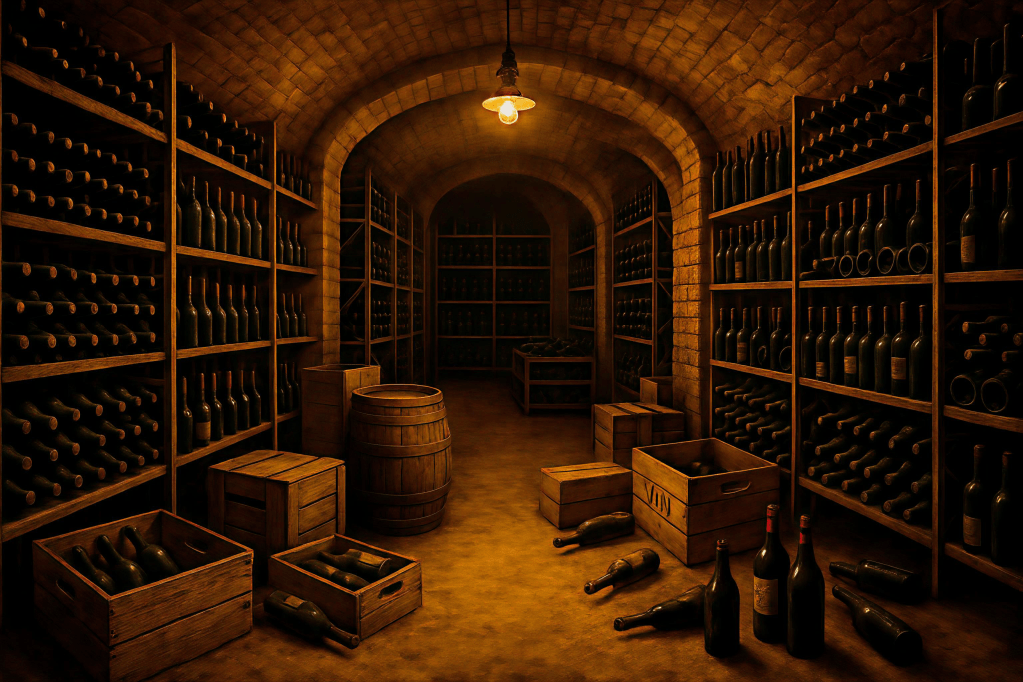
The wine cellar in the 12th looks exactly as I remember it. Damp stone walls, empty bottles on shelves, the smell of fermentation and old wood. We’d met here in February 1941 to debate the trap we were walking into. Five years later, four of us return.
Marcel arrives first, brings wine and bread—proper wine now, not the thin stuff we’d had during occupation. Then Élise, wearing a lab coat like armour, but now pink and new. Then Antoine, thin still but steady, eyes certain as ever.
We sit on old crates and barrels. Pour wine into mismatched glasses. And look at each other with the complicated recognition of people who survived when others didn’t.
“To Bernard,” Marcel says, raising his glass. “Who died saving nothing, but died bravely anyway.”
“To Bernard,” we echo.
“To Lucien,” Antoine adds. “Who painted beauty and embedded codes and died before liberation. He said to tell everyone the paintings mattered.”
“They did,” I say. “The intelligence they carried helped Allied operations. Pemberton confirmed it.”
“To Lucien.”
“To Colette.” Élise’s voice is steady but quiet. “Who wanted to be beautiful and dangerous. She was both.”
“To Colette.”
We drink. The wine is better than anything we’d had during occupation but it tastes of grief anyway. Three dead. Four living. The arithmetic of resistance written in names and graves and the spaces where people should be sitting but aren’t.
“Did it matter?” Élise asks suddenly. “All of it. The codes, the formulas, the intelligence we sent. Were three deaths too high a price for what we accomplished?”
“Yes,” Antoine says immediately. “Not because we won easily or because everyone survived. Because God ordained our resistance to matter. He was sovereign over all of it—the occupation, the arrests, the deaths. And He says it mattered.”
“That’s not an answer,” Élise objects. “That’s theology.”
“It’s both.”
Marcel speaks carefully: “The intelligence we sent to London helped Allied planning. Miles confirmed that. So in a practical sense—yes. What we did contributed to victory. Small contributions, but real.”
“And in the impractical sense?” Élise presses.
I think about what to say. About Bernard dying in a German cell. About Colette’s name on a camp list. About Lucien’s unmarked grave. About the terrible cost of beauty resisting ugliness.
“We refused to let darkness extinguish all light,” I say finally. “We embedded beauty in codes and wore defiance on runways and made perfume that smelt like hope. We said no to ugliness even when ugliness killed us. And Paris stands. Notre-Dame stands. This building and cellar still exists. We preserved what was worth defending. That’s what mattered. Not that everyone survived. That we refused to surrender beauty completely.”
“And faith?” Élise looks at me. “You found it, didn’t you? In Avenue Foch. Antoine told me.”
“Yes. I can’t explain it fully. Just that God made an appointment with me in the darkness. Removed my heart of stone and gave me a heart of flesh, exactly like the scripture says. And I’ve been learning to trust Him ever since. Learning that His purposes don’t have to be legible to me to be real.”
“I don’t have faith,” Élise says. “Father didn’t believe. I still don’t. But I survived. And I’m still making perfume. And maybe that’s enough.”
“It is,” Antoine says gently. “God’s grace extends to you whether you recognise it or not. You’re alive. You endure. That matters.”
We sit in silence for a while. Then Marcel asks: “What do we do now? Tomorrow? Next year? The rest of our lives?”
“We remember,” I say. “We visit graves and tell stories and make sure the dead aren’t forgotten.”
“We work,” Marcel adds. “I stitch jackets. Élise makes perfume. Antoine delivers packages. Miles—what do you do now?”
“I write. Intelligence reports mostly. But also this—” I gesture vaguely. “An account of what we did. For memory.”
“Good,” Marcel says. “Someone should write it down. Make sure people know.”
“All of it,” Élise says quietly. “Not just what we accomplished. What it cost. Who we lost.”
“Yes,” Antoine agrees. “Bernard and Lucien and Colette. Their names. Their choices. What they gave.”
“And we honour them by continuing,” Marcel says. “By doing the work they can’t. By being here when they’re not.”
We sit in silence for a moment longer. Then near midnight, we leave the wine cellar and embrace—less restrained now, my British reserve finally giving way to something more honest. We promise to meet again, then scatter into the Paris night.
The next morning, we visit Bernard’s grave.
The cemetery is in the 14th arrondissement, a quiet place with chestnut trees that are losing their leaves. Bernard’s stone is simple: Bernard Garnier, 1878-1941, Parfumeur. No epitaph. Just his name and trade.
Élise stands beside me. Antoine too. Marcel arrived separately but joined us without speaking. The four of us who remain, visiting the first who fell.
“He would have hated dying for nothing,” Élise says finally. “He was practical. Hated waste.”
“He didn’t die for nothing,” Antoine replies. “He died so you could live. That’s not waste.”
“I’m not sure he’d agree. The trade failed. Miles was arrested anyway. Weber got everything he wanted.”
“But you’re here,” I say quietly. “Standing at his grave. Still making perfume. Still creating beauty. That’s not nothing.”
She nods but doesn’t speak.
We stand in silence whilst Paris moves around us—traffic, voices, the ordinary sounds of a city rebuilding. Then we leave, separately, each of us carrying whatever meaning we can make from an old man’s death in German custody.
I walk back to my hotel slowly, thinking about those who aren’t here. Lucien in that overgrown field at Fresnes. Colette in a mass grave at Ravensbrück with no stone, no ceremony, no way to visit or remember except to say her name and believe that beauty and danger together meant something.
Tomorrow I’ll walk Rue de l’Espoir again and remember when seven of us met on a balcony at the Hôtel Montalembert to embed beauty in codes and resist ugliness with fashion and perfume and paint.
Tomorrow I’ll return to London and continue writing this account, trying to testify to what we did and what it cost and whether any of it mattered.
But tonight, I stand outside Notre-Dame one more time and look up at her towers against the October sky.
Five years since I walked out of Avenue Foch. Four years since Paris was liberated. One year since the war ended. And she still stands. Still watches over the Seine. Still endures whilst everything else changes.
The light shines in the darkness, and the darkness has not overcome it.
I believe that now. Not because I understand suffering or God’s purposes or why some died and some survived. But because Someone made an appointment with me in a cell at Avenue Foch, and I learnt that appointments kept in hell are more certain than certainties claimed in comfort.
Bernard is dead. Colette is dead. Lucien is dead. Three of seven gone. But Marcel stitches jackets on Rue de l’Espoir. Antoine’s faith held. Élise endures. I found grace I didn’t deserve. And Paris—Paris still stands.
That has to be enough.
Because it’s all we have. And because Someone sovereign says it matters, even when we can’t see how.
So I’ll remember them. Write their names. Visit their graves. Tell their stories. And trust that beauty embedded in codes and hope bottled in perfume accomplished what God intended, even when the cost was everything.
The war is over. The occupation ended. But the light still shines.
And that, somehow, is enough.
On my final evening in Paris, I returned to the Hôtel Montalembert. I’d stayed at a modest hotel near Gare du Nord the previous nights, but wanted to spend this last night here, in room 412—my old room.
The desk clerk had it ready for me.
I climbed the stairs slowly. Passed a maid in the hallway, gaunt and disheveled, scurrying past me toward the stairs with her head down.
I glanced back, sensing something. But she’d already disappeared down the stairwell.
I unlocked the door.
The room looked the same. Different furniture, perhaps, but the proportions were right. The light from the window. The door to the balcony still in the same place. I could almost smell formula 17—memory playing tricks, nostalgia for what we’d lost.
I set my jacket and hat on the chair. Poured a glass of water from the pitcher on the nightstand. And opened the balcony door.
I walked out and the memories flooded over me—seven of us gathered here in 1939, planning resistance through beauty, believing codes embedded in perfume and paintings and fashion would somehow matter. Three of them were dead now.
I sat in one of the cast iron chairs. Put my water glass on the small table. Looked out at Notre-Dame, her towers against the October evening sky.
A tear formed. I let it fall.
After a while, I went back inside. Sat on the edge of the bed to pull off my shoes.
That’s when I noticed the box on the chair by the desk.
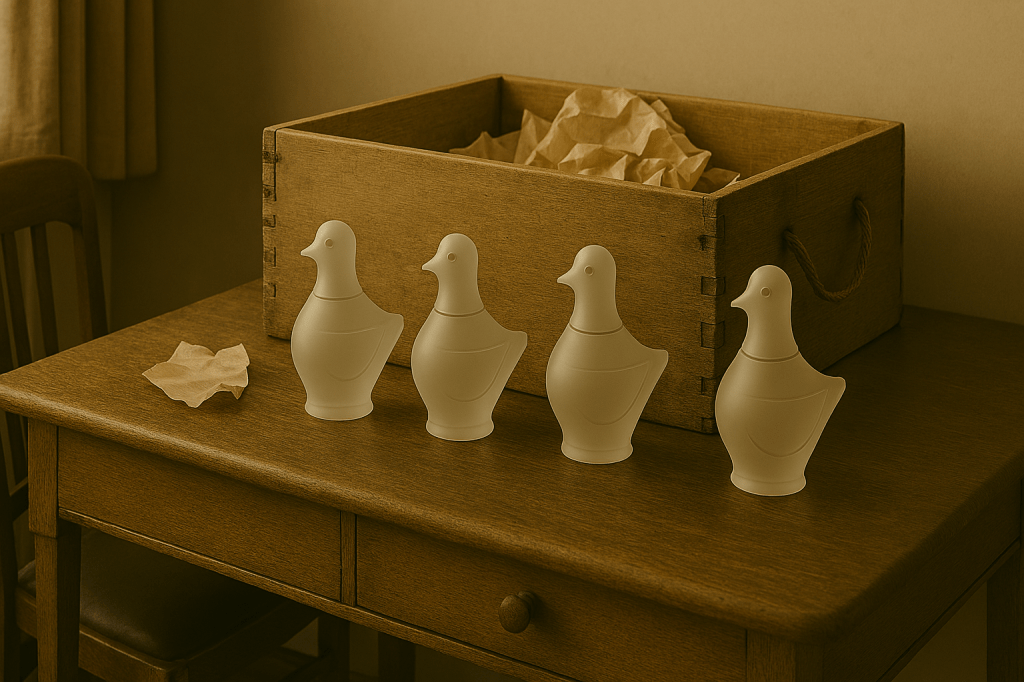
Someone had delivered it—the top was already loosened, as if it had been opened and carefully closed again. I pulled off the lid.
Inside: half a dozen dove-shaped perfume bottles. Bernard’s signature design. Crystal glass, each one perfect.
A note in Élise’s handwriting:
Miles—Father would have wanted you to have these. They were in storage at the shop. I couldn’t bear to sell them. Perhaps you can’t either. Perhaps that’s enough. —É
I picked up one of the bottles. Held it to the light.
The scent hit me—roses and something sharp and clean. Not memory. Real. Fresh. As if someone had just uncorked it moments before.
Which meant someone had just handled these bottles.
Which meant that smell in the hallway wasn’t nostalgia.
Wait.
That maid…
THE END
 Lamp & Ledger